

Abstract illustration showing the structured and human elements involved in how to actually sell a business

How to actually sell your business

Selling a business is rarely as simple as finding a buyer and agreeing on a price.

This guide walks through the full business sale process, from the first decision to the final handover so you can move forward with clarity.

In this Guide:

1. Do you really need or want to sell your business?

So you’re wondering how to actually sell your business.


  • How do you get buyers interested without everyone finding out?


  • When do you tell your staff and your clients?


  • How do you know what the business is really worth?


These questions usually come up long before anyone is ready to talk about price or process. 

Before going any further, it’s worth stepping back and understanding why you’re considering a sale and whether selling now is the right move for you.

Reasons you might be wanting to sell your business

  • You’re thinking about retirement or stepping back
  • You feel burnt out or tired of carrying everything
  • The business is doing well and the timing feels right
  • You’ve hit a growth ceiling and don’t want to push further
  • You want a change or the next chapter looks different

Similar to selling a car, buyers always ask one thing first. Why are you selling? Having a clear and honest answer, builds trust early and sets the foundation for the entire deal.
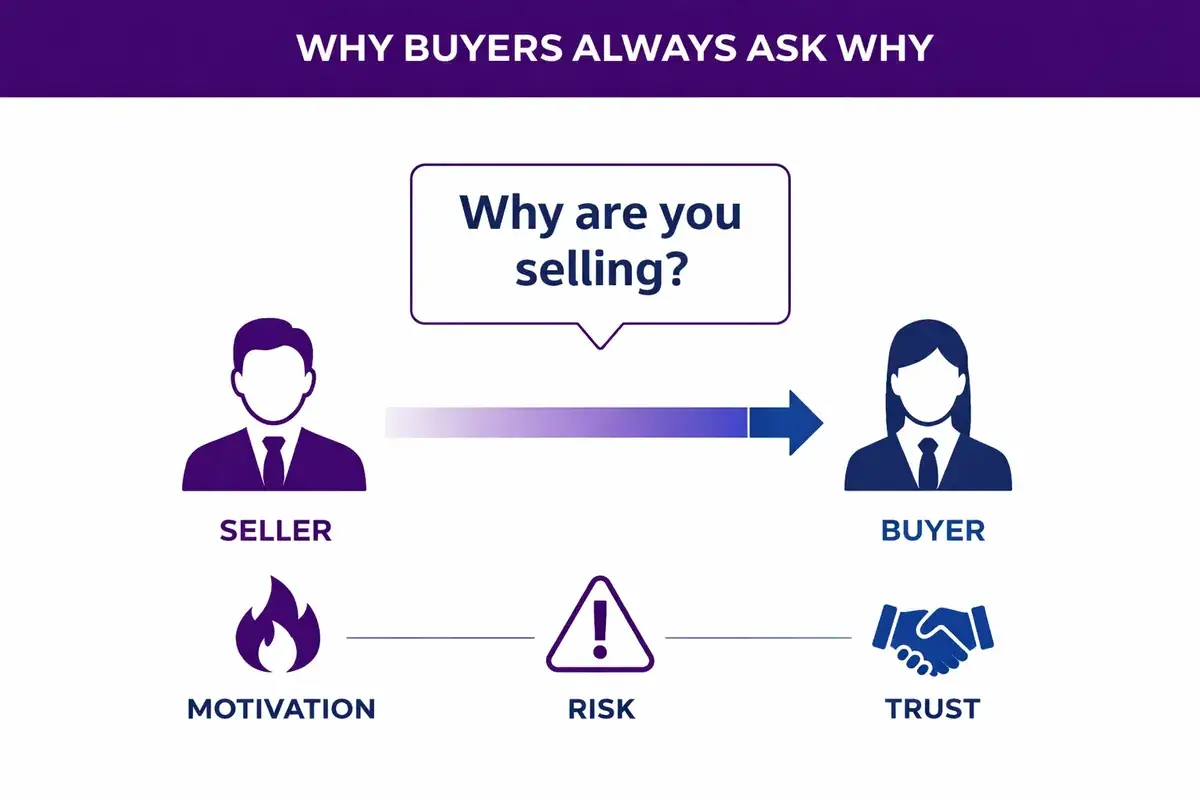
infographic with business buyer asking business seller reason for sale

When selling can feel right but It isn’t

  • The business is messy or disorganised and feels overwhelming
  • Profits are down and selling feels like an escape
  • You’ve received poor or rushed advice
  • Expectations are based on rumours rather than real numbers
  • The decision is driven by pressure rather than preparation
 
Before marketing a business for sale, owners often spend 12–36 months increasing the value of the business.
See our guide on How to Increase the Value of Your Business Before Selling.

Feeling frustrated or stuck does not always mean selling is the right answer.
In many cases improving structure or getting clarity first can materially change the outcome.
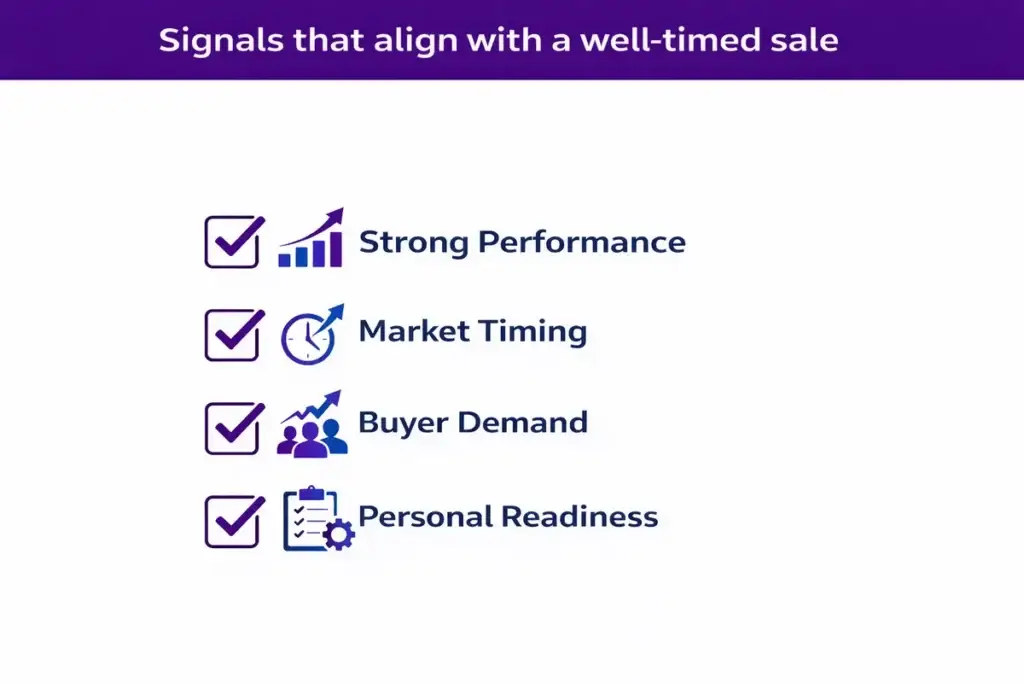
Signs it might actually be the right time to sell

  • The business is performing strongly and consistently
  • Market conditions or consolidation favour sellers
  • You’re seeing similar businesses sell to larger players
  • Retirement, health or family circumstances are changing
  • You have clarity on what comes next personally
signs of a well timed business sale by future business brokers melbourne

Selling a business is rarely just about price. It’s about timing, readiness and making a decision you won’t regret later.

2. What you must do prior to selling your business

Most people think selling a business starts when buyers show up.

In reality the outcome is usually decided much earlier than that.

This stage is about getting ready.
Not perfection. Just clarity.
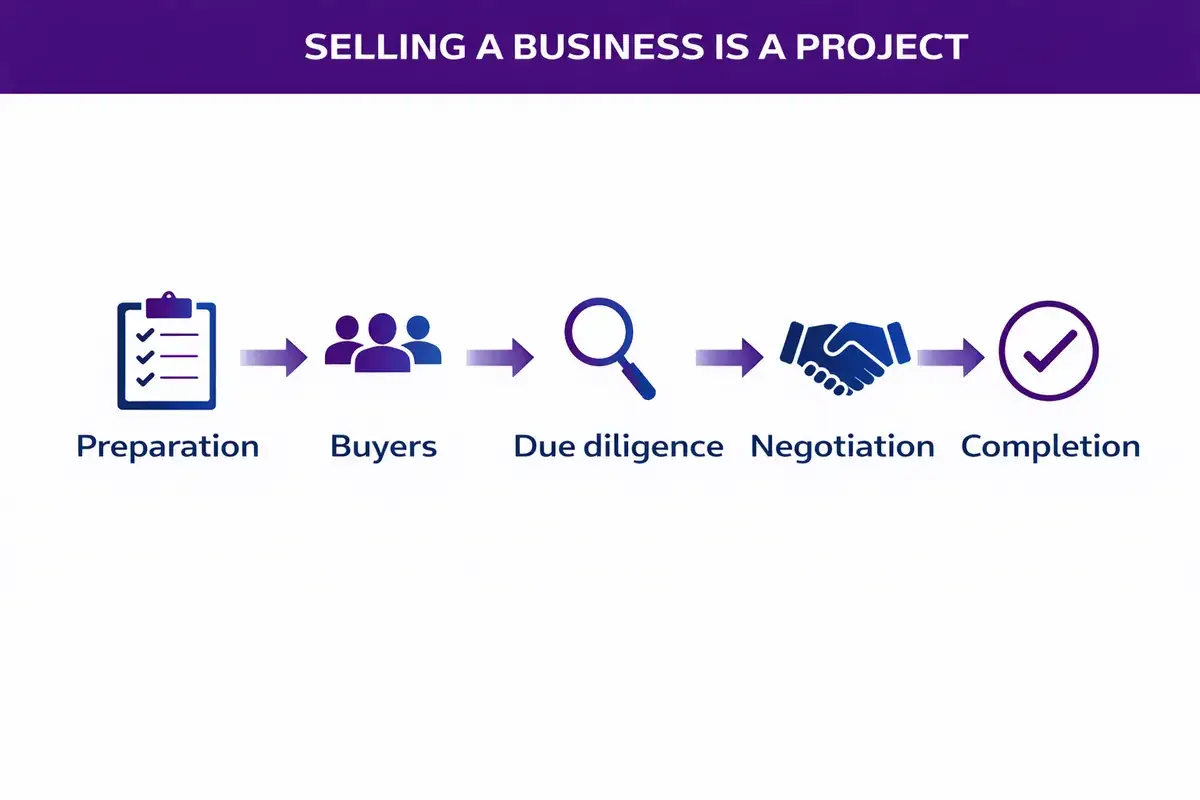
Selling a business is a project not a single event

  • It doesn’t happen overnight
  • It runs alongside your normal day to day work
  • It involves decisions across money, people and operations
  • The earlier you treat it like a project the fewer surprises you face later
Selling a business is a project infographic by future business brokers pty ltd Melbourne

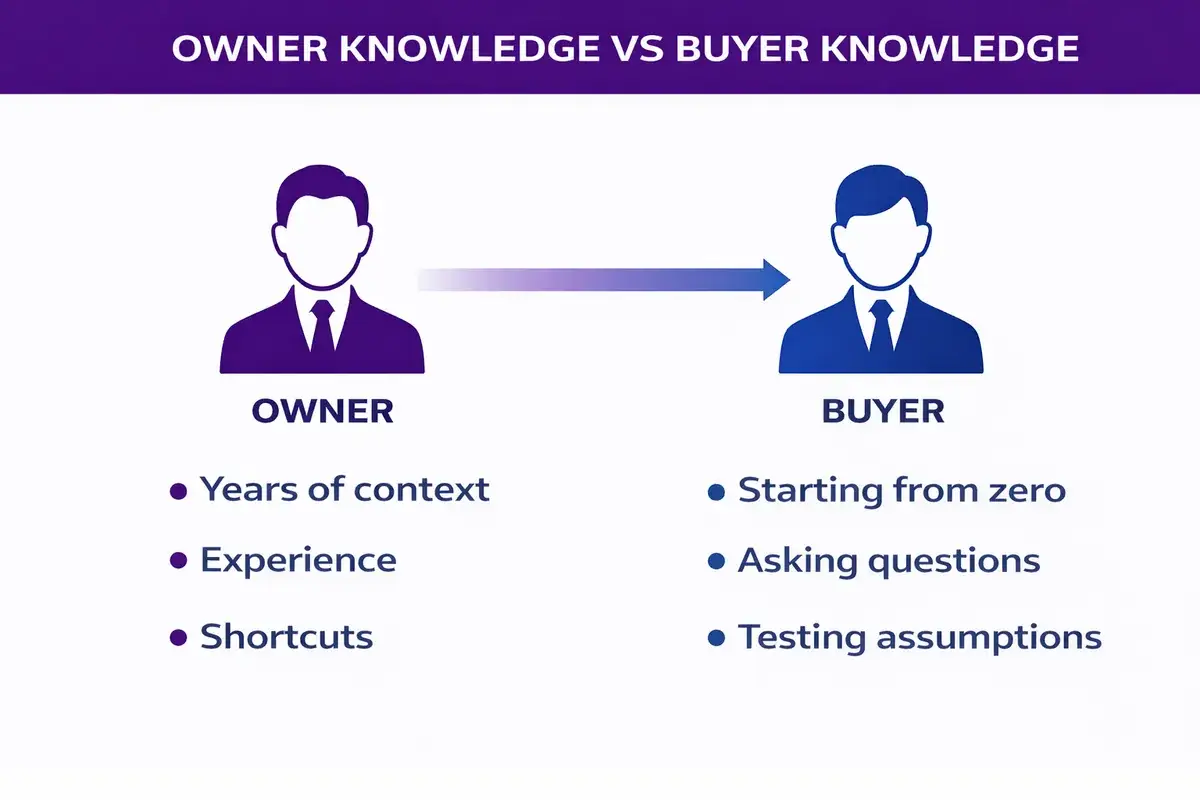
Trying to see the business through a buyer’s eyes

You’ve spent years getting to know your business.

  • Your buyer hasn’t.
 

What feels obvious to you is often brand new to them.

They need things broken down and clearly explained.

Assumptions create confusion. Clarity builds confidence.

A simple mindset shift

Preparing for a sale is less about telling your story and more about breaking the business down so someone else can understand and take it over.
What owners often underestimate or put off

  • How detailed the buyer’s checks will be
  • The need to clearly show value not just talk about it
  • Positioning the business for the right buyer not every buyer
  • Pulling all the information together early
  • Fixing small issues before they turn into big problems
owner vs buyer business sale knowledge of the business diagram future business brokers pty ltd

Preparation doesn’t guarantee a sale.

But poor preparation almost guarantees problems.


The better this stage is handled the smoother everything that follows tends to be.


Read up on the 11 key things to prepare before selling your business


3. Do you sell everything in one go?

When people start thinking about selling, one of the first questions is usually a simple one.


  • What am I actually selling?
  • Is it just the business name and customers?
  • Is it the equipment too?
  • What about the property, the systems, or the people?


Getting clear on this early avoids confusion later.

What is usually included in a business sale

  • Most business sales include more than one moving part.
  • The operating business itself
  • Equipment and physical assets
  • Intellectual property, systems, and processes
  • Customer relationships and goodwill
  • Staff and existing agreements


But here’s the real question:
Which of these actually matter to your buyer?

What’s included can change the value, the type of buyer you attract, and how the deal is structured.
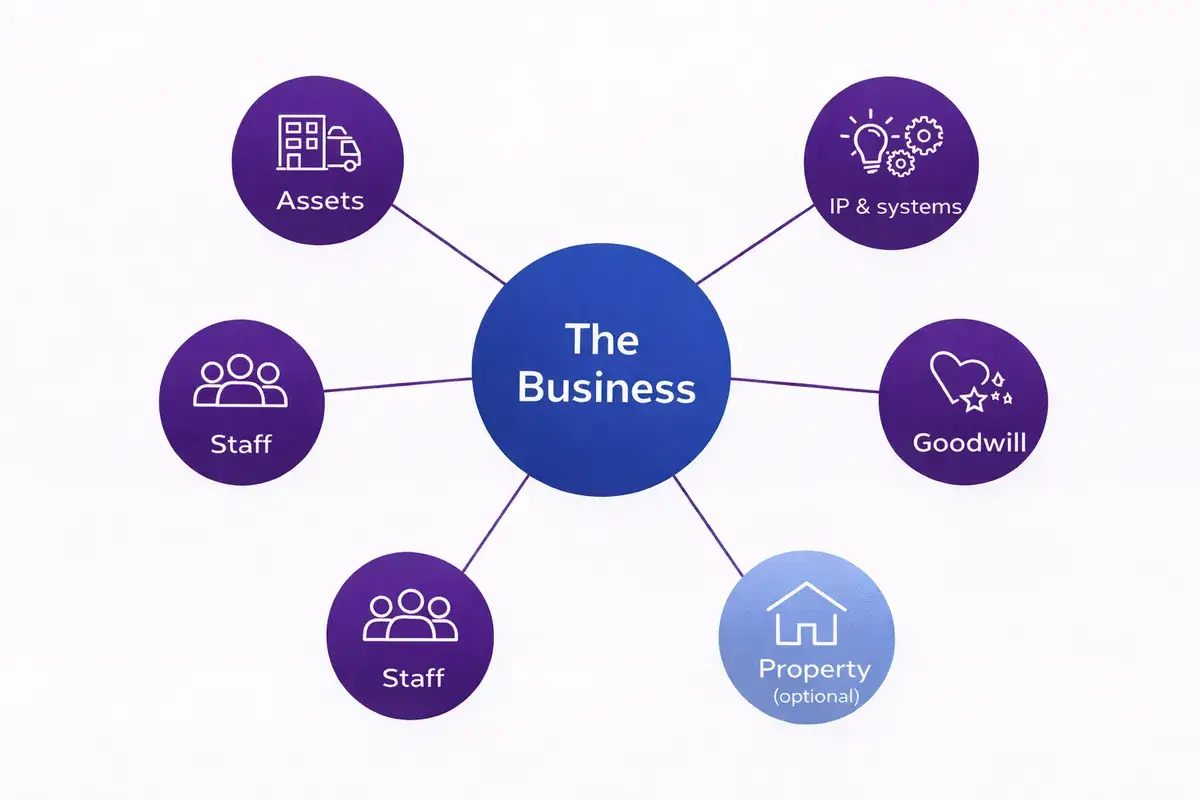
what makes up a business infographic by Future Business Brokers Pty Ltd Melbourne

What people really mean by goodwill and IP

These are terms you’ll hear a lot during a sale.
They’re also two of the least clearly explained.

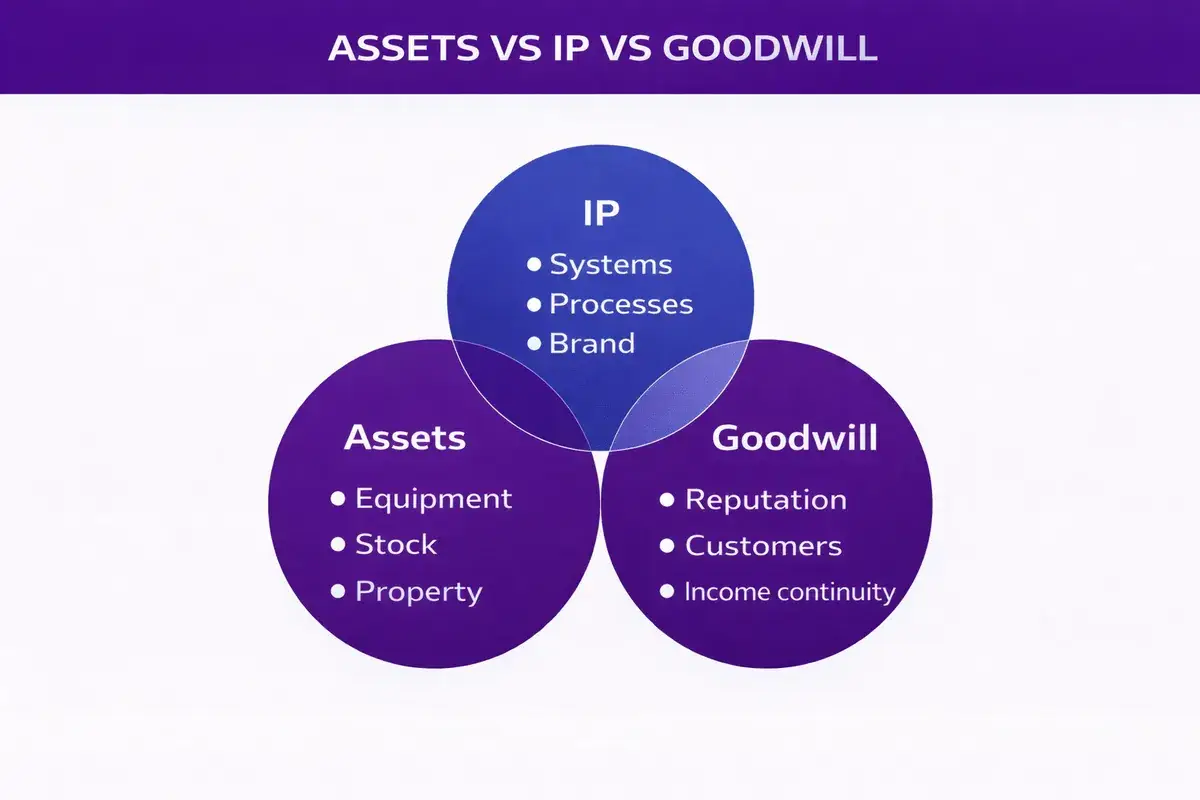
  • Goodwill is the value that exists beyond physical assets. It comes from things like reputation, customer loyalty, brand recognition, and the ability of the business to keep generating income.
 

Ask yourself:

  • Would customers still come back if I stepped away?
  • Does the business rely on me personally, or on systems?
 
  • Intellectual property (IP) is how the business actually runs. This includes systems, processes, software, branding, methods, and know-how.


A useful way to think about it:

  • Assets are what you can touch
  • IP is how the business operates
  • Goodwill is why customers stay

A simple question worth asking

If the doors opened tomorrow under new ownership, what would allow the business to keep working without you?
Common questions owners get stuck on

These are questions almost every owner asks at some point:

  • Do I sell the business with or without the property?
  • Do buyers want the equipment, or just the goodwill and IP?
  • Is this an asset sale, or something else?
  • How do you value the business separate from the assets?
  • What happens if a buyer looks but doesn’t proceed?


If you’re asking these, you’re not behind.
You’re just at the stage where clarity matters.

Most owners are unclear on the difference between an asset sale and a share sale at this stage. If you want a plain English breakdown, read our guide on asset sale vs share sale explained

Managing risk while the business keeps running

Selling a business doesn’t mean pressing pause.

So how do you:

  • Keep performance strong?
  • Protect confidentiality?
  • Avoid staff or client uncertainty?
  • Sell and operate at the same time?


This balancing act is normal, and it’s one of the reasons preparation matters so much.
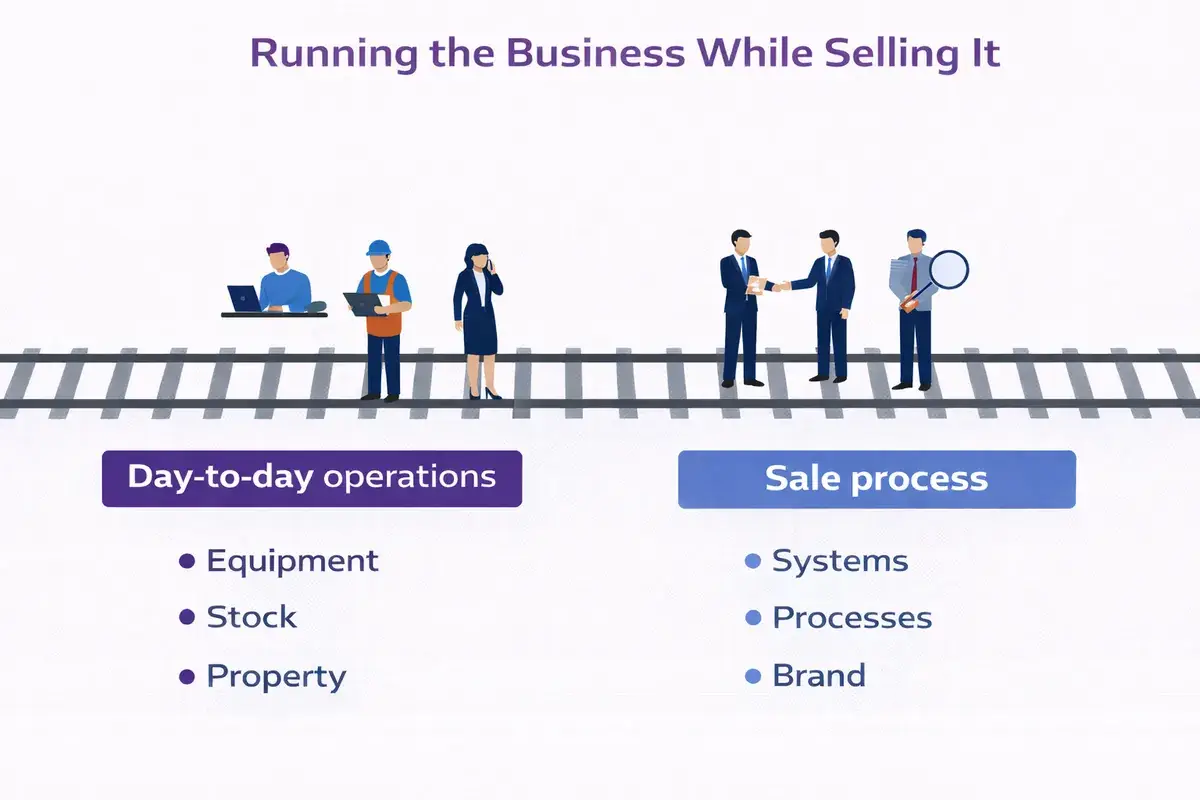
running the business while selling the business diagram created by Future business brokers

Understanding what is being sold, and what actually creates value, sets the boundaries for the entire deal. The clearer this is early, the fewer surprises there are later.

4. How your business is valued

This is usually the part people are most curious about.

It’s also the part with the most misinformation.


If you want a detailed breakdown of how valuation actually works, including SDE, EBITDA, buyer perception and why price and valuation are not the same thing, read our guide on how to value your business and what it’s really worth


You’ve probably heard stories.
Someone sold for “X times profit”.

Another business went for a number that sounds huge.

So what’s actually true?

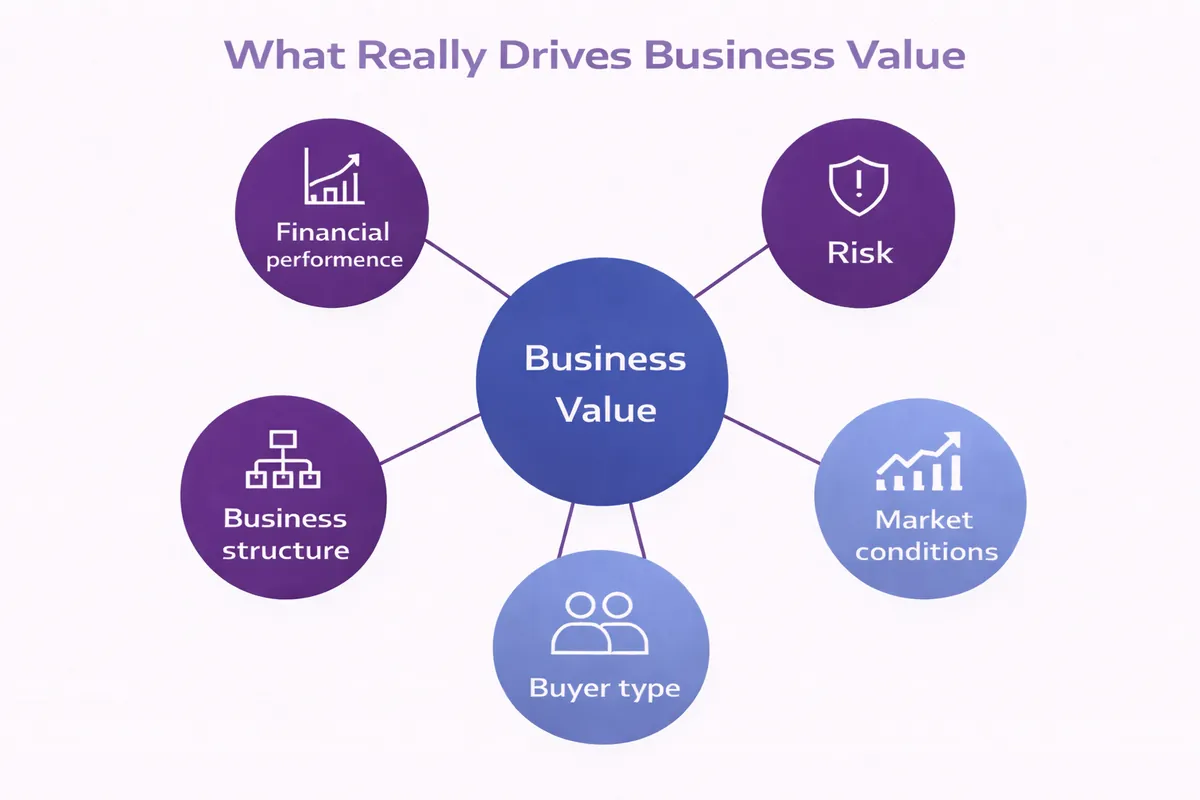
There is no single value for a business

Two businesses can look similar on the surface and sell for very different outcomes.

Why?

Because value isn’t just a formula.

Ask yourself:

  • Who would buy this business?
  • What would they be buying it for?
  • What risk would they be taking on?


Those answers matter more than any headline multiple.
Why rumours and comparisons are dangerous

This catches a lot of owners out.

Unless a business is publicly traded, you almost never know:

  • The real sale price
  • The terms of the deal
  • How much was paid upfront
  • What was deferred, financed, or tied to performance


So when someone says they sold for a certain amount, it doesn’t tell you much on its own.

  • Was there an earn-out?
  • Was part of the price vendor-financed?
  • Did the seller stay on?
  • Were there conditions attached?


Without context, the number means very little.

A useful reality check

What someone says they sold for is rarely the full story. Price without terms is not a valuation.

Different businesses are valued in different ways

Smaller owner-operated businesses are often valued differently to larger, systemised ones.

Valuation methods can change based on:

  • Size of the business
  • Stability of earnings
  • Reliance on the owner
  • Growth potential
  • Risk profile

This is why two valuations can exist for the same business, and both can be reasonable.
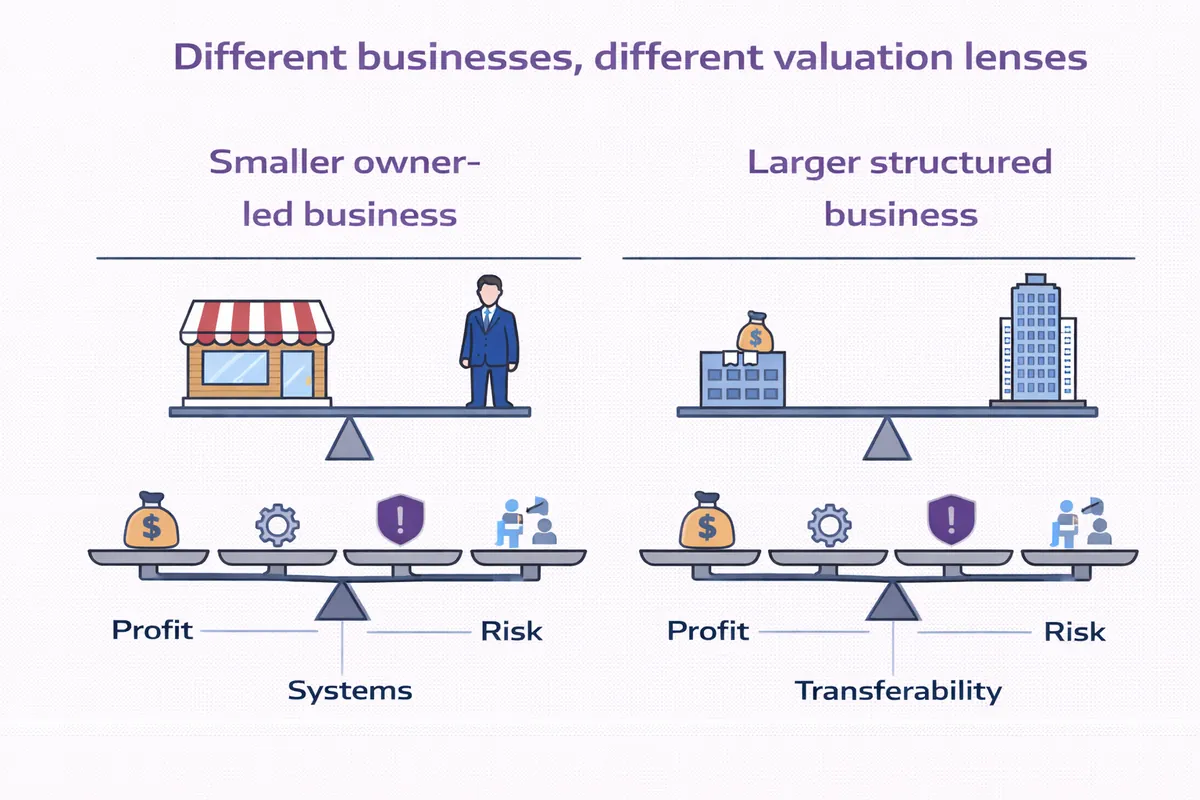
Diagram comparing different valuation lenses for smaller owner led businesses and larger structured businesses across profit systems risk and transferability

Buyer type has a huge impact on value

A competitor may value your business very differently to:

  • A first-time buyer
  • An investor
  • A management buyout
  • A private equity group


Each buyer sees;

  • Different upside
  • Different risk
  • Different reasons for buying


That’s why the same business can attract very different offers.

Structure matters more than most owners realise

It’s not just what the business does.
It’s how it’s put together.

Buyers look closely at:

– How revenue is generated?

– How dependent the business is on you?

– How repeatable and transferable it is?

– How easy it would be to step in and operate?

Valuation isn’t about guessing a number or comparing stories. It’s about understanding how buyers see risk, opportunity, and transferability. Once you understand that, the numbers start to make sense.

5. Ways your business may be sold

Most owners think there’s only one way to sell a business.

Put it on the market, find a buyer, agree on a price, move on.

In reality, there are a few different ways a sale can happen, and the path you take can change:

  • Who buys the business
  • How much risk you carry
  • What your life looks like after the sale

There’s more than one way to sell

Not all buyers want the same thing.
And not all sellers want the same outcome.

  • Some owners want a clean break.
  • Others want flexibility.
  • Some want certainty.
  • Others are comfortable trading risk for upside.
 

That’s why sale structures vary.

If you are trying to understand what those structures mean for your life after settlement read how long do I have to stay after selling my business.
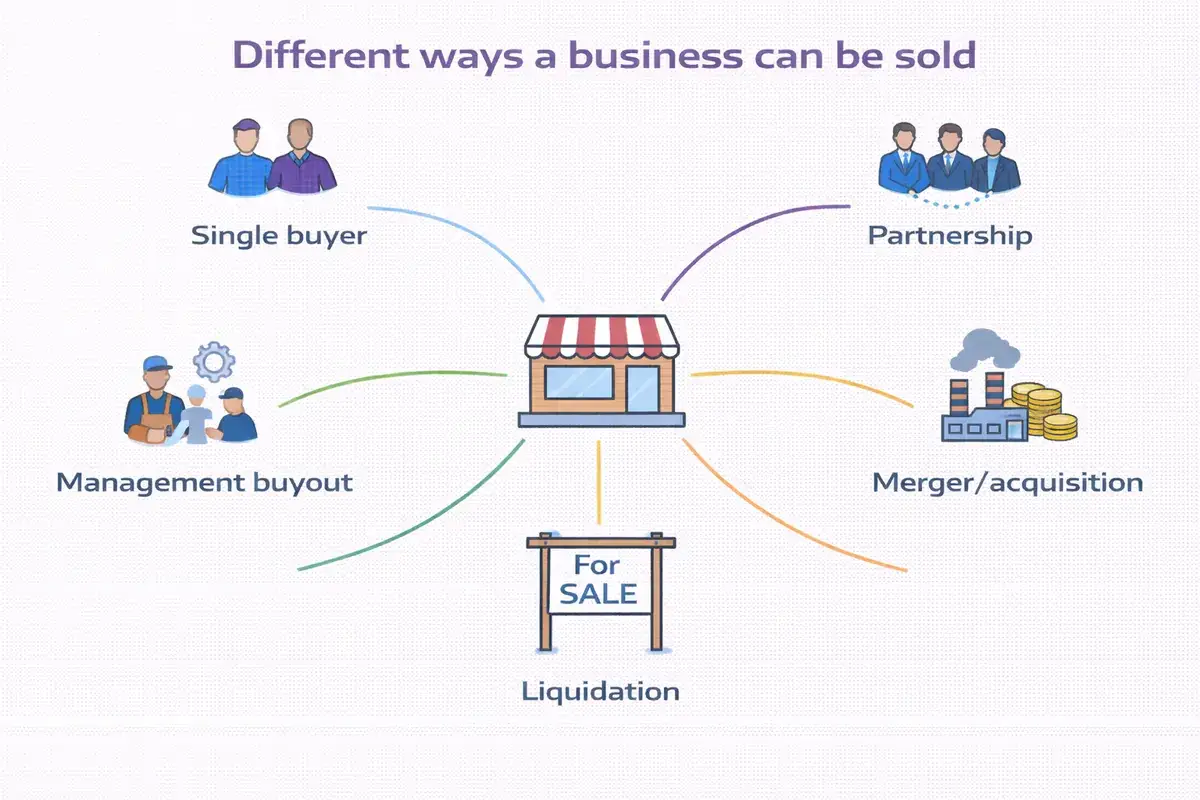
Diagram showing different ways a business can be sold including single buyer partnership management buyout merger acquisition and liquidation

Common ways businesses are sold

  • Selling to a cash buyer for a clean exit
  • Selling with vendor finance to make the deal work
  • Selling with an earn-out, where part of the price depends on future performance
  • Selling part of the business and staying involved
  • Selling to employees or management
  • Selling to a competitor
  • Selling to an investment group

None of these are right or wrong.

They just come with different trade-offs.

What is vendor finance (in simple terms)?

Sometimes the right buyer for the business doesn’t have all the funds upfront.

In these cases, the seller may agree to finance part of the deal.

This means you receive some of the sale price over time rather than all at once.

It’s not about discounting the business.

It’s about bridging a funding gap to get a good deal across the line.


Vendor finance is often used when:

  • The buyer is a strong operational fit
  • The business is performing well
  • The gap is about funding structure or timing, not confidence

Like any structure, it increases flexibility but also changes the risk profile.

It needs to be thought through carefully and documented properly.

More attention to detail now means less stress later.
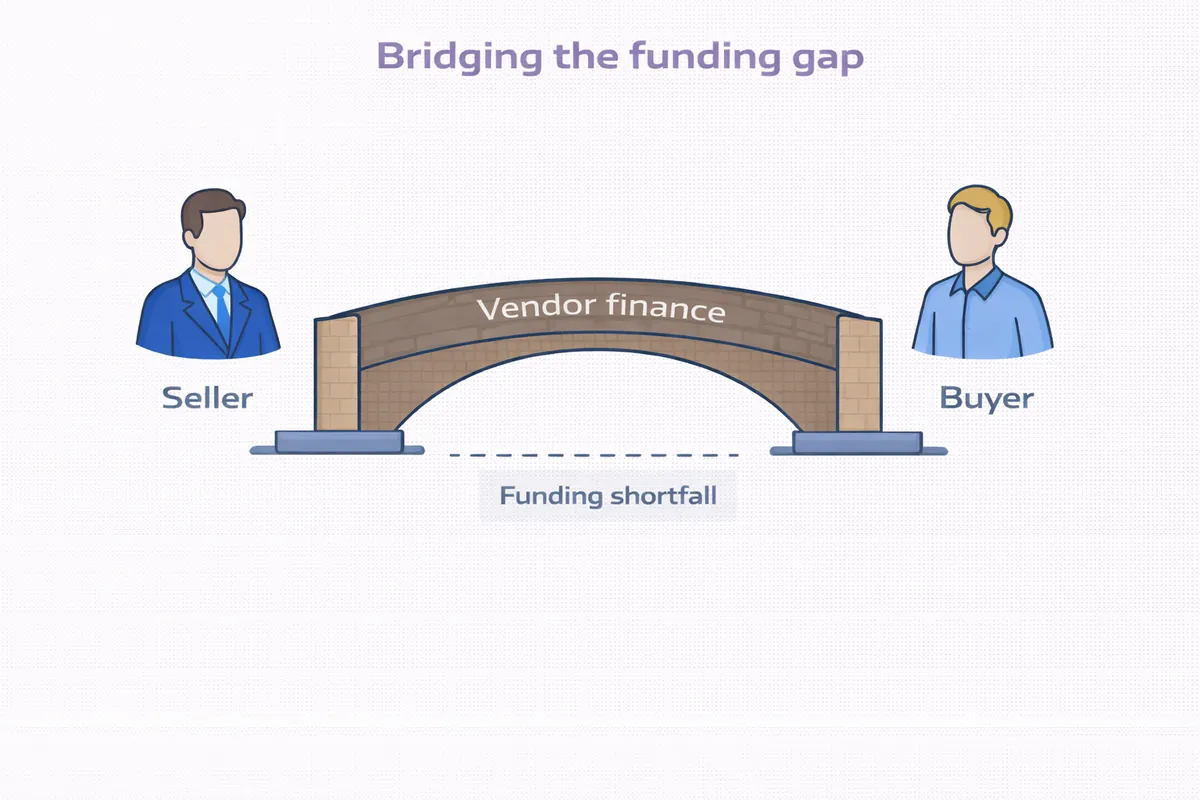
Diagram showing how vendor finance bridges the funding gap between a seller and a buyer when selling a business - future business brokers pty ltd melbourne australia

Why price isn’t the whole story

Two deals can look the same on paper and feel very different in real life.

It’s worth asking:

  • How much do I get upfront?
  • How much is tied to conditions?
  • How long do I need to stay involved?
  • What happens if things don’t go to plan?


A higher price doesn’t always mean a better outcome.

A simple way to think about it

Most deals are a balance between price, risk, and how involved you stay after the sale.
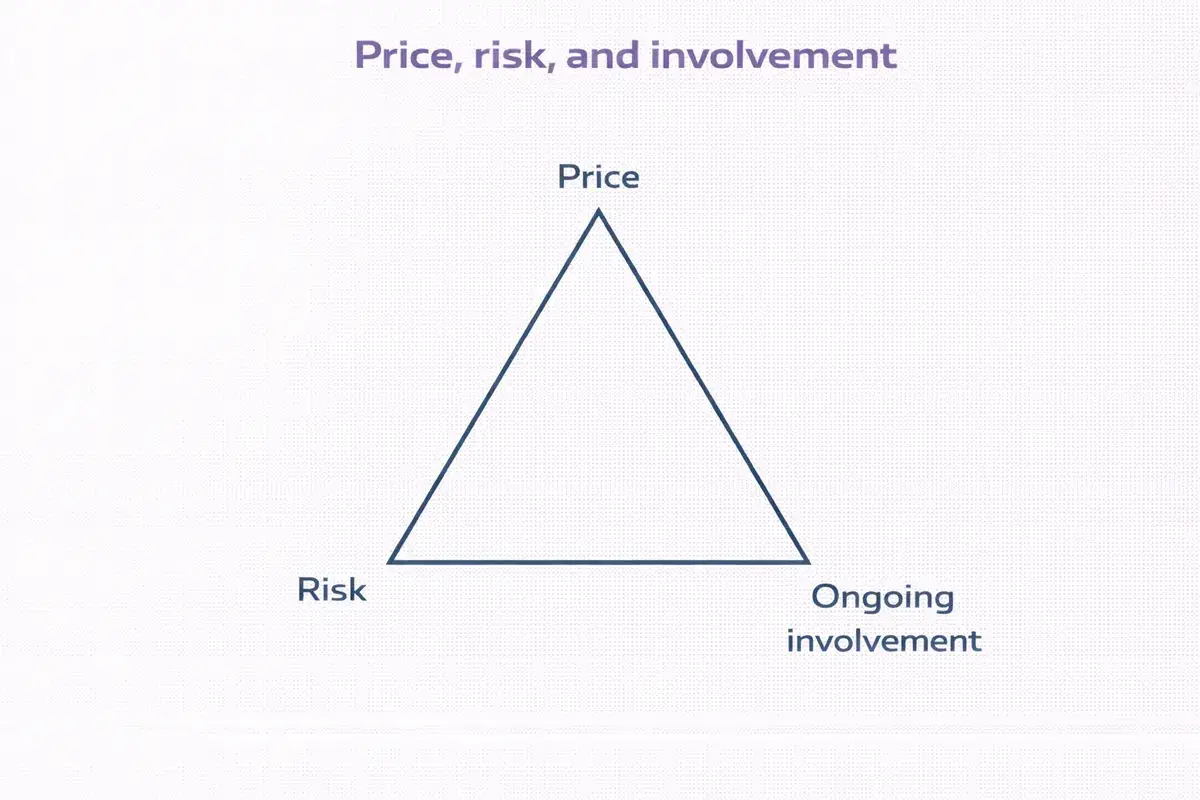
Diagram showing the relationship between price risk and ongoing involvement when selling a business future business brokers Melbourne Victoria

Selling doesn’t always mean walking away

Some owners choose to:

  • Sell part of the business
  • Step back gradually
  • Share future upside
  • Stay involved for a period of time


This approach can suit owners who want flexibility or aren’t ready for a full exit yet.

The right buyer matters more than speed

A fast deal isn’t always a good deal.

Problems tend to show up when:

  • Expectations aren’t clear
  • Roles aren’t agreed upfront
  • The structure doesn’t suit both sides


The way a deal is set up should make life easier, not harder.
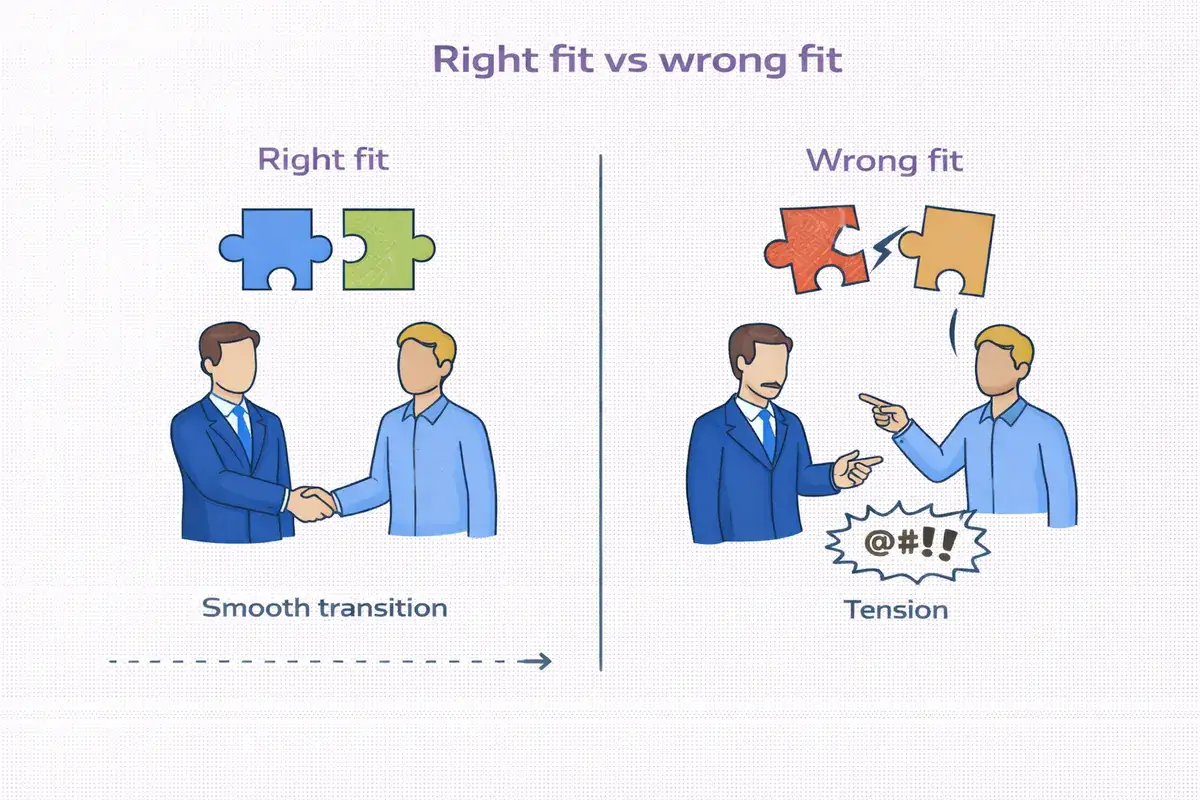
Visual comparing right fit versus wrong fit in a business sale showing aligned expectations and smooth transition versus misalignment and tension Future Business Brokers Pty Ltd

How a business is sold matters just as much as who buys it. The structure you choose shapes the risk you carry, and what comes next for you.

6. Searching and selecting the right type of buyer

Finding a buyer isn’t usually the hard part.


Finding the right buyer is.


Not everyone who shows interest should be taken seriously.


And not every buyer who sounds good early will be right in the end.


This stage is about choosing carefully, not moving fast.


If you’re unsure what types of buyers are even realistic for your business, it helps to first understand who could actually buy it and why.

Interest is not the same as intent

A buyer asking questions doesn’t mean they’re ready to buy.

Talking about price doesn’t mean they can complete the deal.

Before going too far, it’s worth asking:
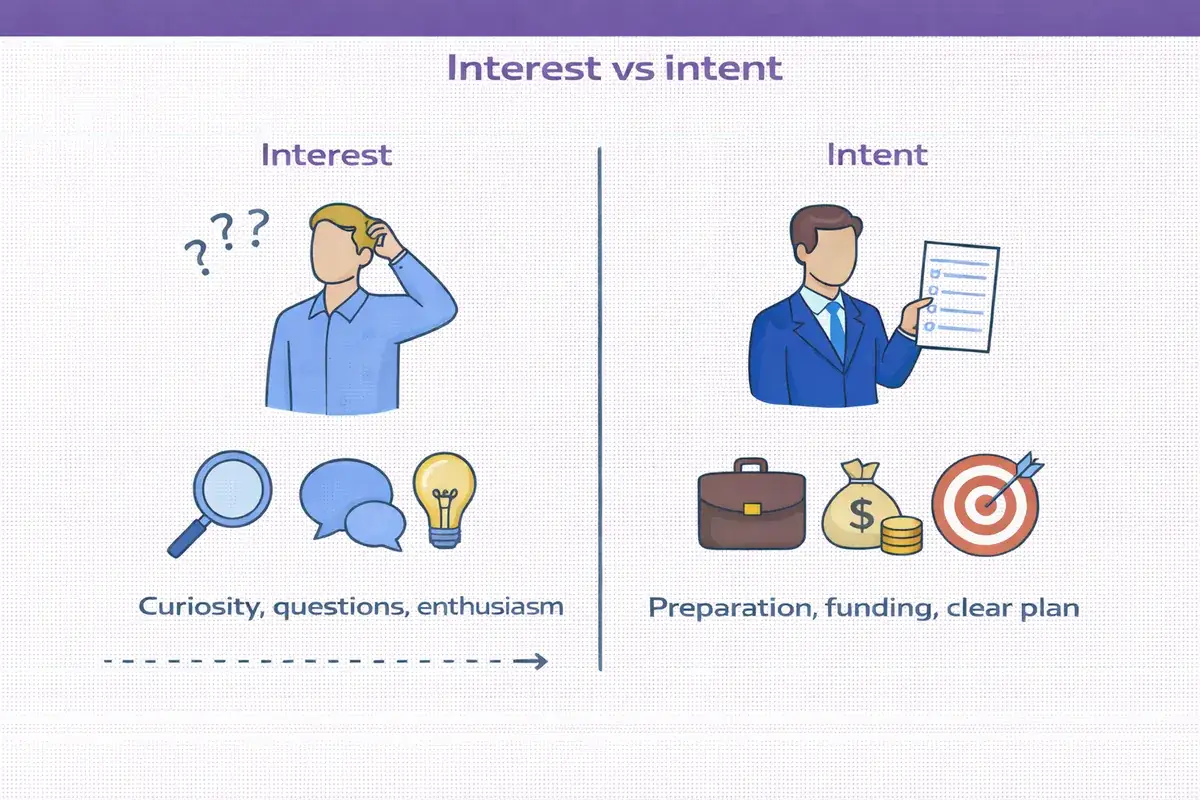
  • Why are they interested in this business?
  • What are they actually trying to achieve?
  • Are they prepared for what owning it involves?

Why early filtering matters

Most problems later on can be traced back to poor filtering early.

Common mistakes include:

  • Not checking how prepared a buyer really is
  • Engaging competitors or tyre kickers too openly
  • Spending too much time with people who can’t proceed
  • Assuming issues can be fixed later


Time spent with the wrong buyer is time taken away from running the business.

Seeing things from the buyer’s side

Buyers aren’t trying to be difficult. They’re trying to reduce risk.


They’re usually thinking about:

  • What could go wrong
  • What depends too much on the owner
  • What needs to be proven, not explained


When sellers understand this, conversations become calmer and clearer.

A helpful way to look at it

When a buyer pushes on a detail, they’re usually testing risk, not doubting you.
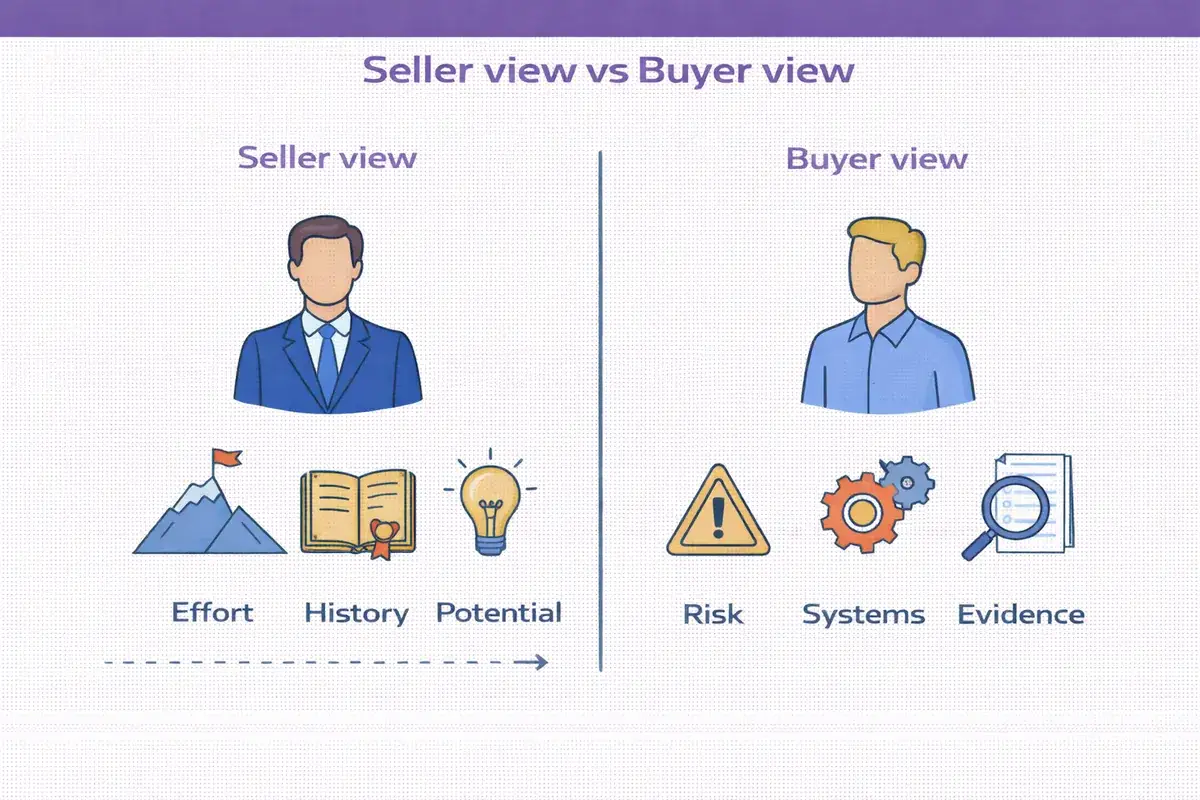
Diagram comparing seller view versus buyer view in a business sale showing effort history and potential versus risk systems and evidence FBB

Fit matters more than excitement

A buyer can sound enthusiastic and still be the wrong fit.

Problems often show up when:

  • The buyer doesn’t suit the business structure
  • Expectations aren’t aligned
  • The buyer underestimates what’s involved
  • The deal relies too heavily on future promises

A good fit usually feels steady, not rushed.

Protecting confidentiality as you engage buyers

At this stage:

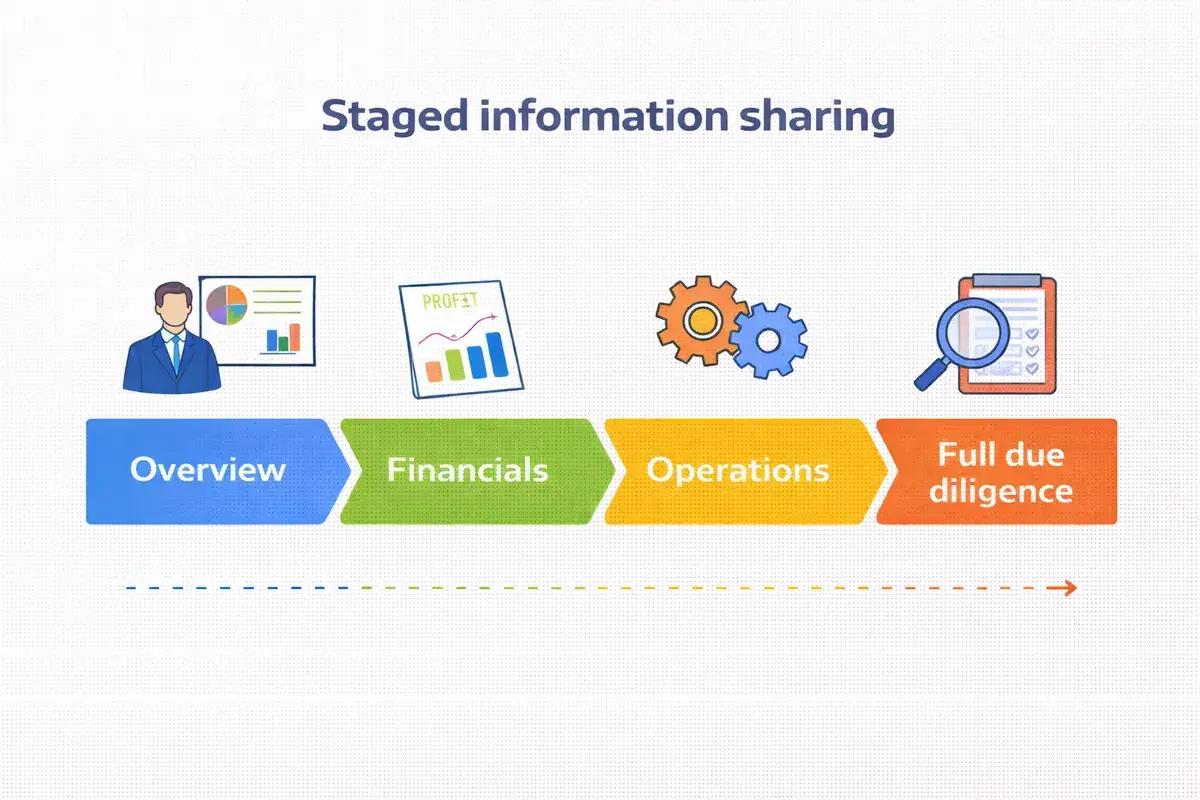
  • Information should be released gradually
  • Trust is built over time
    The business still needs to operate as normal
  • Choosing the right buyer early reduces risk later.
Melbourne Business Brokers Diagram showing staged information sharing in a business sale from overview to financials operations and full due diligence

The goal isn’t to find any buyer. It’s to find the right buyer for the business, and the outcome you want. Get this right, and the next stages are far simpler.

7. Financial and operational deep dive by the buyer

This is the stage most deals are won or lost.

Up to this point, things are mostly conversations.

Now the buyer starts checking whether what they’ve been told matches reality.

This process is usually called due diligence, but at its core it’s just verification.

What buyers are really doing at this stage

Buyers are not trying to catch you out.
They’re trying to get comfortable.

They want to confirm:

  • The numbers make sense
  • The business runs the way it’s been described
  • The risks are understood
  • There are no major surprises


The more confidence they gain here, the smoother everything else becomes.
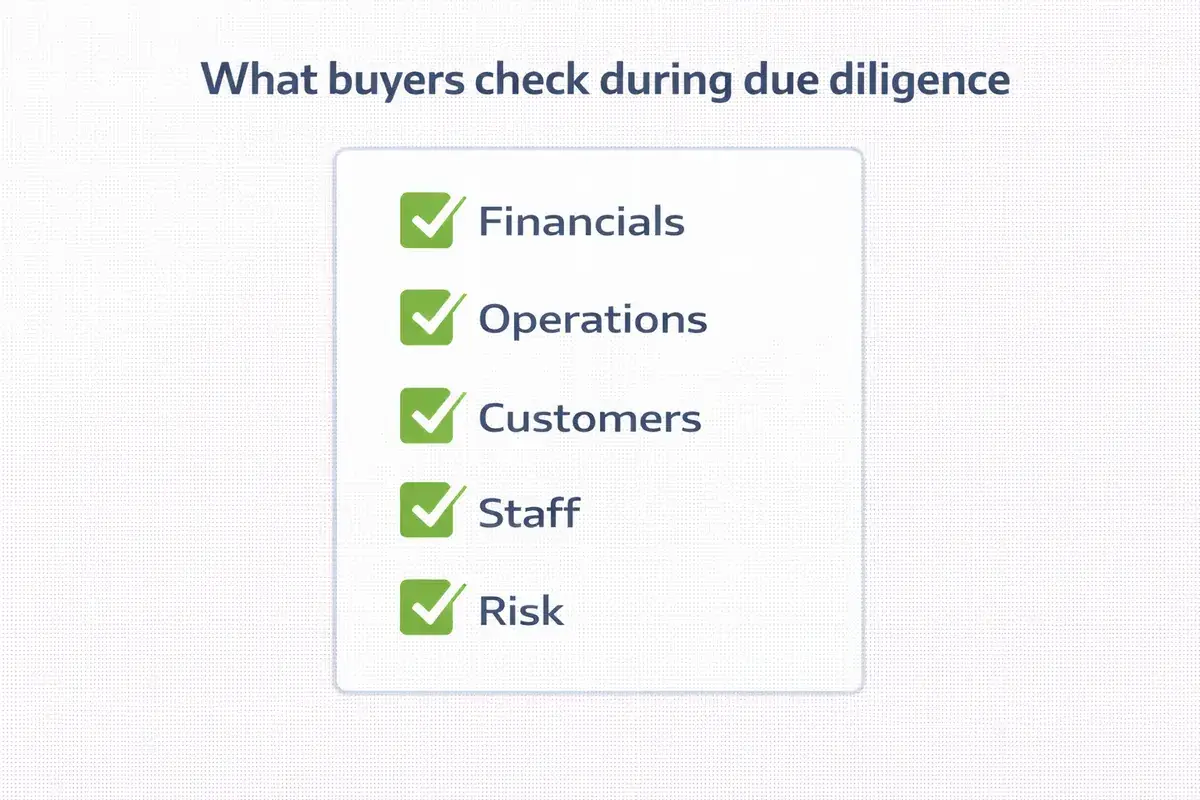
Checklist showing what buyers check during due diligence including financials operations customers staff and risk future business brokers pty ltd Melbourne VIC

Where deals often start to wobble

Most problems at this stage are avoidable.

Common issues include:

  • Small inaccuracies early that grow into trust issues
 
  • Financials not matching the original information
 
  • Too many add-backs or adjustments that don’t hold up
 
  • Incomplete or poorly organised data
 
  • Emotions starting to override facts
 

None of these help a buyer feel confident.

Why honesty early matters

Trying to smooth things over early almost always backfires later.

Buyers expect:

  • Some imperfections
  • Reasonable explanations
  • Clear documentation
 

What they struggle with is:

  • Surprises
  • Changing stories
  • Information that doesn’t line up

A simple rule of thumb

Small issues disclosed early are usually manageable. Small issues discovered late rarely are.
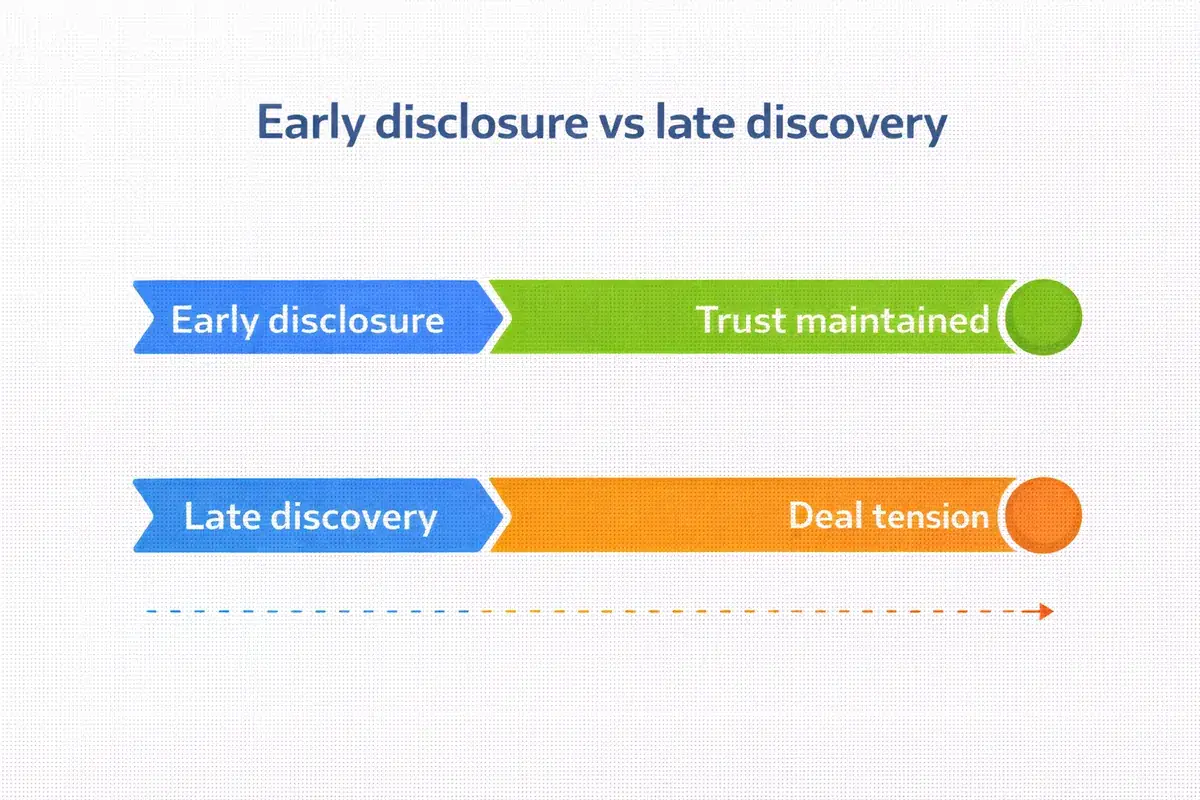
Diagram comparing early disclosure versus late discovery in a business sale showing trust maintained versus deal tension Future Business Brokers Pty Ltd

Keeping emotions in check

This stage can feel personal.

Owners may feel:

  • Questioned
  • Defensive
  • Frustrated


Buyers may feel:

  • Uncertain
  • Cautious
  • Under pressure
 

Keeping conversations factual and calm helps prevent unnecessary friction.

Good advice matters here

Poor or uncoordinated advice can complicate this stage quickly.


Problems often arise when:
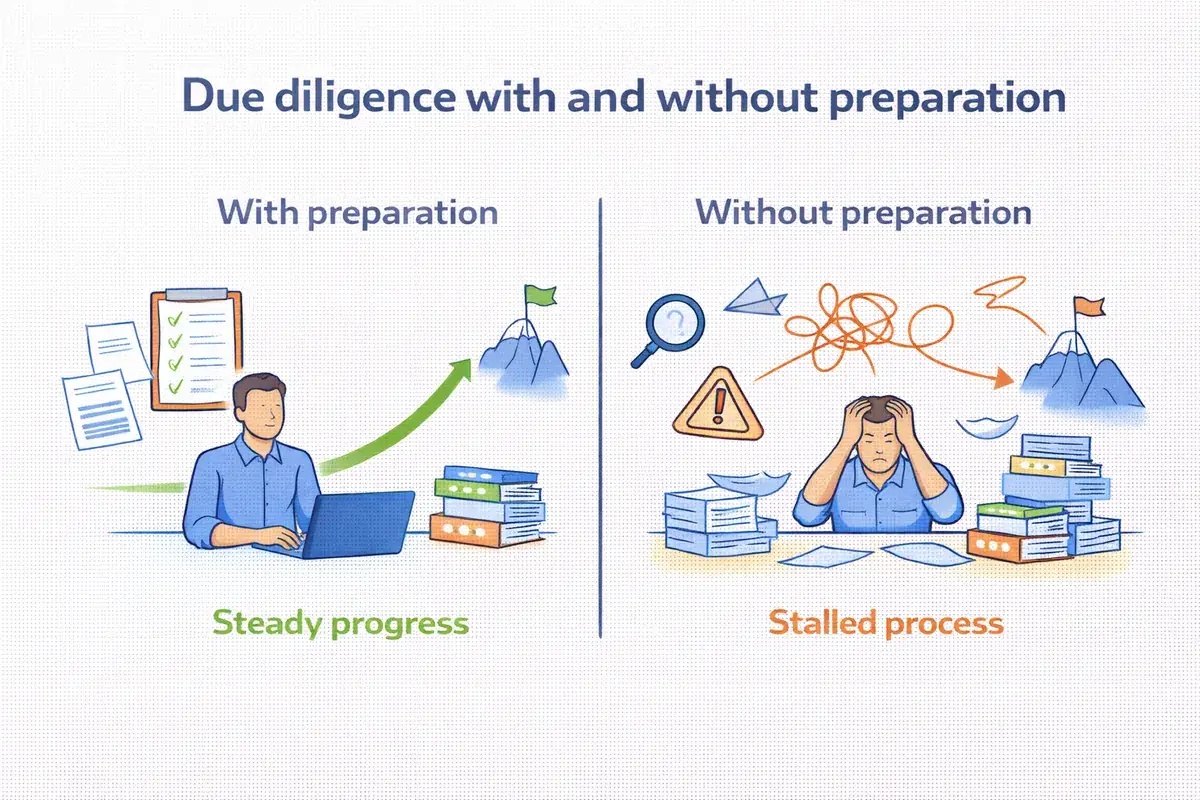
 

  • Advisors give conflicting guidance
 
  • Explanations aren’t consistent
 
  • Documents aren’t prepared properly
 
  • Clear, experienced advice helps keep momentum.

Due diligence isn’t about perfection. It’s about alignment between what’s been said and what can be shown. The closer those two are, the easier this stage becomes.

8. Your terms, the buyer’s terms and getting the deal done

This is the point where things stop being theoretical.

You’re no longer just talking about the business.

You’re talking about the deal.

If this stage feels a little uncomfortable, that’s normal.

It usually means you’re close.

Every deal involves compromise

There is no deal where only one side sets the rules.

  • You have things that matter to you.
  • The buyer has things that matter to them.


That doesn’t mean the deal is weak.

It means both sides are trying to make it work.

And that’s usually a good sign.

Price is only part of the story

Two offers can look the same at first glance and feel very different once you slow down.

This is where many owners pause and think,

“Hang on… what am I actually agreeing to here?”

That’s a healthy reaction.

It’s worth asking:

  • How much do I get paid upfront?
  • How much is paid later?
  • What conditions need to be met?
  • What happens if things don’t go as planned?
 

A higher number on paper doesn’t always mean a better outcome in real life.
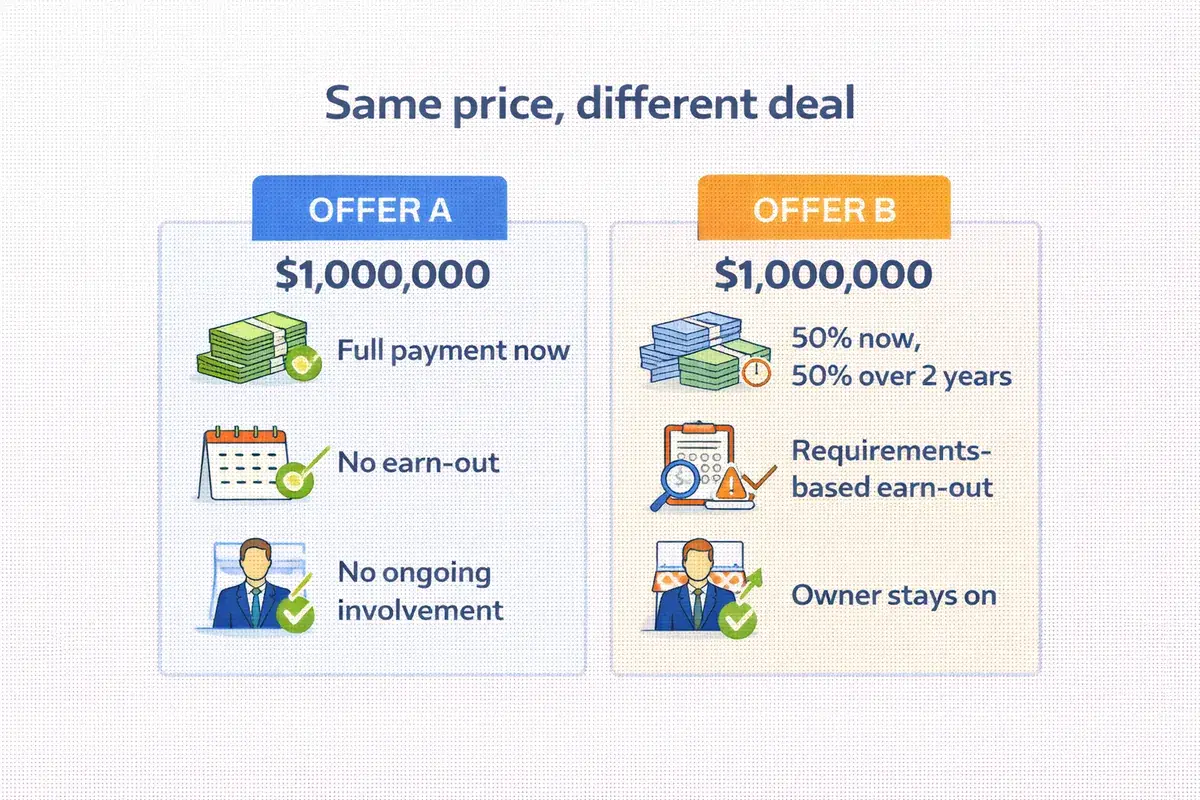
Visual comparing two business sale offers at the same price showing differences in payment timing conditions and owner involvement Future Business Brokers Pty Ltd

Most deals involve shared risk

In many sales, not everything is guaranteed from day one.

That might include:

  • Earn-outs
  • Deferred payments
  • Staying on for a period of time
  • Performance targets


This doesn’t mean the buyer doesn’t trust the business.

It usually means they’re trying to manage uncertainty.

A simple rule to remember

If a term doesn’t feel right now, it usually won’t feel better later.

Know your limits before agreeing

Before you commit, it helps to pause and get clear.

Ask yourself:

  • What am I okay to negotiate on?
 
  • What would I regret agreeing to later?
 
  • How long am I prepared to stay involved?
 
  • What do I want life to look like after this is done?
 

There’s no perfect answer.
There is a right answer for you.


Keeping things professional helps everyone

This stage can feel stressful.


Details pile up.


Deadlines appear.


Emotions can sneak in.


Staying calm and respectful often leads to:


  • Better conversations
  • Fewer misunderstandings
  • Stronger outcomes on both sides

“Turnkey” rarely means zero involvement

Even good buyers usually need some help early on.

That might mean:

  • Making introductions
  • Explaining systems
  • Being available during the transition
 

This doesn’t mean you’re stuck.

It usually means you’re helping set the business up to succeed.


f you want to go deeper on terms, risk balance and keeping momentum, read our guide on how to negotiate a business sale with a buyer
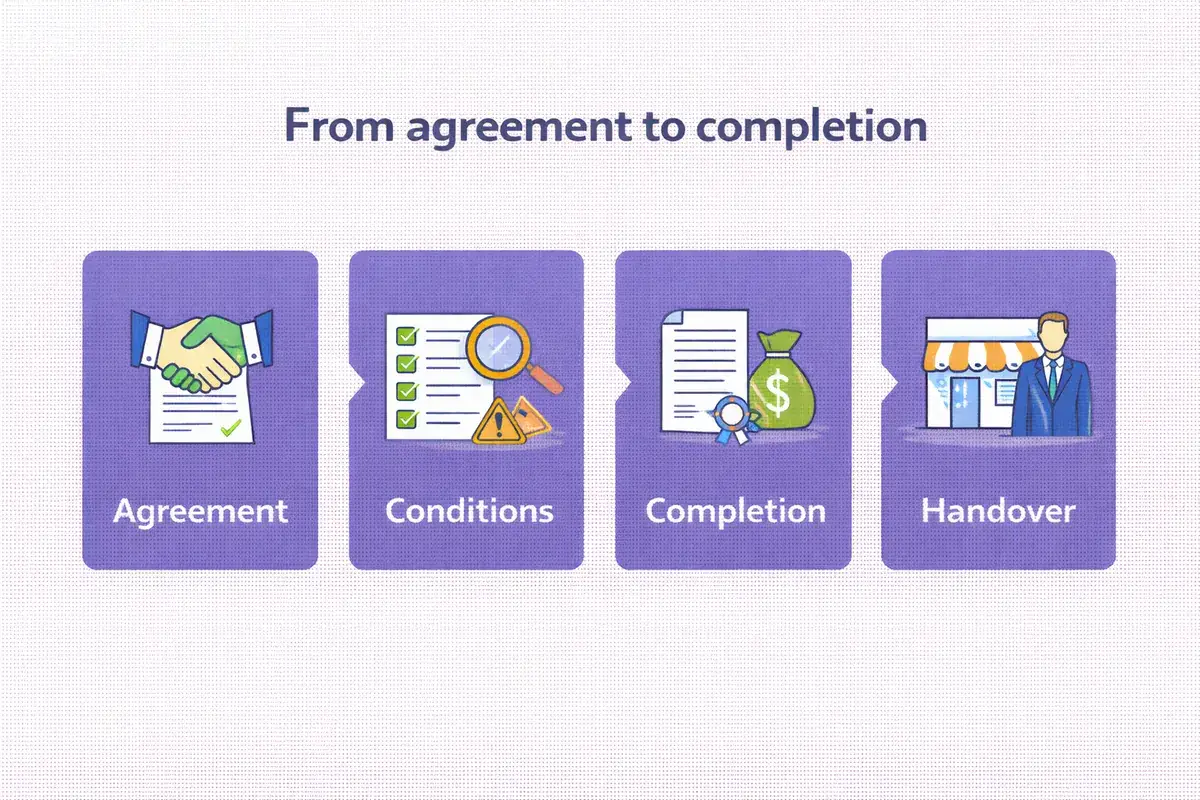
This stage isn’t about rushing to the finish line. It’s about agreeing to terms you still feel comfortable with once the dust settles. Get this part right, and the final steps feel far less stressful.

9. Other parts of the deal including lawyers, accountants, brokers and employees

By this stage, it’s clear the deal involves more than just you and the buyer.

There are other people involved.

And how well they work together has a big impact on how smooth this feels.

This part is about having the right support and keeping everyone aligned.

Why the right advisors matter

Lawyers, accountants, and brokers all play a role in a business sale.

When they’re right for the job, they help:

  • Structure the deal properly
 
  • Manage tax and compliance
 
  • Keep things moving
 
  • Reduce unnecessary stress
 

When they’re not, things slow down or become harder than they need to be.

Not every advisor suits a business sale

This is a common issue.

A good professional in one area isn’t always right for selling a business.

Problems usually arise when:

  • Advisors lack experience with business sales
 
  • Advice is too cautious or too aggressive
 
  • Advisors aren’t aligned
 
  • Communication breaks down


It’s reasonable to pause and make sure everyone understands the goal.

The role of business brokers

Business brokers sit in the middle of the deal.

They often help with:

  • Finding and filtering buyers


  • Protecting confidentiality


  • Keeping the process on track


  • Coordinating between all parties


But not all brokers work the same way.


There are brokers.


And then there are good brokers.

What a good broker actually does

A good broker is more than a go-between.

They tend to be:

  • Creative in how the business is positioned
  • Diligent in working through the detail

Their job is to:

  • Pull the business apart properly
  • Understand what really drives value
  • Present information clearly and honestly
  • Anticipate buyer questions before they become problems

A good broker reduces confusion.
A poor one often adds to it.
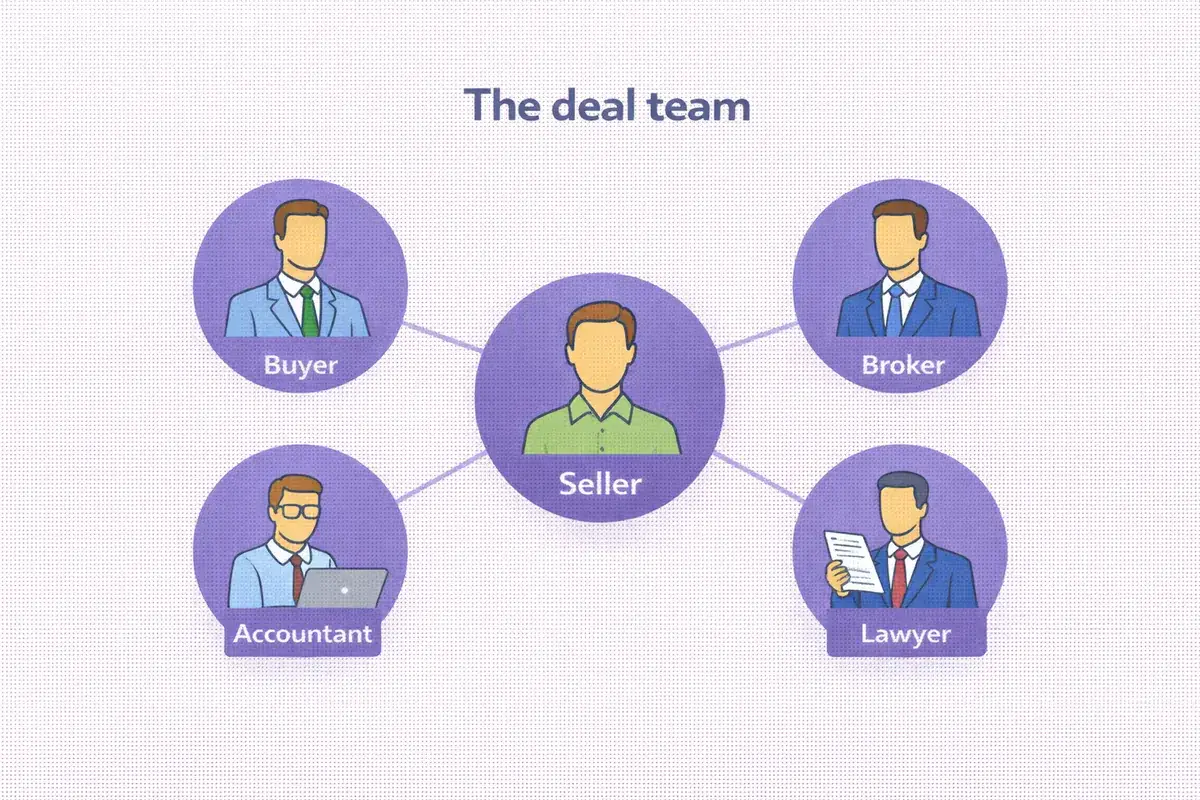
Diagram showing the deal team involved in selling a business including the seller buyer broker lawyer and accountant Future Business Brokers documents

Thinking about employees at the right time

Employees are one of the most sensitive parts of a sale.

Telling them too early can create uncertainty.

Telling them too late can damage trust.

Owners often ask:

  • Who needs to know?


  • When is the right time to tell them?


  • How much detail should be shared?


There’s no perfect moment.


But there is a better order.

Clients and suppliers matter too

In many businesses, relationships are a big part of the value. Buyers will care about client stability, supplier arrangements & how relationships transfer. Careful timing and clear communication help protect these relationships.

Common things that slow deals down

Delays often come from:

  • Unclear ownership or agreements


  • Tax or compliance issues appearing late


  • Missing or poor documentation


  • Advisors not working together


  • Tension between people


These don’t mean the deal is failing.


They usually just mean more care is needed.
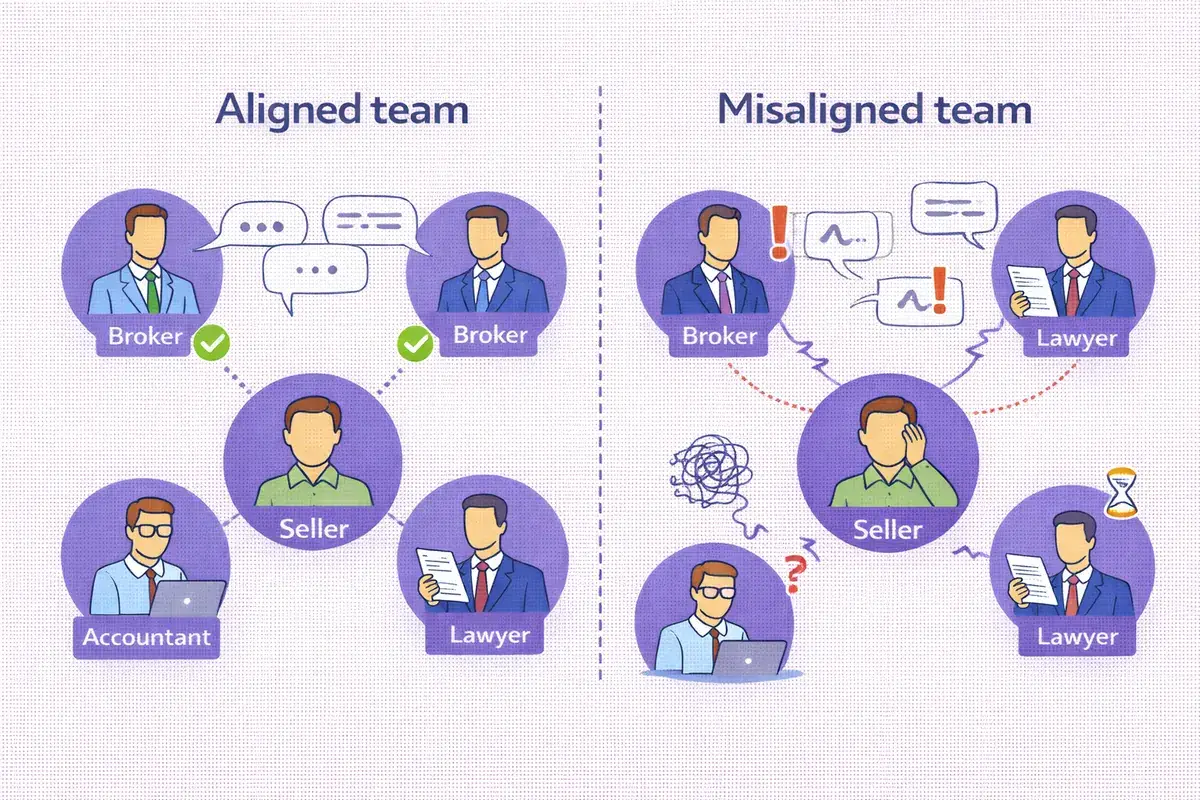
Visual comparing an aligned advisory team versus a misaligned team in a business sale showing clear communication versus confusion delays and frustration Future Business Brokers Pty Ltd materials

Selling a business isn’t just about choosing a buyer. It’s also about the people helping you through the process. The right team makes this stage easier and sets up a smoother handover.

10. Handing over the reins and getting paid

This is the part most owners look forward to.

It’s also the part where expectations matter most.

The deal may be agreed, but the journey isn’t quite finished yet.

This stage is about transition, payment, and setting yourself up for what comes next.

Payment is often structured, not instant

Very few deals involve everything being paid in one clean hit on day one.

Payment may include:

  • An upfront amount
  • Deferred payments
  • Earn-outs linked to performance
  • Adjustments for working capital or invoices
 

Understanding the timing and conditions helps avoid surprises.
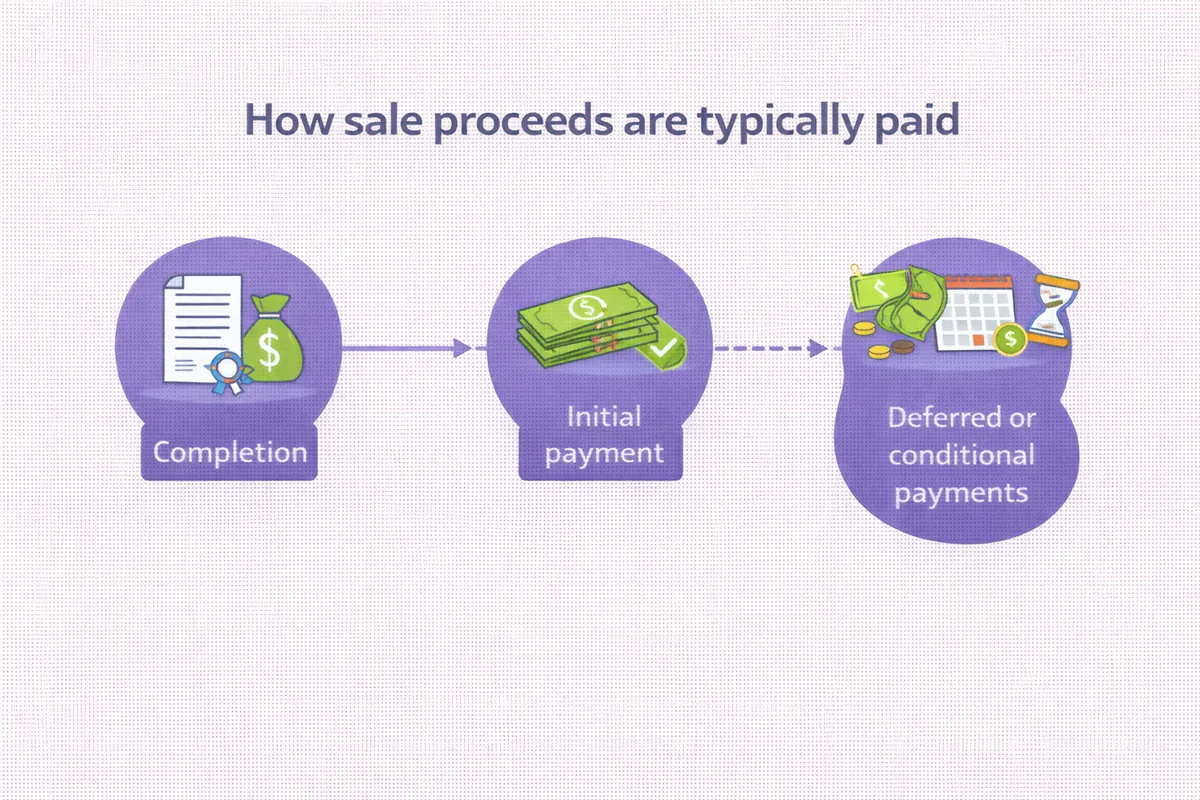
Infographic showing how sale proceeds are typically paid in a business sale including completion initial payment and deferred or conditional payments Future Business Brokers Pty Ltd

Handover is part of the deal

Even in the best transactions, buyers usually need support early on.

That might involve:

  • Introducing key clients or suppliers
  • Explaining systems and processes
  • Helping staff adjust to change
  • Being available for questions


This doesn’t mean you’re trapped.

It usually means you’re helping protect the value you’ve just sold.

Working capital and loose ends

Before final settlement, a few practical things are usually worked through.

These can include:

  • Outstanding invoices
  • Stock or work in progress
  • Supplier and employee obligations
  • Final adjustments agreed in the contract


None of this is unusual.

It’s part of closing things properly.

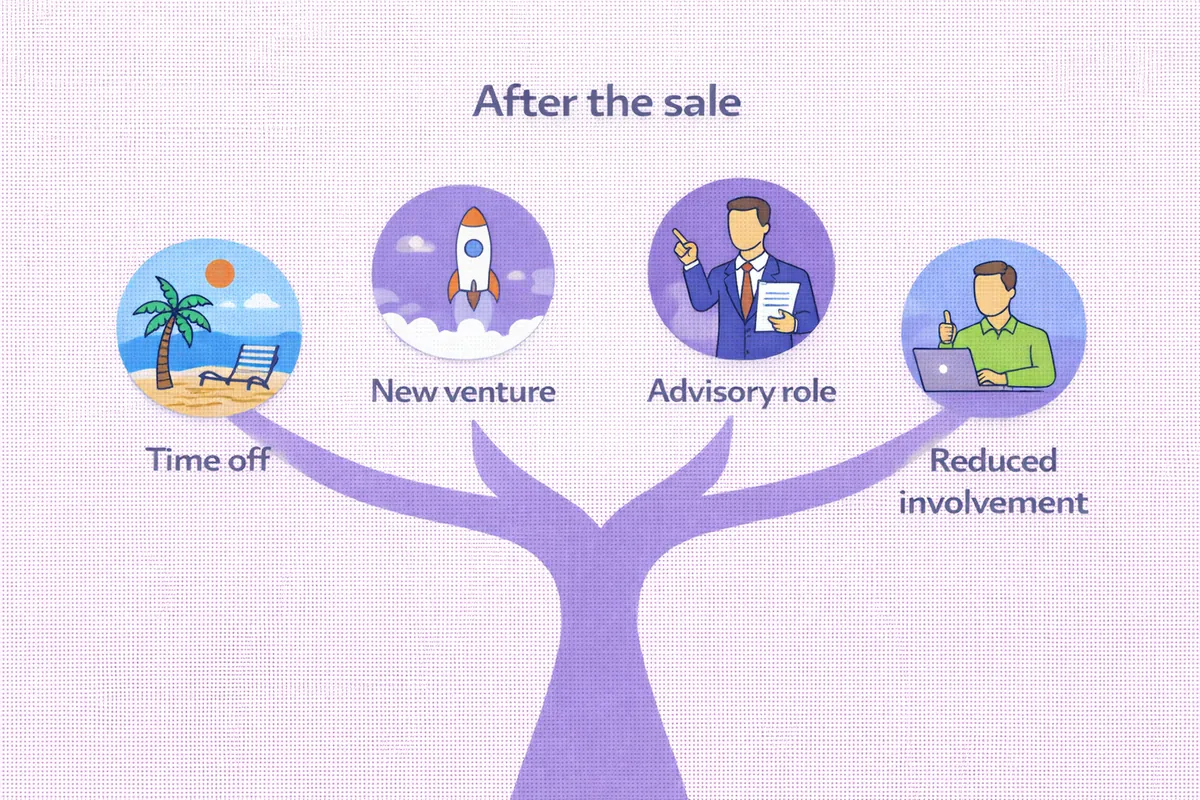
Preparing yourself for what comes next

This part is often overlooked.

After years of running a business, stepping away can feel strange.

Some owners:

  • Take time off
  • Stay on in a reduced role
  • Move into a new project
  • Simply enjoy the space
 

There’s no right answer.

It helps to think about this before the deal completes.

A quiet truth

Selling a business changes more than your bank balance.


It changes your routine, identity, and pace of life.
Selling a business is rarely a single moment. It’s a process that rewards preparation, patience, and clarity. Handled well, it doesn’t just end one chapter. It sets up the next one properly.


Let's Book a Call Together?

If you would like to discuss your situation privately you are welcome to book a confidential call. This is not a valuation and not a sales pitch. It is a chance to understand where you are, what you are aiming for and whether working together makes sense.
Share the Post: