


This question rarely appears in isolation.
Sometimes it comes after a quiet approach from a competitor.
Sometimes after a broker mentions “active buyers”.
Sometimes after a friend says they sold quickly and easily.
Often the owner already has an idea in mind.
They just have not tested it properly.
Many assume there is a broad, active market waiting.
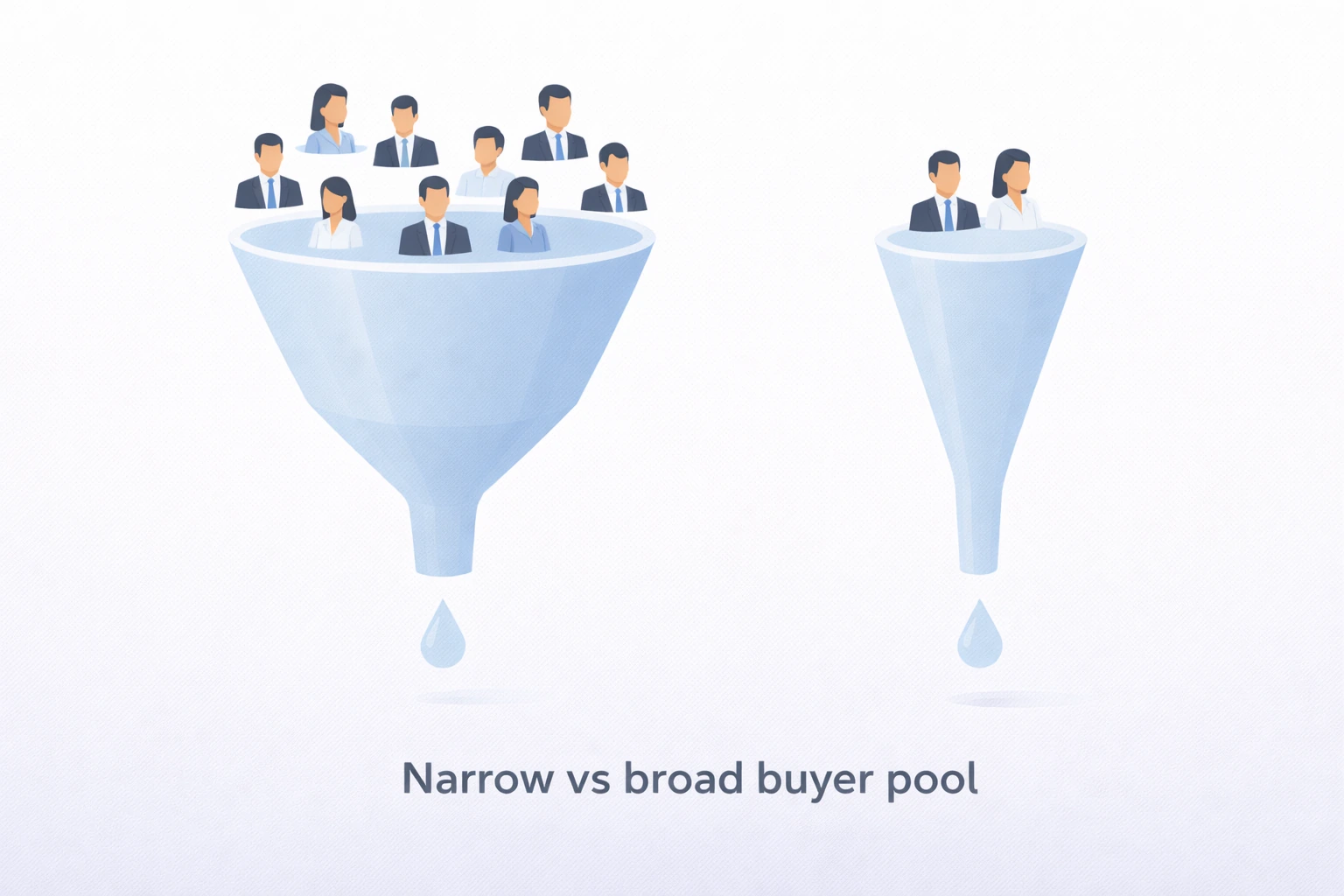
In reality, the buyer pool is usually narrower and more specific.
Understanding who could realistically buy your business changes how you think about the entire sale process.
Most owners have an instinct about who might buy. They just haven’t stepped back to examine it
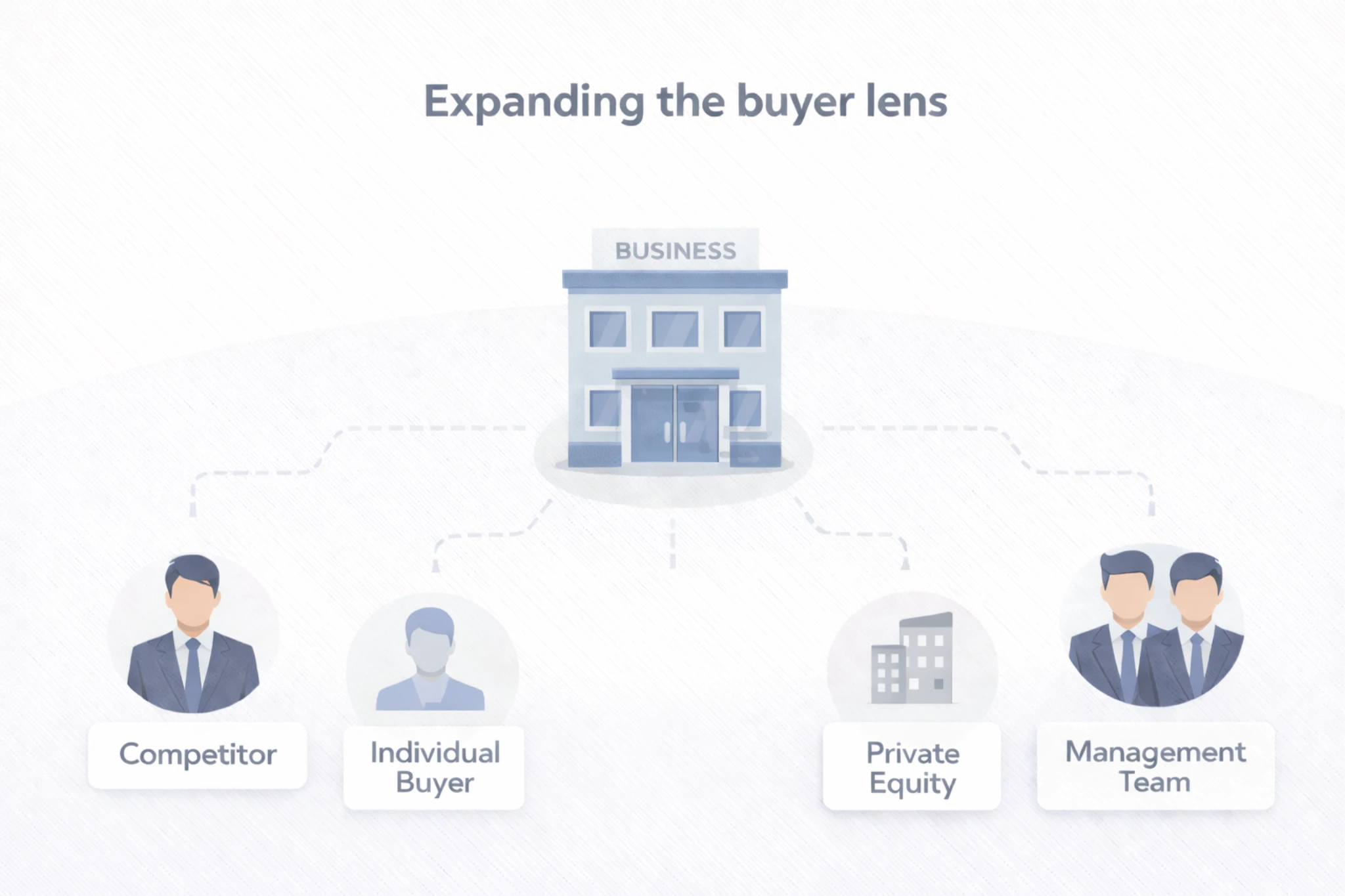
For many small and mid-sized businesses, competitors are the most likely buyers.
They already understand the industry.
They know the risks.
They can see operational overlap.
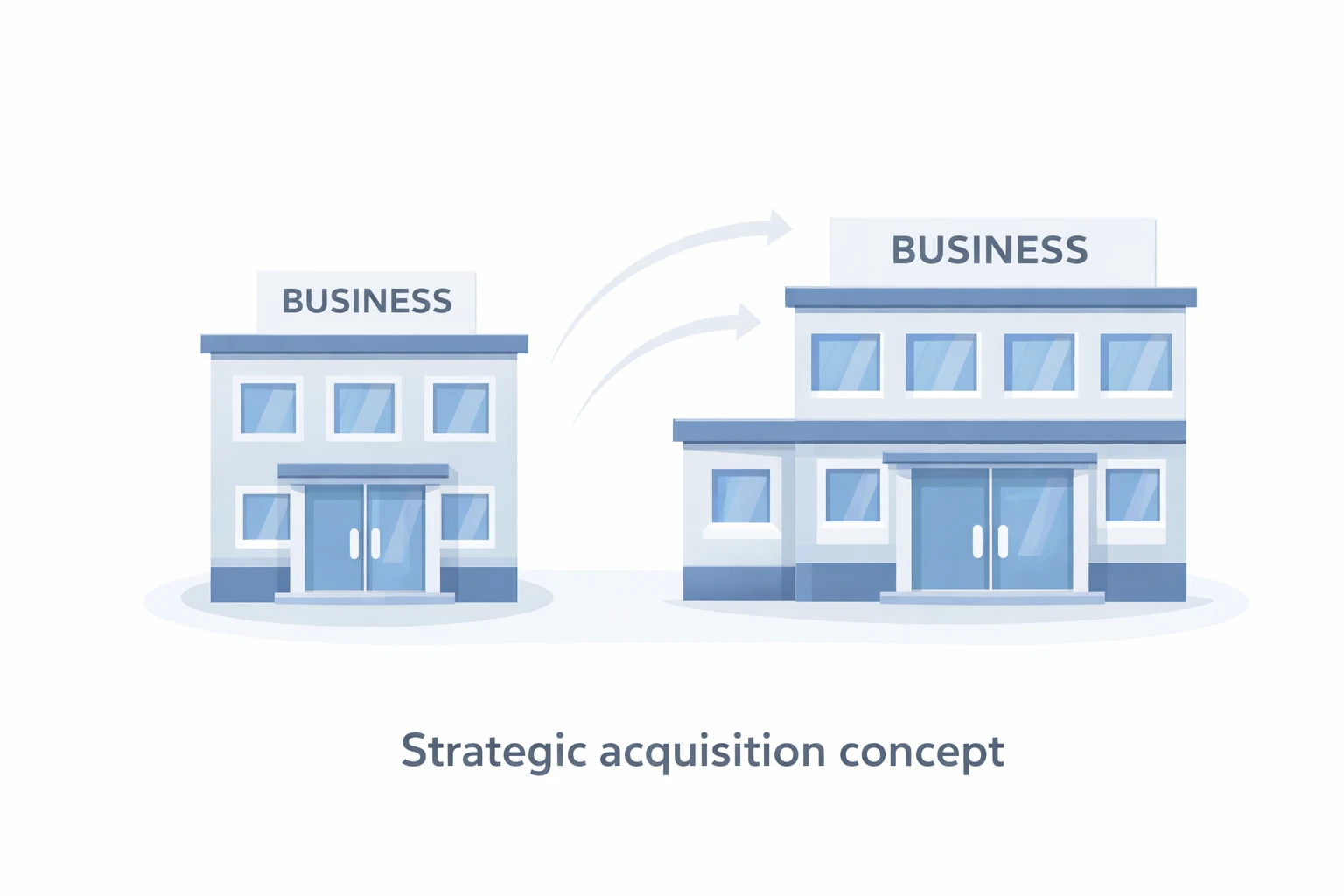
Strategic buyers may not be direct competitors but operate in adjacent spaces.
They may want access to customers, geographic expansion, or capability.
In these cases, the buyer is not starting from zero.
They are expanding something that already exists.
This does not mean they will always pay more.
It means their reasoning is usually clearer.
When someone in your industry shows interest, it’s usually about expansion
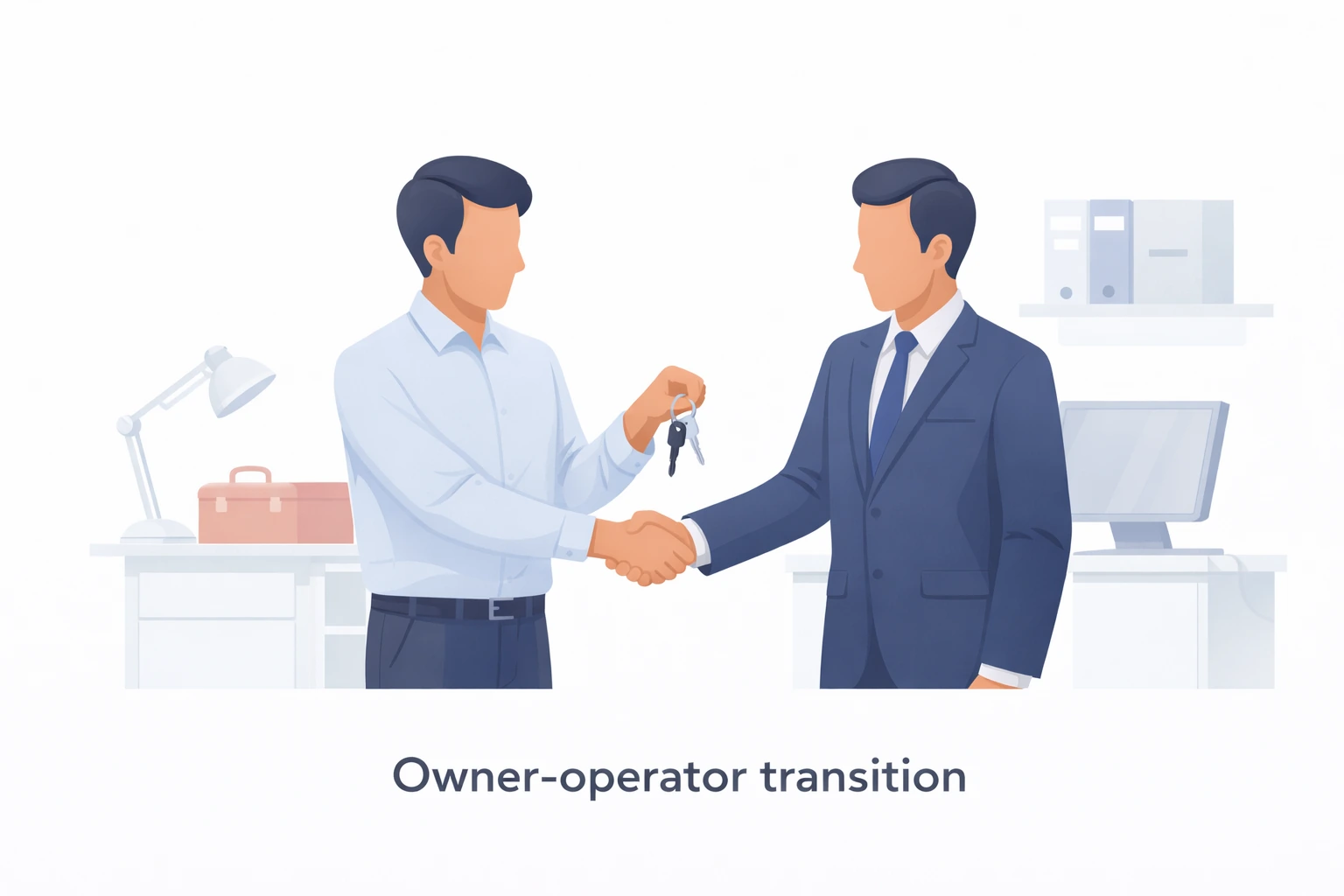
Some businesses suit individual buyers.
These are often experienced operators looking to run a business themselves.
Sometimes called “mom and pop” buyers.
Sometimes industry professionals stepping into ownership.
This category is common in certain sectors and less realistic in others.
The key difference is capability.
An individual buyer must be able to operate what they purchase.
For larger or more complex businesses, this pool becomes smaller.
Not every business can be stepped into by one person, no matter how enthusiastic they are.
Private equity and investor groups do buy businesses.
But usually with a very specific lens.
They look for:
• Predictable returns
• Strong systems
• Low reliance on one individual
• Something defensible or scalable
They are not buying a job.
They are buying a return profile.
For some businesses, this is a natural fit.
For many small businesses, it is not.
Investors don’t buy effort. They buy repeatable performance.

This path is often forgotten.
Sometimes the right buyer is already inside the business.
A senior manager.
A leadership team.
A long-term employee.
They understand operations.
They understand customers.
They understand culture.
The question is usually financial structure, not operational capability.
This route does not suit every situation.
But it deserves consideration.
Sometimes the most realistic buyer already knows the business better than anyone else

One of the most important shifts is this:
Not everyone will buy your business.
And that is normal.
Buyer pools are shaped by:
• Industry
• Size
• Structure
• Complexity
• Risk profile
In some niches, there may only be a small number of logical acquirers.
That does not reduce opportunity.
It clarifies it.
Understanding this early avoids chasing the wrong audience.
The size of the buyer pool often determines leverage more than ambition does
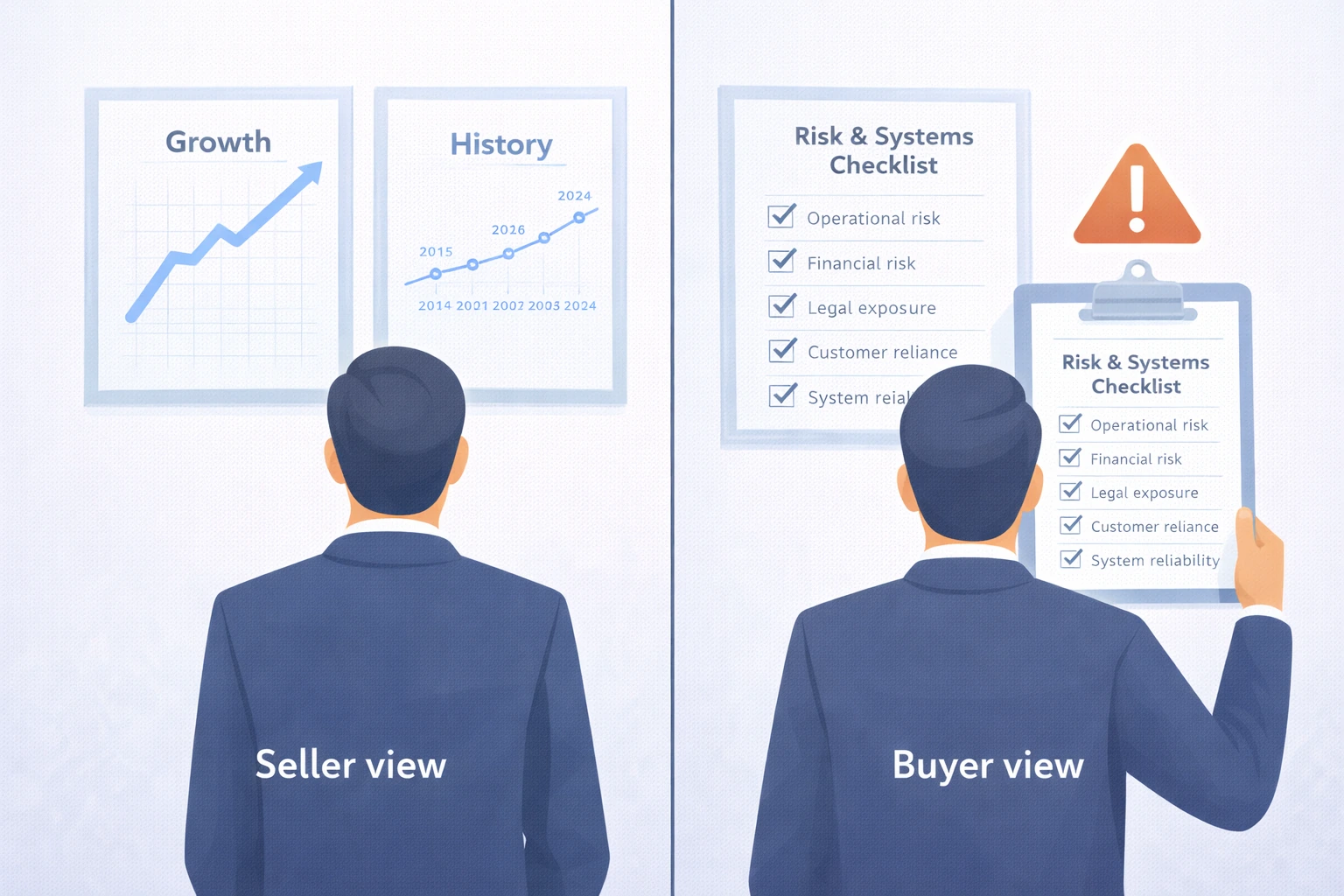
Many owners approach sale discussions from their own perspective.
The effort invested.
The years built.
The potential ahead.
Buyers look at something else.
Risk.
Transferability.
Fit.
Strategic logic.
An unsolicited offer can be flattering.
But it is also information.
It may signal strategic value.
It may signal opportunism.
It may signal limited competition.
Understanding who else could buy helps put any single offer in context.
This perspective shifts the conversation from hope to positioning.
Understanding how buyer positioning and structured outreach actually works can make that shift far clearer. If you want to see how deliberate buyer engagement and filtering is handled in practice, you can explore our business sales services page.
A business becomes clearer when you ask who would actually want to own it, and why.
Identifying possible buyer types is one thing.
Engaging the right ones is another.
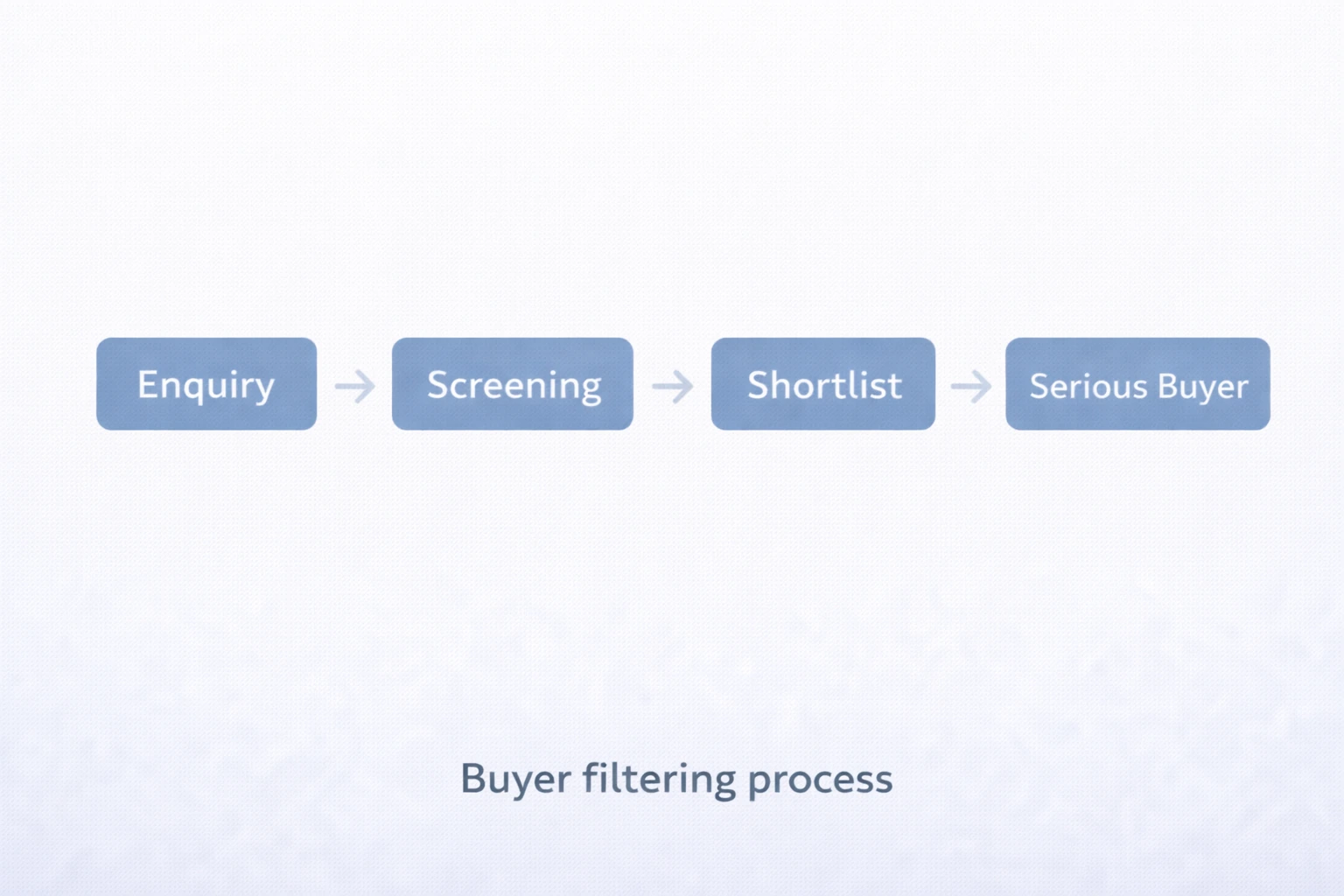
A common misconception is that buyers simply appear.
In reality, they are filtered.
Careful filtering protects confidentiality, time, and leverage.
This is where targeted outreach and positioning matter.
Different buyer types respond to different narratives.
Understanding this shapes how the business is presented and to whom.
If you want to understand how this fits into the broader process, our main guide on how to actually sell a business explains the end-to-end pathway .
A good sale process is less about finding any buyer, and more about finding the right one.
Knowing who could realistically buy your business changes how you prepare.
It shapes:
It also reduces naivety.
There is no universal buyer waiting.
There is a defined audience.
Sometimes small.
Sometimes competitive.
Always specific.
When you understand who could buy, the sale becomes more deliberate and less speculative.
Clarity here does not force a decision.
It simply means that when the time comes, you are engaging the right people for the right reasons.