


When you suddenly ask yourself; How do I protect confidentiality when selling a business?
For many owners, confidentiality is theoretical until the first real buyer conversation.
Then it becomes personal.
This is not just commercial concern.
For many owners, their business represents years of work.
Family income.
Staff livelihoods.
Reputation built slowly over time.
When a sale becomes possible, it can feel like everything is suddenly exposed.
Confidentiality matters because stability matters.
The good news is this:
Selling a business isn’t just a transaction. It carries people’s livelihoods with it
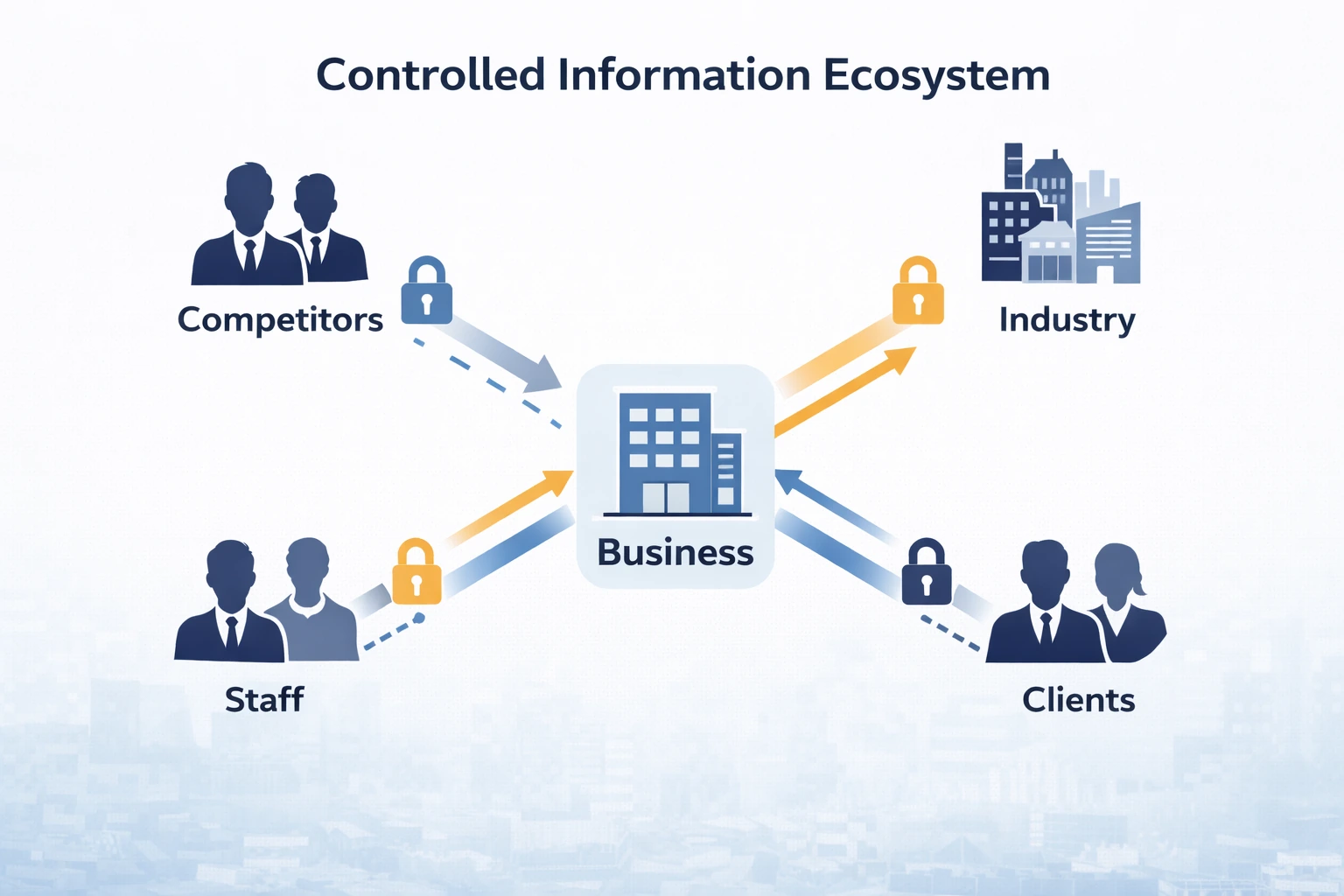
Many people assume confidentiality equals an NDA (Non-disclosure agreement)
Sign the document before selling your business to a qualified buyer.
Problem solved.
In reality, confidentiality is behavioural before it is legal.
It includes:
An NDA is part of the framework.
But discipline is what makes it work.
Confidentiality is not a one-time step.
It runs from the first enquiry through to post-completion, when buyers often prefer that price and deal terms remain private.
Paper creates protection. Behaviour creates trust
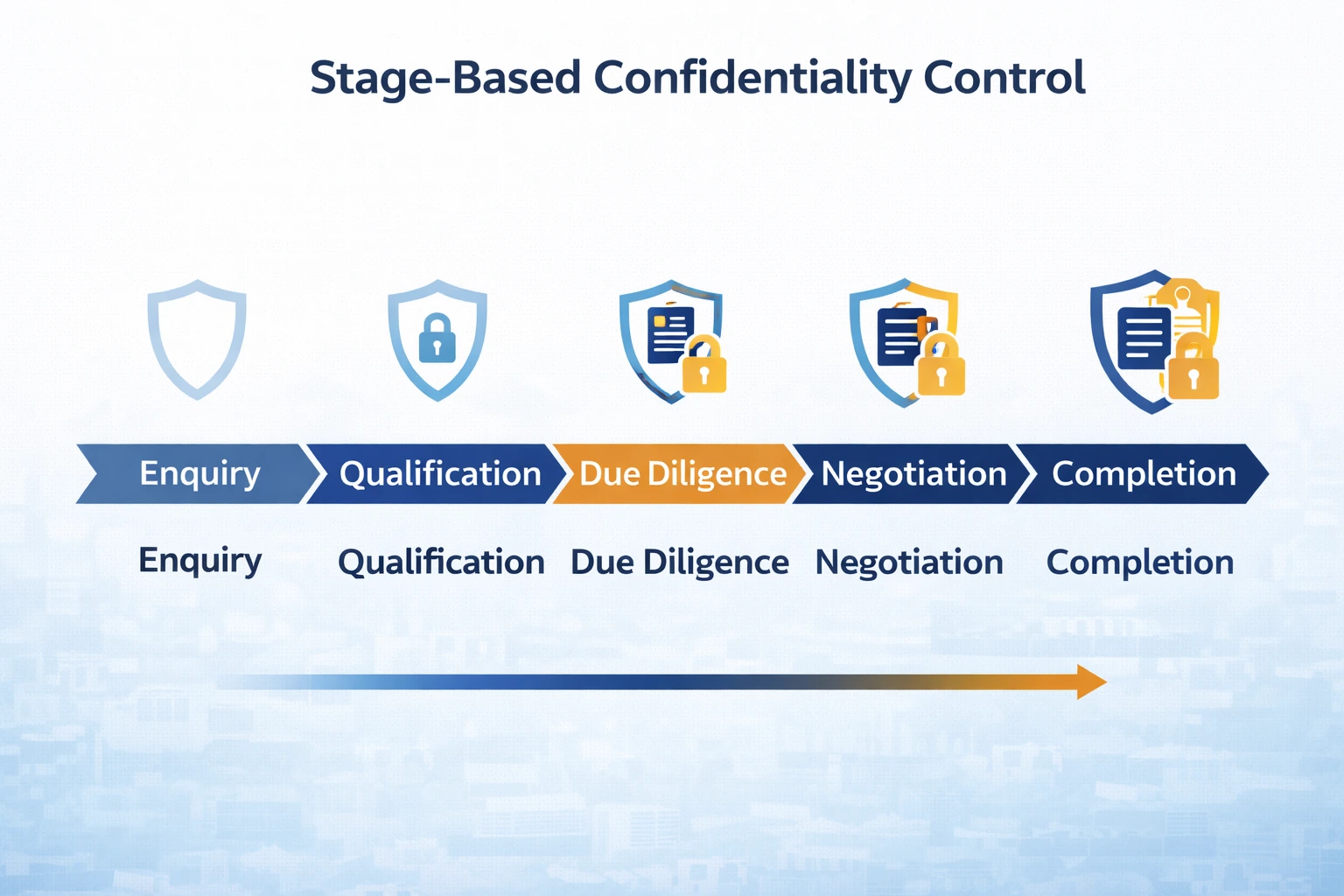
There is no single high-risk moment.
Each stage requires a slightly different approach.
Not paranoia.
Assessment.
Is this buyer serious?
Do they need this information now?
Who genuinely needs to be in this conversation?
Treating confidentiality as a stage-by-stage risk assessment keeps the process calm rather than reactive.
The risk moves as the deal moves
It is tempting to look for one weak point.
In reality, risk is shared.
Most confidentiality breaches do not happen through dramatic events.
They happen through normal human behaviour.
A conversation at the wrong time.
An assumption shared too casually.
An email forwarded without thinking.
Understanding this makes the process more grounded.
It is not about distrust.
It is about structure.
Confidentiality rarely fails through one big decision. It slips through small ones
This is often the hardest part.
Employees are not just staff.
They are people with mortgages, families, and routines built around the business.
Telling them too early can create fear.
Telling them too late can create resentment.
There is no fixed rule.
If senior employees must assist with due diligence or data gathering, they may need to be informed earlier.
But with boundaries.
Limited detail.
Clear expectations.
Aligned incentives where appropriate.
If involvement is not required, extreme caution often makes sense.
Handled carefully, this stage protects both livelihoods and momentum.
It is not about hiding. It is about protecting stability until there is something real to share
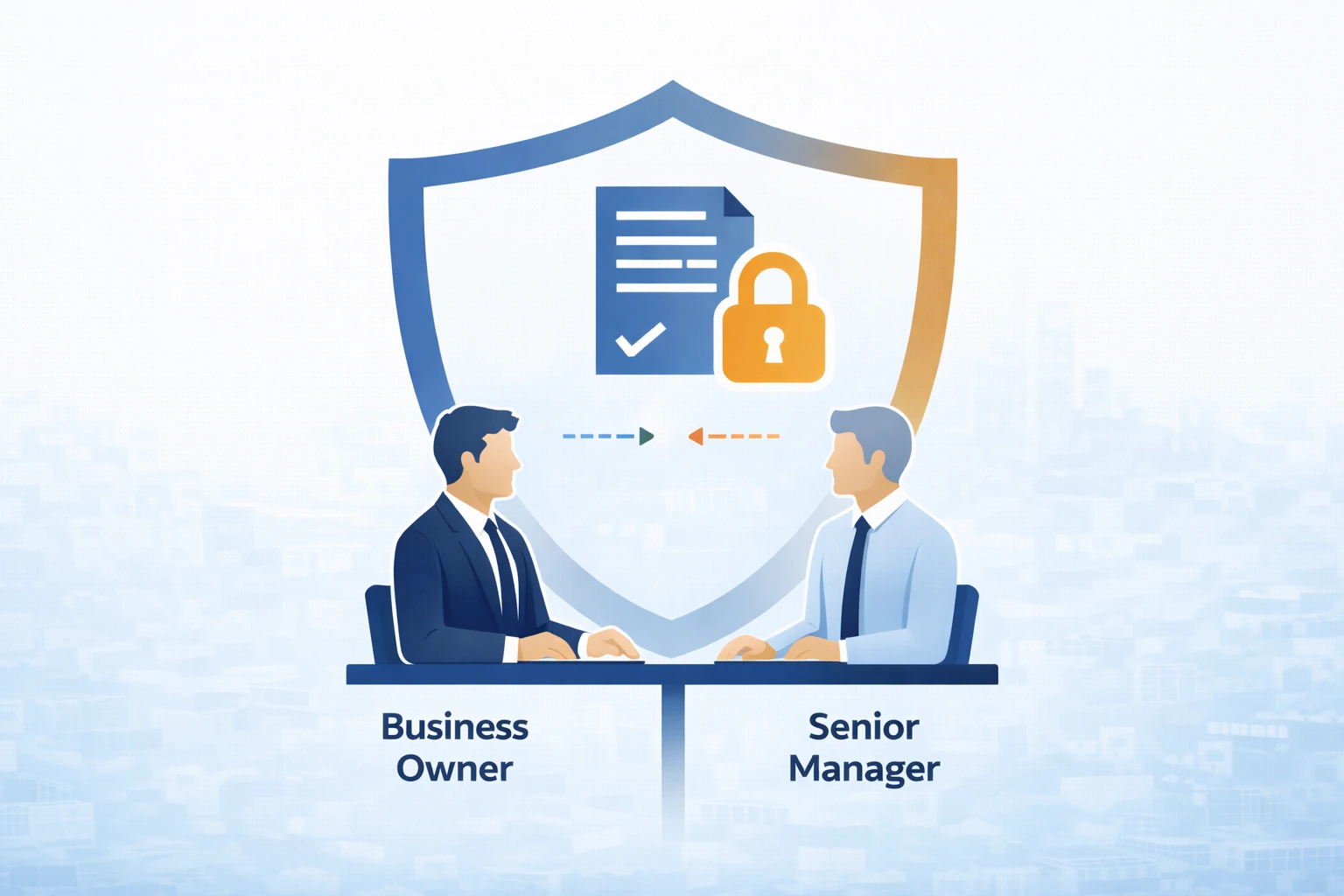
Confidentiality is not pure silence.
Nor is it full disclosure behind an NDA.
It is a balance.
– Early stage: high discretion, minimal exposure.
– Mid stage: structured information release to qualified buyers.
– Late stage: detailed disclosure to serious, verified parties.
This can involve:
This approach protects the business while still allowing momentum.
It is a progression. Information expands as seriousness increases.
It is easy to forget that buyers have exposure too.
A competitor discovering acquisition plans can affect strategy.
Public knowledge can inflate pricing.
Deal terms becoming public can create internal issues.
Confidentiality is not a seller-only concern.
It is shared.
Recognising this shared interest often lowers tension and improves cooperation.
When both sides want discretion, structure becomes easier

In tight sectors, activity can be noticed even without formal disclosure.
Supplier enquiries shift.
Industry contacts ask questions.
Movements are observed.
In these environments, confidentiality becomes a managed dance.
You assess:
Then you design around it.
No two cases are identical.
That perspective reduces panic.
It becomes professional management rather than fear.
Confidentiality is an art form. The framework stays. The handling changes.
When selling a business, you are not only negotiating price.
You are protecting:
That weight is real.
It is normal to feel protective.
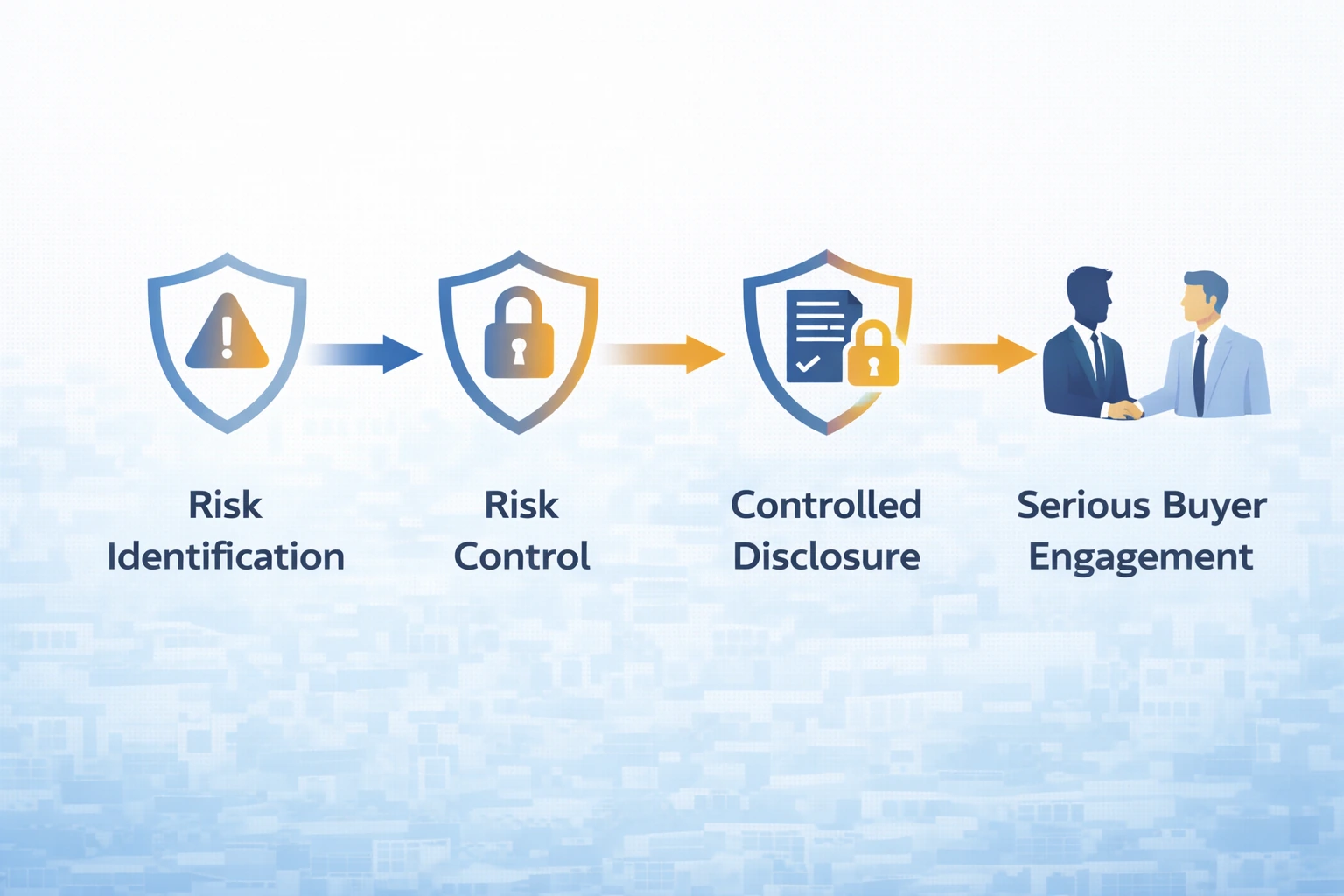
The key is remembering that risk can be managed.
With structured filtering.
With staged disclosure.
With controlled conversations.
With disciplined handling.
The goal is not zero risk.
It is informed risk.
Most confidentiality risk is manageable when it is anticipated.
Protecting confidentiality does more than avoid disruption.
It preserves leverage.
It maintains staff morale.
It protects client relationships.
It keeps negotiations calm and private.
Most importantly, it keeps control with the owner until the process becomes real.
Confidentiality is not about secrecy for its own sake. It is about choosing when the story becomes public.
Handled properly, a sale does not need to create noise.
It can move quietly.
Deliberately.
Behind closed doors.
And when the time is right, information is released with structure rather than surprise.
The risks are real.
But they are manageable.
And in most cases, far more controllable than they first appear.