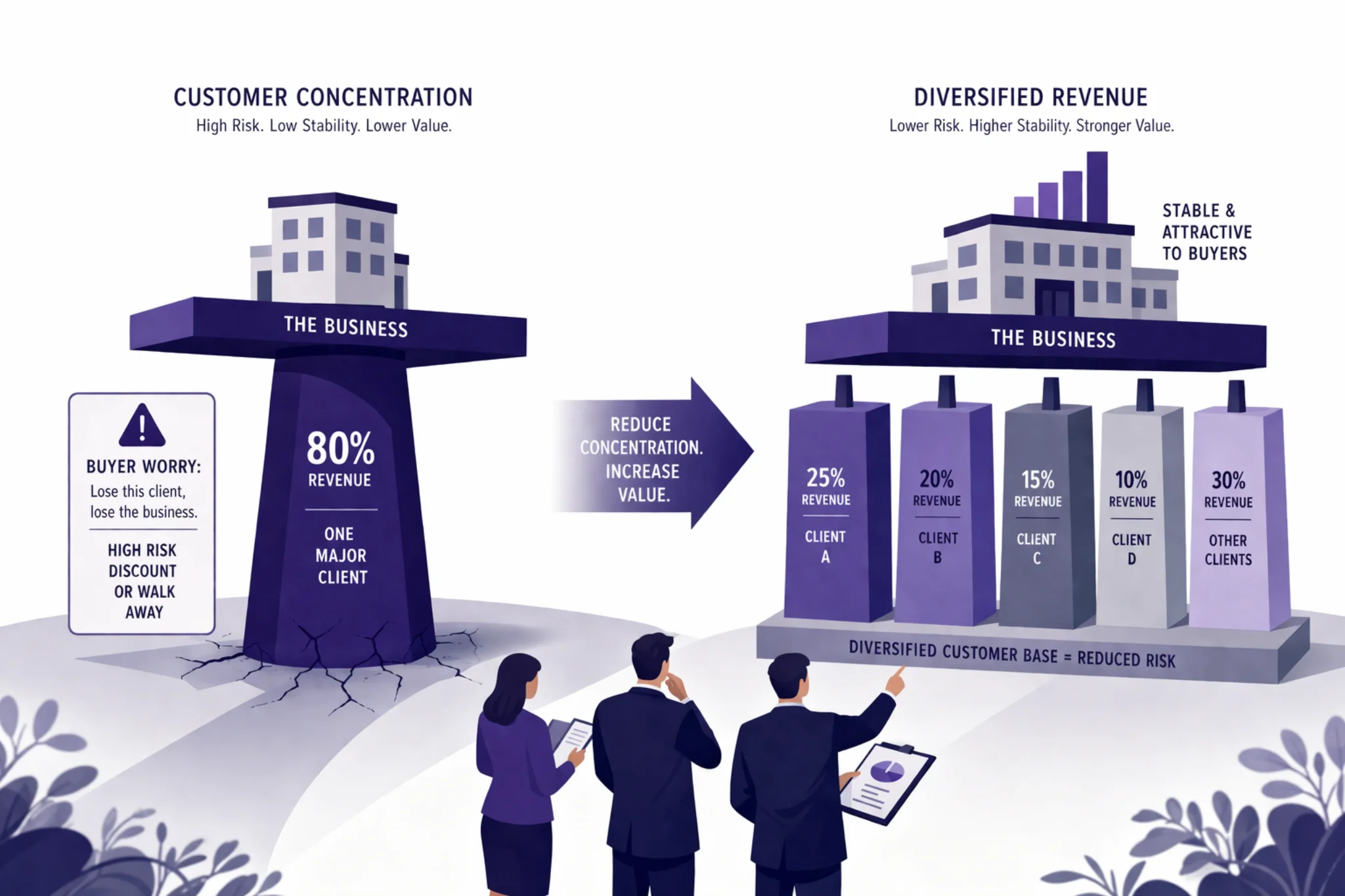


It’s when everything runs through the owner.
Relationships. Operations. Staff decisions. Deals.
At that point, it’s not really a business. It’s more an organised setup that relies on one person to hold it together.
And buyers see that straight away.
They’re not buying a business. They’re buying you, and you’re leaving.
If the owner walks out, what’s left?
That’s the question sitting in the buyer’s head the whole time.
They’re not looking at how well it runs now. They’re thinking about what happens when you sell your business.
Everything looks stable until the person holding it together leaves.
Client relationships is a big one.
You might have contracts, but the real negotiation still happens through you. Side deals, conversations, understandings.
Staff is another.
There are often little arrangements that aren’t written down. Things you’ve agreed to over time that only you know about.
Financials can be tied in as well. Family on the books. Personal stuff mixed through.
Even simple things like your phone, your email, approvals.
It all connects back to you.
The business slowly becomes your personal way of operating.
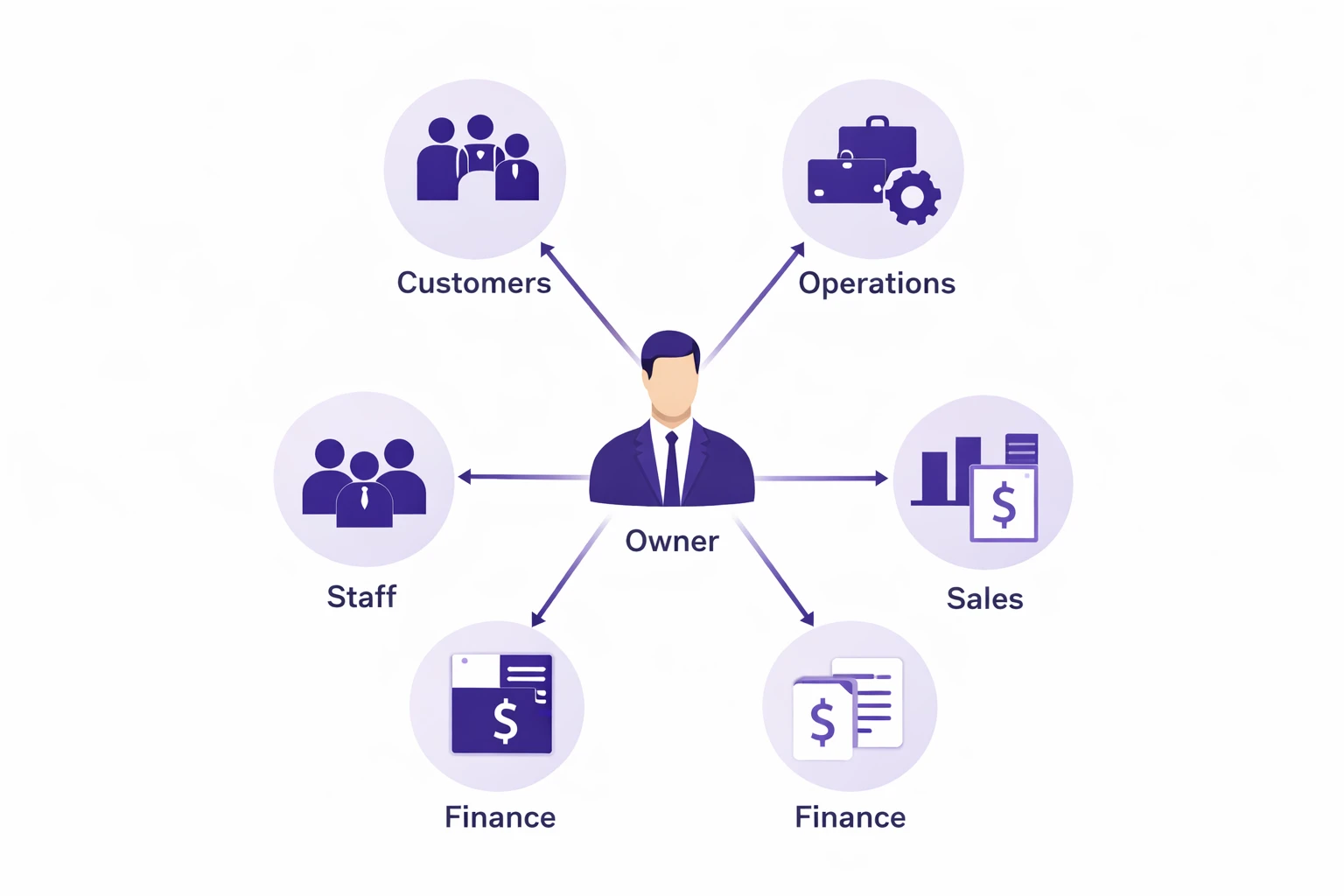
They start testing everything.
Are the clients loyal to the business or just to you
Do the staff actually follow structure or just come to you
Can decisions happen without you
If the answer keeps coming back to the owner, that’s where the concern builds.
If every answer leads back to one person, that’s the risk.
When everything is verbal.
Too much talking. Not enough written down.
If you’re explaining how the business works instead of showing it, buyers assume there’s no real structure.
Messy financials. No clear processes. Nothing documented.
It tells them it all lives in your head.
And your head doesn’t transfer with the sale.
Because that’s when buyers go deep.
Much deeper than most owners expect.
They want to see everything. Not just what’s there, but what’s missing.
They’re looking for gaps. Things that don’t line up. Things that haven’t been documented.
Like checking a car, they’re not just looking at what works. They’re looking for what didn’t get serviced.
They’re trying to find what they can’t see.
It’s rarely just one issue.
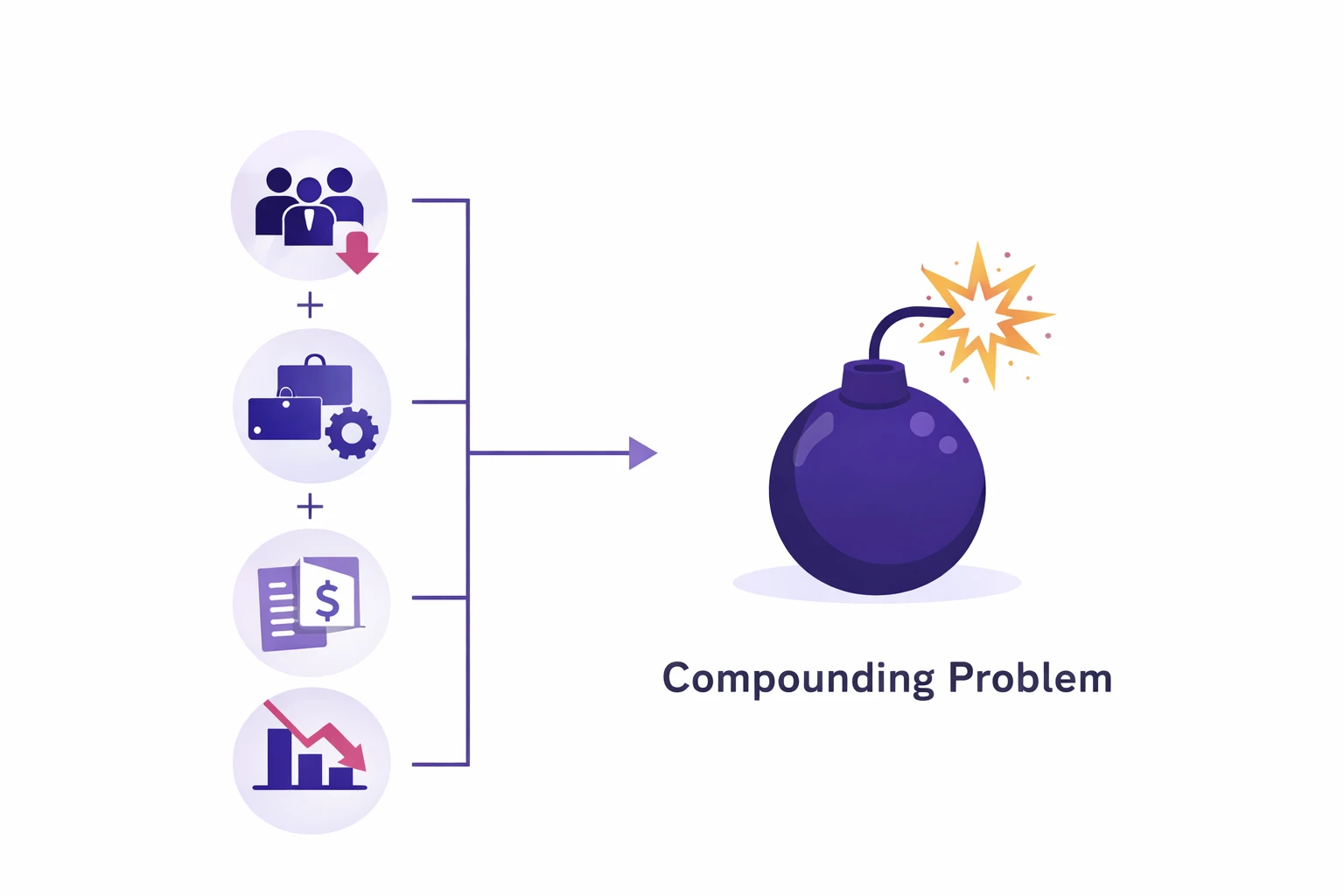
It’s when things start stacking.
You’ve got owner dependency, plus messy financials, plus unclear processes.
Individually, a buyer might live with it.
But once they combine, it becomes too much.
Like buying a car that’s dirty, has a small leak, and missed a service.
Each one adds up.
Compounding issues are what kill deals.
They don’t ignore it. They structure around it.
They’ll keep you in.
Full-time at the start
Then part-time
Then maybe as a consultant
Or they’ll adjust the price.
Sometimes both.
If they want the business, they’ll make it work, just not on clean terms.
The risk just gets built into the deal.
Because most sellers want to walk.
Clean exit. Done.
But if the business depends on you, the buyer can’t accept that.
So they ask you to stay.
And that’s where things start to break down.
Especially if you’re being asked to stay for years.
You can’t exit cleanly from something that still needs you.
Yes.
If the buyer is strong and already has structure.
They might have finance, HR, management already sorted.
They’re not relying on your setup. They’re plugging it into theirs.
Or in smaller businesses, buyers might just accept the risk.
But as deals get bigger, the tolerance drops.
Bigger deals mean less room for dependency.
Because the business works for them.
There’s no reason to question it until they try to sell.
Then suddenly everything gets pulled apart.
And by that point, it’s too late to fix properly.
You can’t build structure overnight. It takes time to settle in.
Most people find out when they’re already in the process.
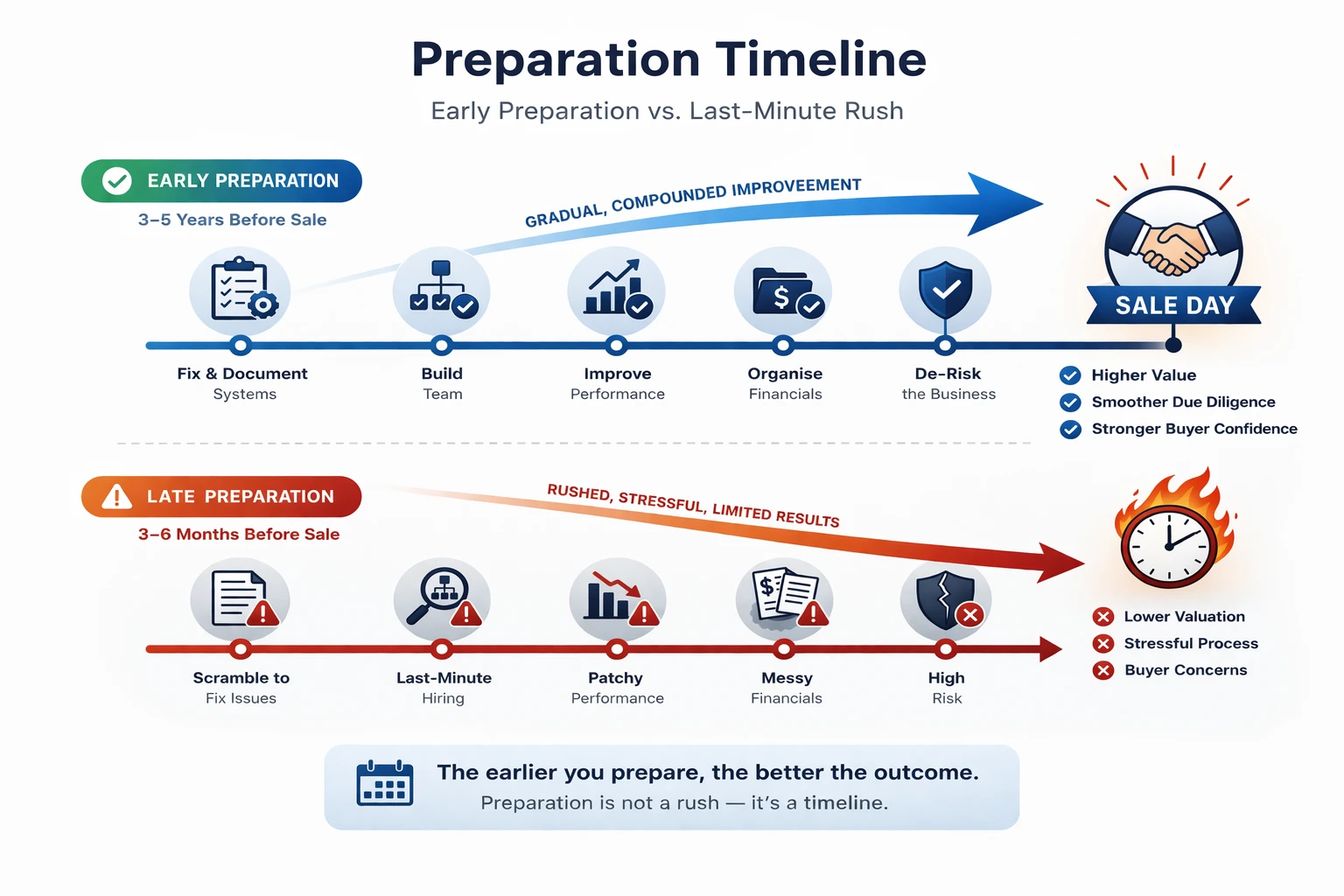
They rush it.
They try to put systems in, delegate everything, clean up structure all at once.
It becomes reactive.
This kind of change needs to happen over time.
Sometimes you even need to spend money to build that structure properly.
You’re building value, not just chasing profit in that moment.
Short-term cost, long-term value.
Track what you actually do and prepare your business for sale early.
Every call
Every email
Every task
Then look at it properly.
Does this form a role
Who should be doing this
That’s where structure starts.
Not big changes. Just clarity first.
It runs without you.
Not perfectly, but it runs.
There are systems. Processes. Clear roles.
People know what they’re doing.
Clients don’t need to speak to you for everything.
If you’re away for a few days, it doesn’t stop.
A good business keeps moving without you there.
They want to see structure.
Position descriptions
Processes
Contracts
Clear responsibilities
They want to understand how it all works without needing you to explain it.
Not talk. Not assumptions. Something they can see.
They’re buying something they can step into, not figure out.
This sits within the broader discussion around value, as covered in How to Increase the Value of Your Business Before Selling.