


Buyers aren’t looking at your org chart for interest.
They’re looking at risk.
If it’s a financial buyer, the question is simple.
Will this business run without you?
If the answer is no, they’re already stepping back.
Strategic buyers look at it differently.
They’re thinking about how your management structure before selling a business fits into theirs.
Do you have the right layers?
The right ratios of staff to supervisors?
Or is it going to create friction inside their existing business?
A financial buyer just won’t buy a business that depends on the owner. It has to run on its own.
A lot of businesses look strong on paper.
Revenue is there.
Profit is there.
But the whole thing is being held together by the owner.
Relationships sit with them.
Decisions sit with them.
Knowledge sits with them.
From the outside, that’s not a business.
That’s a job.
Reducing owner dependence before selling a business is one of the biggest value drivers.
If the owner steps out and it doesn’t run, the buyer already knows what’s going to happen after settlement.
It usually doesn’t fall apart loudly.
It shows up when buyers start asking simple questions.
Who owns this?
Who’s responsible for that?
What happens if this person isn’t there?
And the answers start getting vague.
Confidence drops at this point.
Not because the business is bad.
Because it’s unclear.
This is where weak management structure in a business sale starts creating friction.
You’ve got all these managers, but it’s muddled on who does what.
Owners often think things are “covered”.
Someone handles it.
It gets done.
It’s always worked.
But that’s not structure.
That’s habit.
Buyers don’t trust what lives in your head.
They want to see it mapped.
Clear roles.
Clear responsibilities.
Clear accountability.
This is a key part of improving management structure before selling a business.
Owners get a bit delusional… this person covers that, that person covers this… but it’s never actually written down.
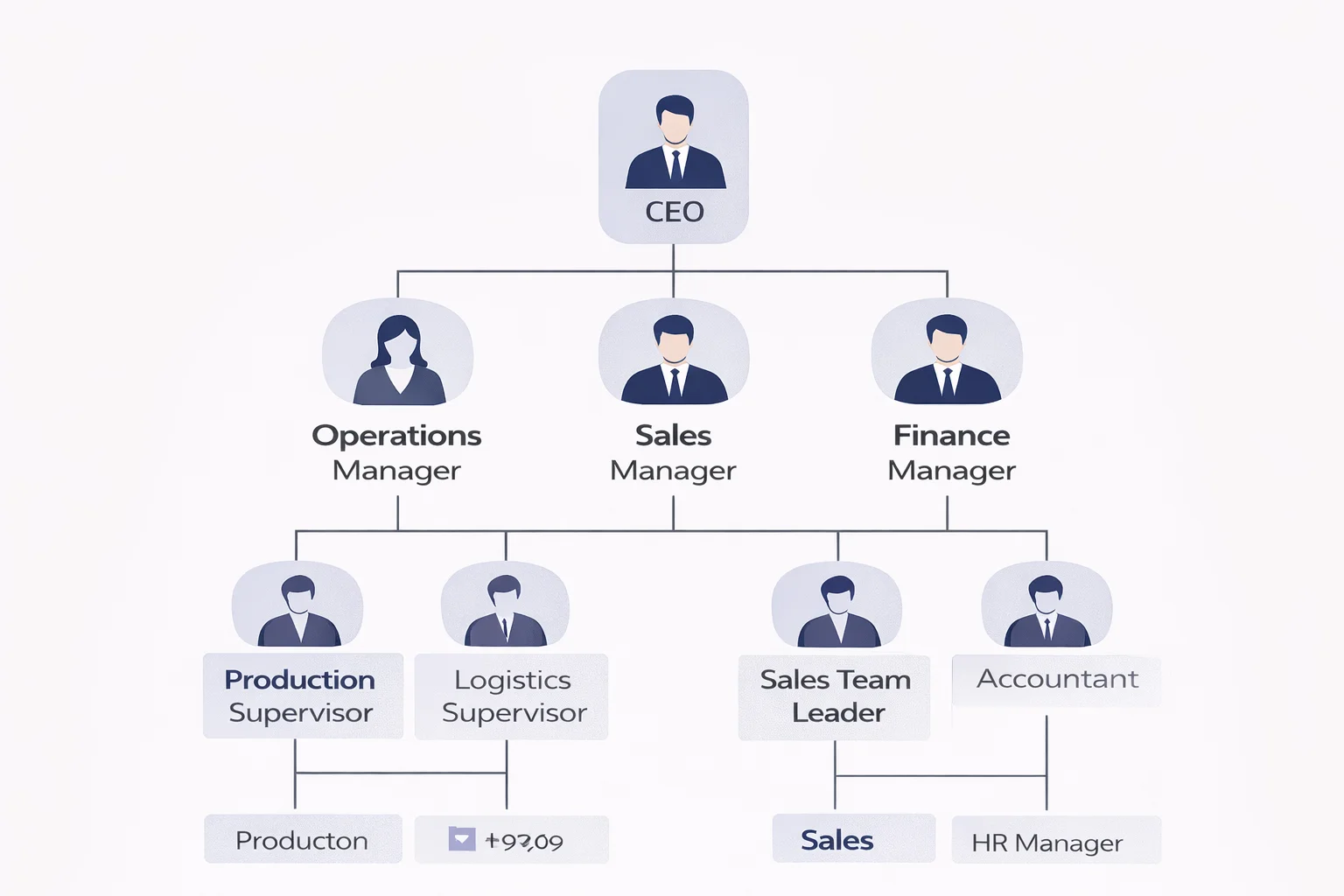
Most people treat an org chart like a formality.
It’s not.
Done properly, it becomes your operating manual.
It shows:
Who reports to who
Where decisions stop
How issues move through the business
A clear business org chart for sale preparation reduces friction immediately.
Not complexity.
Just clean flow.
If a labourer has a problem, they go to the supervisor. If they can’t solve it, it moves up. That’s how the business runs.
Even if the org chart looks good, buyers watch behaviour.
Who actually makes decisions?
Where do things bottleneck?
Who everything gets escalated to?
If everything still flows back to the owner, the structure isn’t real.
A clear chain of command matters more than titles.
Ownership matters more than hierarchy.
This is where buyer risk in management structure becomes obvious.
What creates risk is too much dependency on one person.
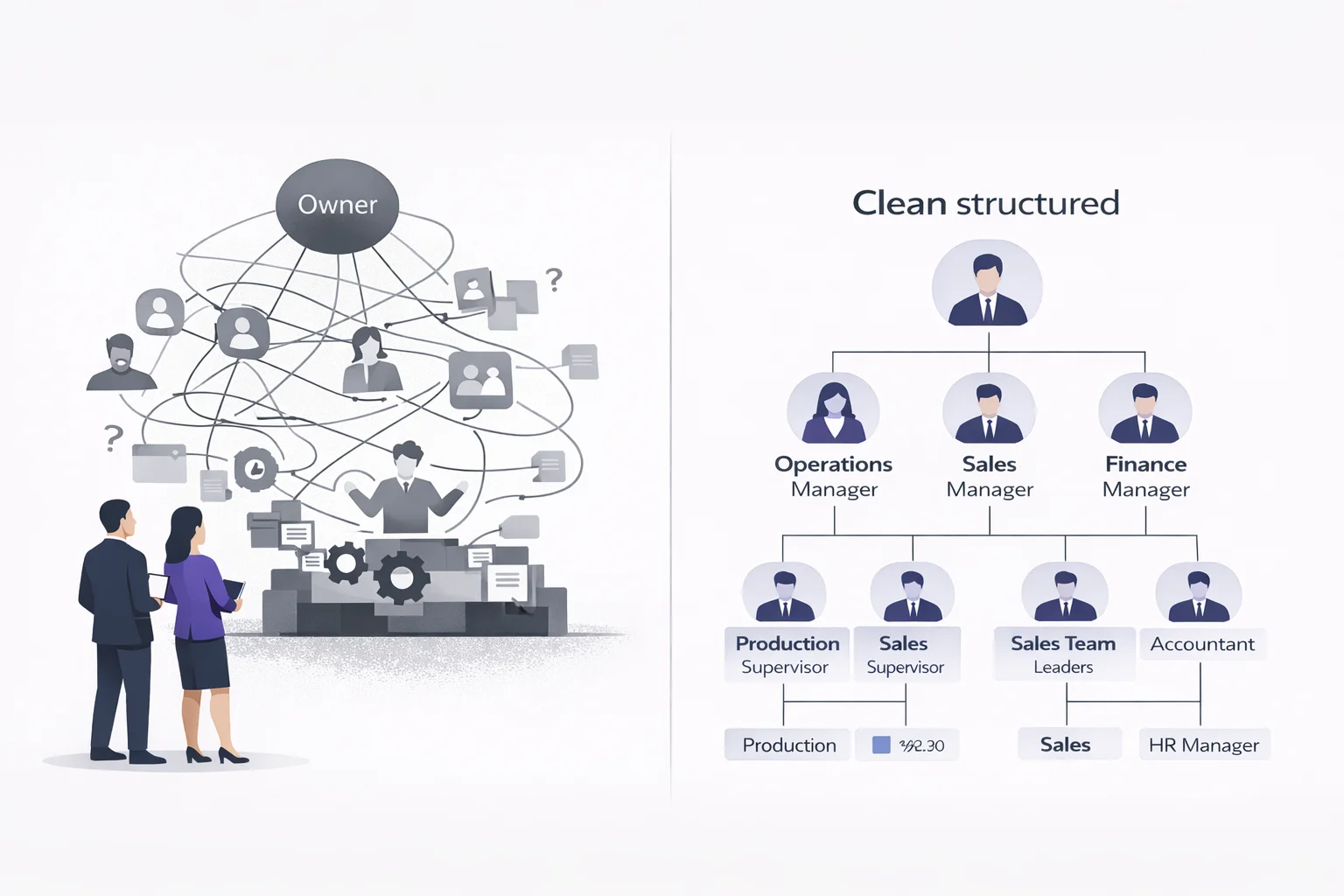
A lot of owners overcomplicate this.
They think more layers = more structure.
It’s the opposite.
Buyers don’t want to decode your business.
They want to understand it quickly.
One page is often enough.
If it’s clear.
Simple, clear systems are key when preparing management structure for sale.
Simplicity is great. You want to clearly explain how the business runs.
They rarely say it directly.
They adjust the deal instead.
Longer transition periods
More reliance on you staying
More conditions
More pressure on key staff staying
That’s when deals start getting heavier.
More risk for you.
More complexity in the deal.
This is how weak structure impacts deal terms.
They assume the structure won’t transfer well into new ownership.
Structure isn’t just roles.
It’s people.
Buyers look closely at who actually holds the business together.
And then they ask:
Are they staying?
Retention becomes part of the deal.
Incentives.
Earn-outs.
Positioning.
Strong staff retention during business sale protects the structure.
You have to sell the transition to your key staff… it’s not ‘I’m selling’, it’s ‘we’re transitioning’

It’s not complicated.
It’s clear.
You have:
An org chart
Defined roles
Position descriptions
Clear deliverables
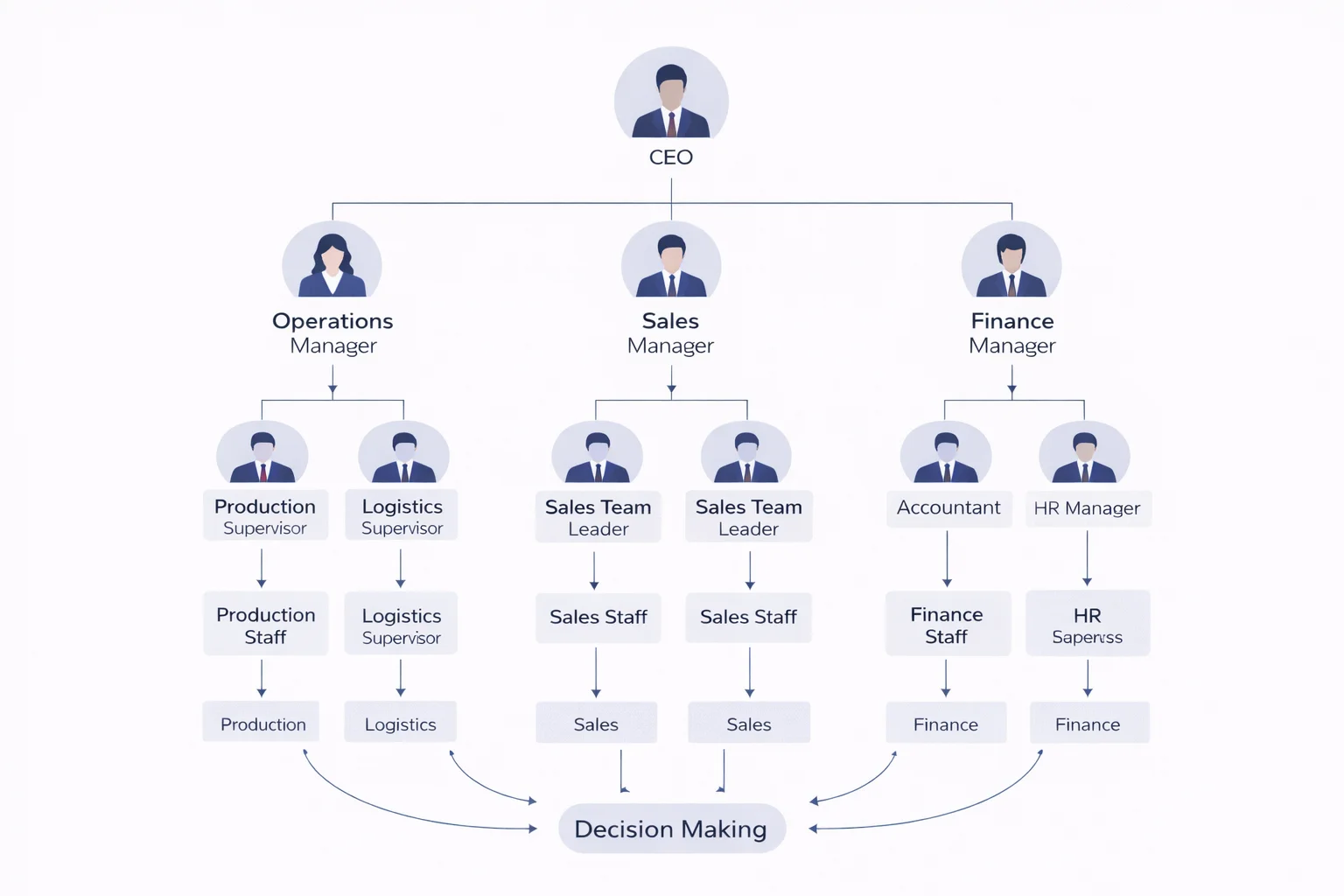
Everything connects upward.
Operations → management → leadership
And you can explain it simply.
On one page.
This is what buyers expect when improving management structure before selling a business.
Every role has accountability. Decisions stop where they’re meant to stop.
When owners finally map it out, things show up quickly.
Gaps
Overlaps
People doing too much
Unclear responsibilities
This isn’t a bad thing.
It’s the point of doing it.
Because now you can fix it.
This is a key step in business sale preparation.
Things that have just always worked suddenly don’t look that clear anymore.
No management structure is perfect.
Buyers know that.
What matters is:
Can it be understood?
Can it be explained?
Can it operate without you?
That’s enough.
The goal is reducing risk before selling a business, not perfection.
No business sale is ever perfect. You’re just trying to minimise risk.
Then you need to show control.
That means:
A clear business development strategy
Evidence of pipeline
Financial buffers like retained earnings
Proof the model works over time
You’re not removing the risk.
You’re explaining it properly.
No business sale is ever perfect. You’re just trying to minimise risk.
You don’t need to rebuild everything.
Focus on the basics.
Org chart
Position descriptions
Clear roles and responsibilities
It doesn’t need to be complex.
It just needs to be clear.
You need to be able to put it on the table and explain how your business runs.

This is where it really shows up.
When structure is strong, everything feels different.
Conversations are easier
Buyers are calmer
Confidence is higher
You’re not just showing financials.
You’re showing how the business actually works.
This is how management structure increases business value.
You can sit there with confidence and say — this is how everything works.
A strong management structure connects directly to value.
Because it supports:
Scalability
Predictability
Transferability
You’re not just explaining today.
You’re showing how growth happens.
This is critical when valuing a business for sale.
You can map future growth and show what roles are needed to hit those projections
Management structure is just one part of the bigger picture.
But it’s a critical one.
It sits alongside financial clarity, risk reduction, and overall preparation — as covered in our guide on preparing your business for sale
Getting this right strengthens your entire business sale preparation strategy.