
When buyers see customer concentration, they go straight to risk.
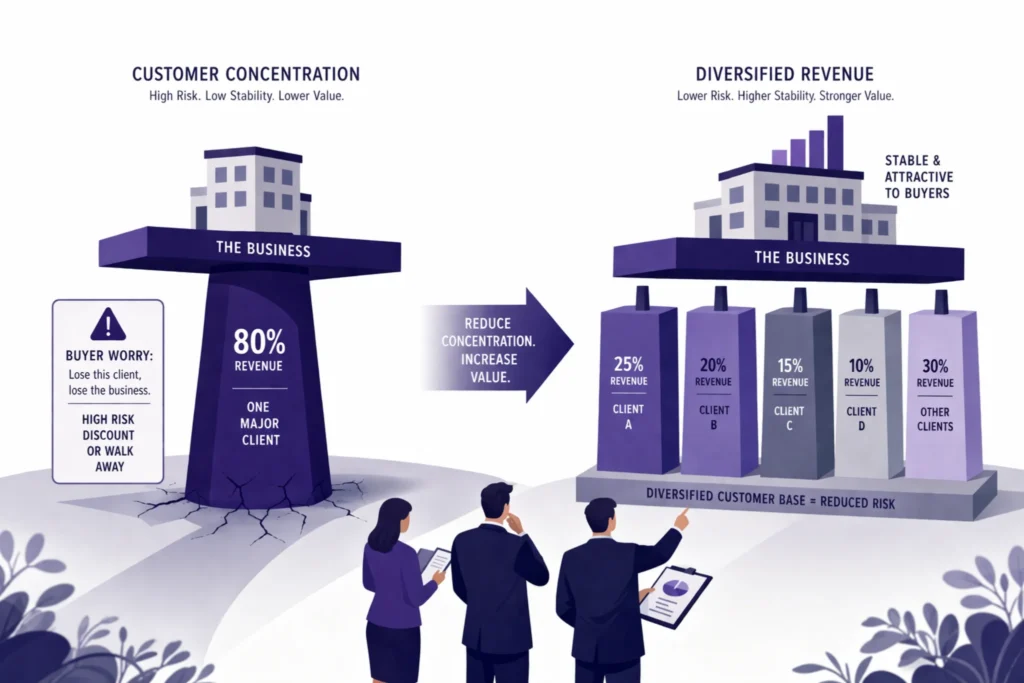
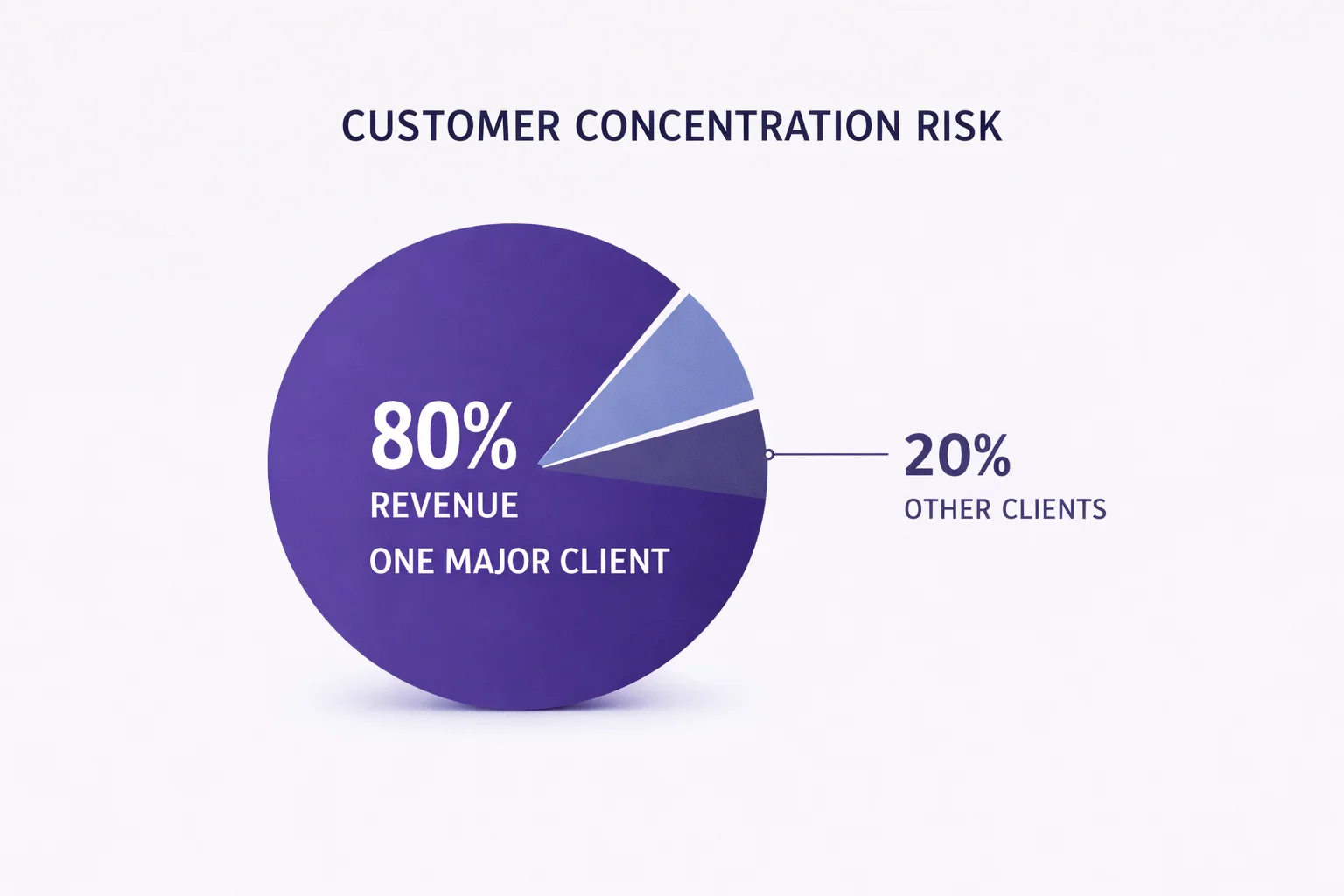
If you’ve got a $5M business and one client is doing $4M of that, the maths is obvious.
Lose that client and you’ve basically lost the business.
It’s not just about the number.
Buyers start asking:
Is this contract locked in?
Is it relationship-based?
Is the owner holding it together?
If you lose that customer… you effectively lose 80% of your revenue overnight.
It comes back to how fragile the revenue is.
A business with evenly spread customers feels stable.
A business with one or two dominant clients feels exposed.
This is exactly what buyers price into risk.
And it directly impacts value.
There is massive value in those… but there’s also big risk.
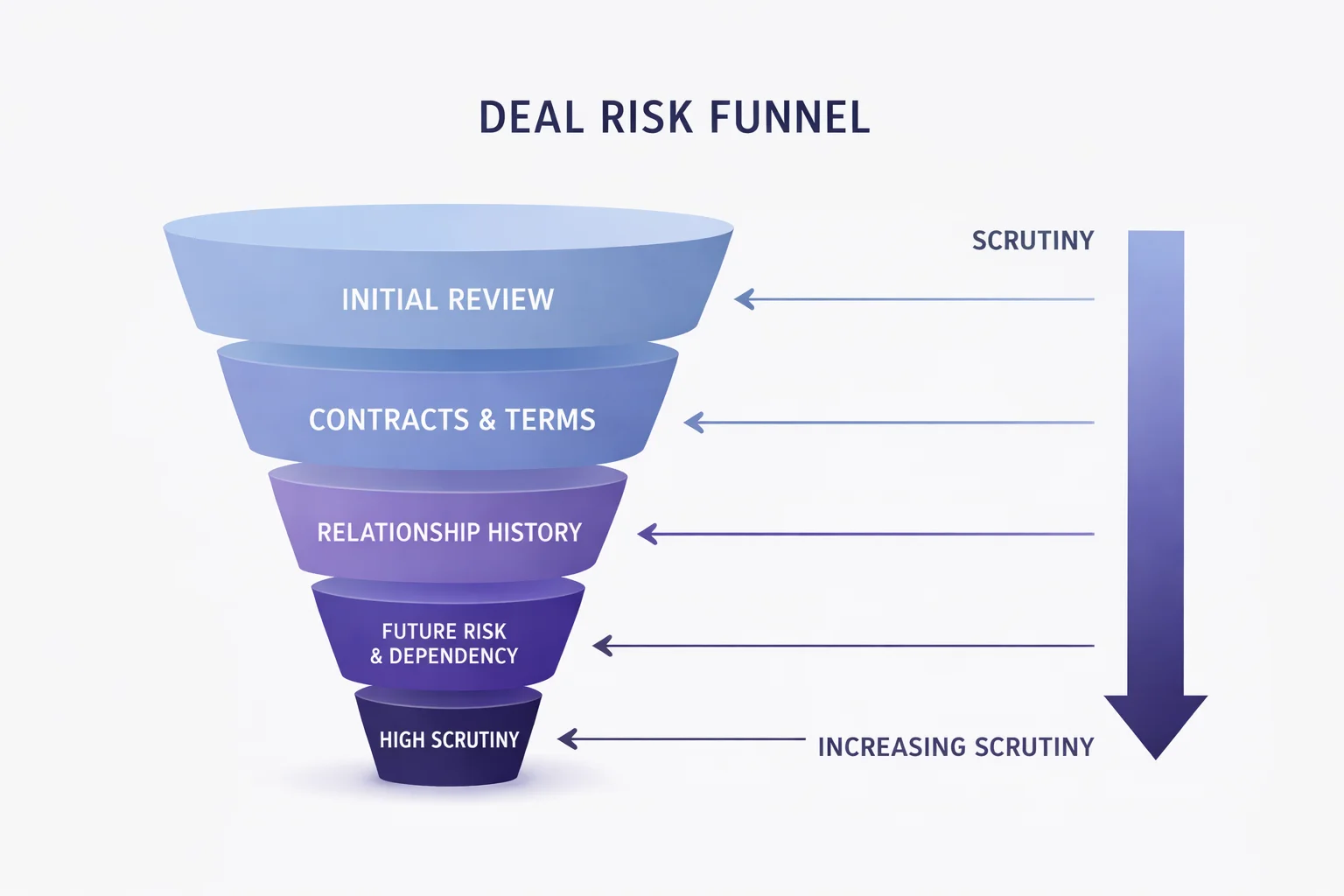
This is where things slow down.
Buyers dig into:
Contracts
Renewal terms
Relationship history
Who manages the account
If it’s mid-contract, they’ll ask what happens next.
If it’s informal, they’ll worry even more.
They don’t just accept it.
They reshape the deal structure.
You’ll see:
Earnouts
Delayed payments
Retention conditions
It’s all about shifting risk away from the buyer.
If this customer leaves… we won’t pay you the earn-out.
Yes. It can.
If there’s no pipeline, no mitigation, and everything hinges on one or two clients, some buyers will walk.
“It could be enough to make them not buy your business.”
It’s rarely just this alone.
But combined with other risks, it becomes a problem fast.
Because this is structural.
You can’t just go out and win new customers a month before selling.
This has to be built over time.
Through how you grow
How you sell
How you structure the business
You can’t just magic up new customers.
There’s no perfect model.
But buyers look for balance.
Instead of one dominant client, they want:
Revenue spread across multiple customers
“A safe place… would be a million dollars each per customer if you had a revenue of 10 million.”
It’s not about perfection.
It’s about reducing dependency.
They don’t ignore it. They structure around it.
They’ll keep you in.
Full-time at the start
Then part-time
Then maybe as a consultant
Or they’ll adjust the price.
Sometimes both.
If they want the business, they’ll make it work, just not on clean terms.
The risk just gets built into the deal.
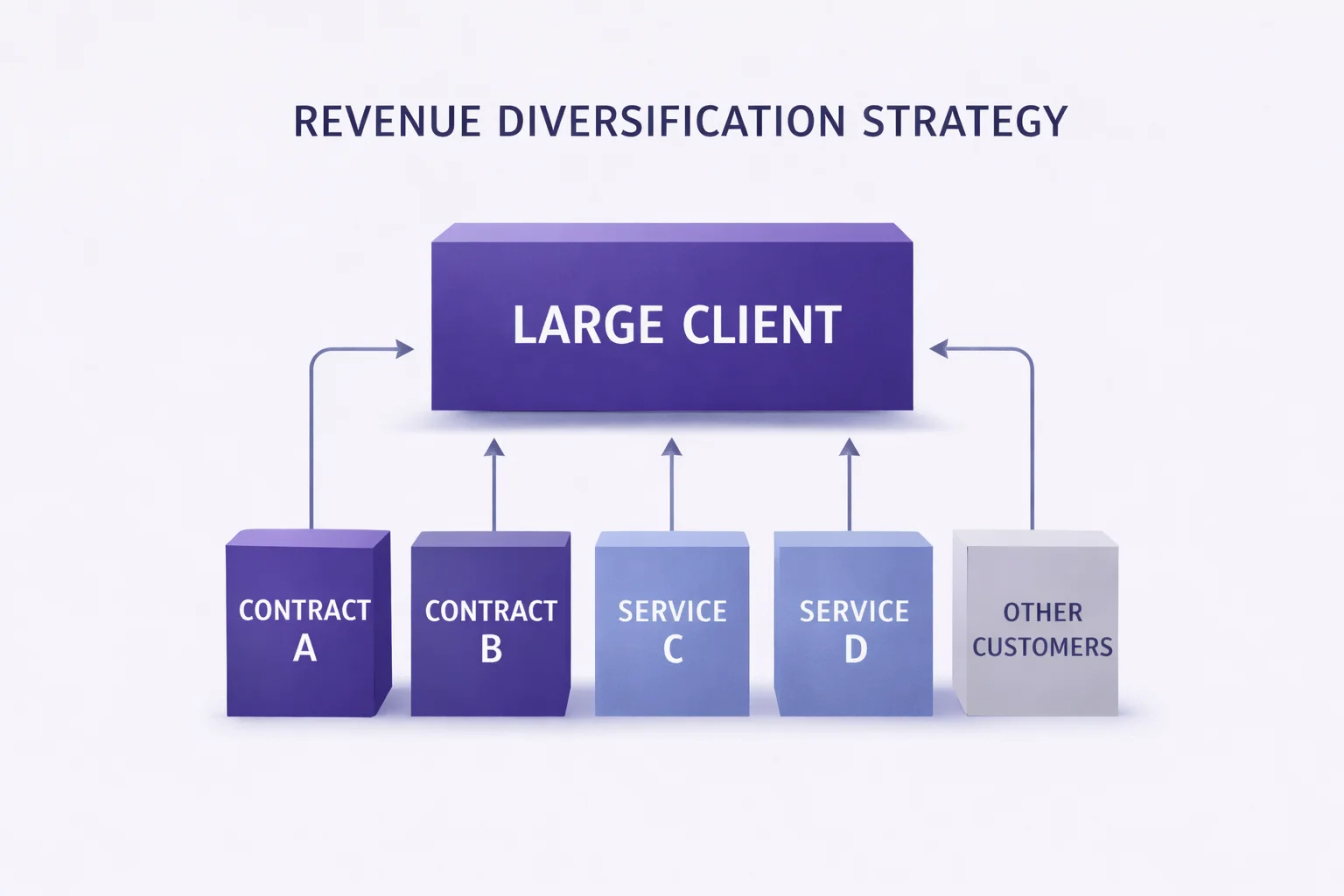
You don’t replace big clients.
You build around them.
That might mean:
Adding smaller contracts
Introducing complementary services
Building secondary revenue streams
It’s about creating a buffer.
We’re going to provide this service… just to create a buffer zone.
Buyers don’t just look at current revenue.
They look forward.
If you’ve got concentration but also a visible pipeline, the whole tone changes.
It shows momentum.
It shows intent.
If you’ve got other deals in the pipeline… then that would be OK.
This is where risk stacks.
If the owner controls the relationship
And the revenue is concentrated
That’s a double issue.
“It’s highly likely that the customer concentration is highly dependent on the owner as well.”
Now the buyer has to replace:
The revenue
The relationship
Defensiveness kills deals.
If a seller downplays the issue or refuses to acknowledge it, buyers get cautious quickly.
“Getting their back up… and not seeing the problem… is not a great place to be.”
Buyers don’t expect perfection.
But they expect awareness.
Then you need to show control.
That means:
A clear business development strategy
Evidence of pipeline
Financial buffers like retained earnings
Proof the model works over time
You’re not removing the risk.
You’re explaining it properly.
You’ve got to show awareness… and demonstrate how you de-risk the situation.
Yes. In the right context.
If the rest of the business is:
Clean
Stable
Well run
Buyers may accept it.
Strategic buyers may manage the risk differently.
If it’s messy elsewhere… this could tip the scales.
It almost always reduces value.
Even with strong revenue, buyers discount for risk.
“The value is gonna drop… you’re gonna lose value.”
That’s the trade-off.
Scale vs stability
Look at your:
Customer mix
Exposure
Diversification strategy
You don’t need perfection.
Just movement.
“A few pans on the stove… a few fingers in a few pies.”