

Most owners first hear about business valuation multiples through conversations.
A supplier mentions someone who “sold for five times profit”.
A friend says a similar business sold for a surprisingly high number.
Stories like this travel quickly.
Soon the question appears.
What multiple is it worth when I sell my business?
Owners often begin by comparing numbers.
Buyers start somewhere else.
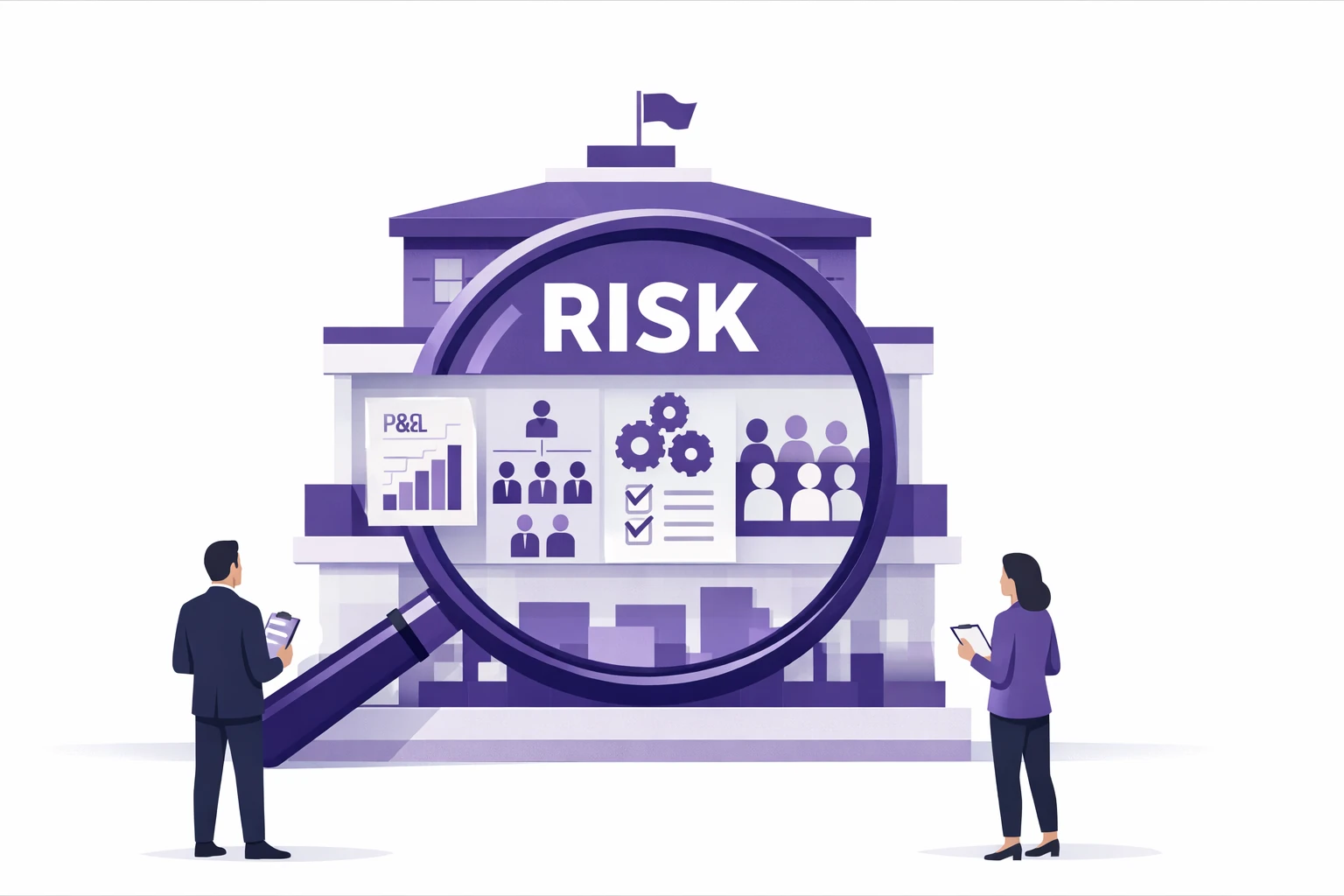
They begin by assessing risk.
Two businesses earning the same profit can sell for very different outcomes depending on how safe and transferable they appear to a buyer.
Multiples are rarely about the number itself. They reflect how a buyer sees the risk behind that number.
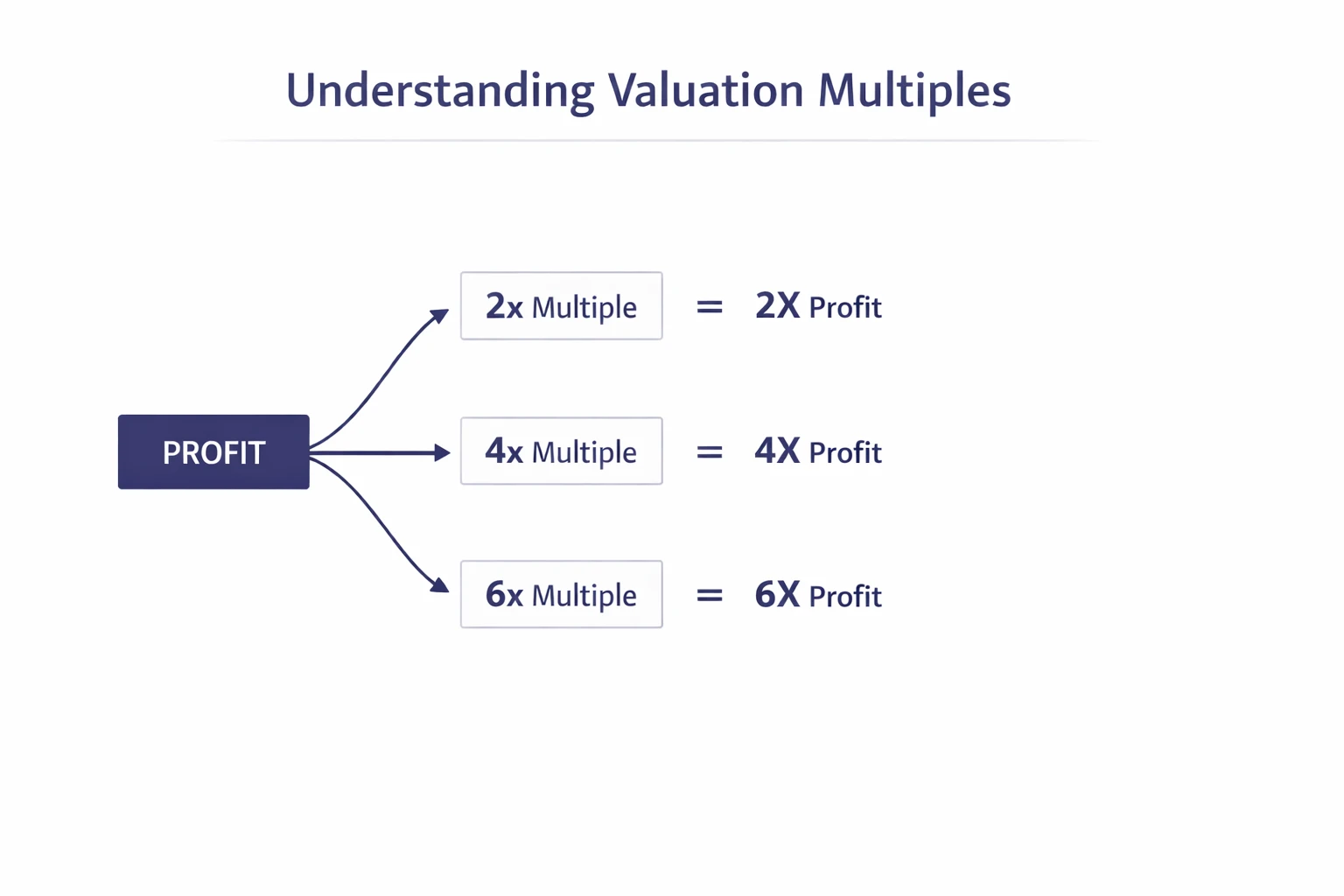
A business valuation multiple is a way buyers express value relative to profit.
For example:
• Business profit: $500,000
• Multiple: 4×
• Approximate value: $2,000,000
But the number itself is only shorthand.
Buyers use multiples to reflect:
• risk
• stability of earnings
• ease of ownership transfer
Two businesses with identical profits can sell for very different multiples when the level of risk feels different.
Multiples reflect confidence in future earnings, not just past results.
Buyers usually look at a combination of structural factors.
Common ones include:
• owner dependence
• customer concentration
• recurring revenue
• strength of management
• systems and processes
• growth potential
• industry stability
These factors often become clearer when a business is reviewed through a structured sale preparation process. If you want to see how this is assessed in practice, you can explore the business sale advisory and brokerage services we provide
A well-structured business with stable income usually attracts stronger multiples.
A business that relies heavily on one person or one customer tends to attract lower ones.
The multiple rises or falls with perceived risk.
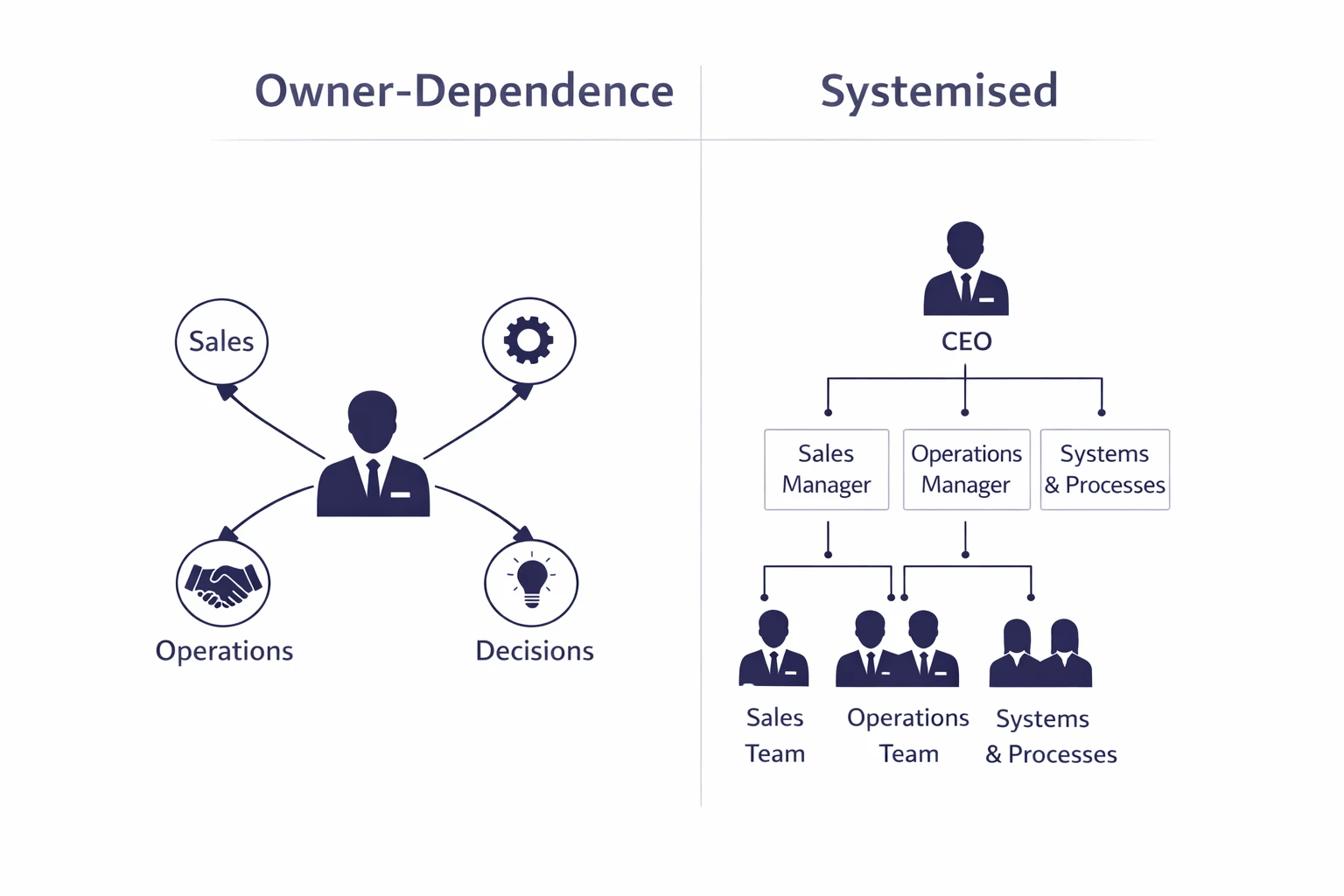
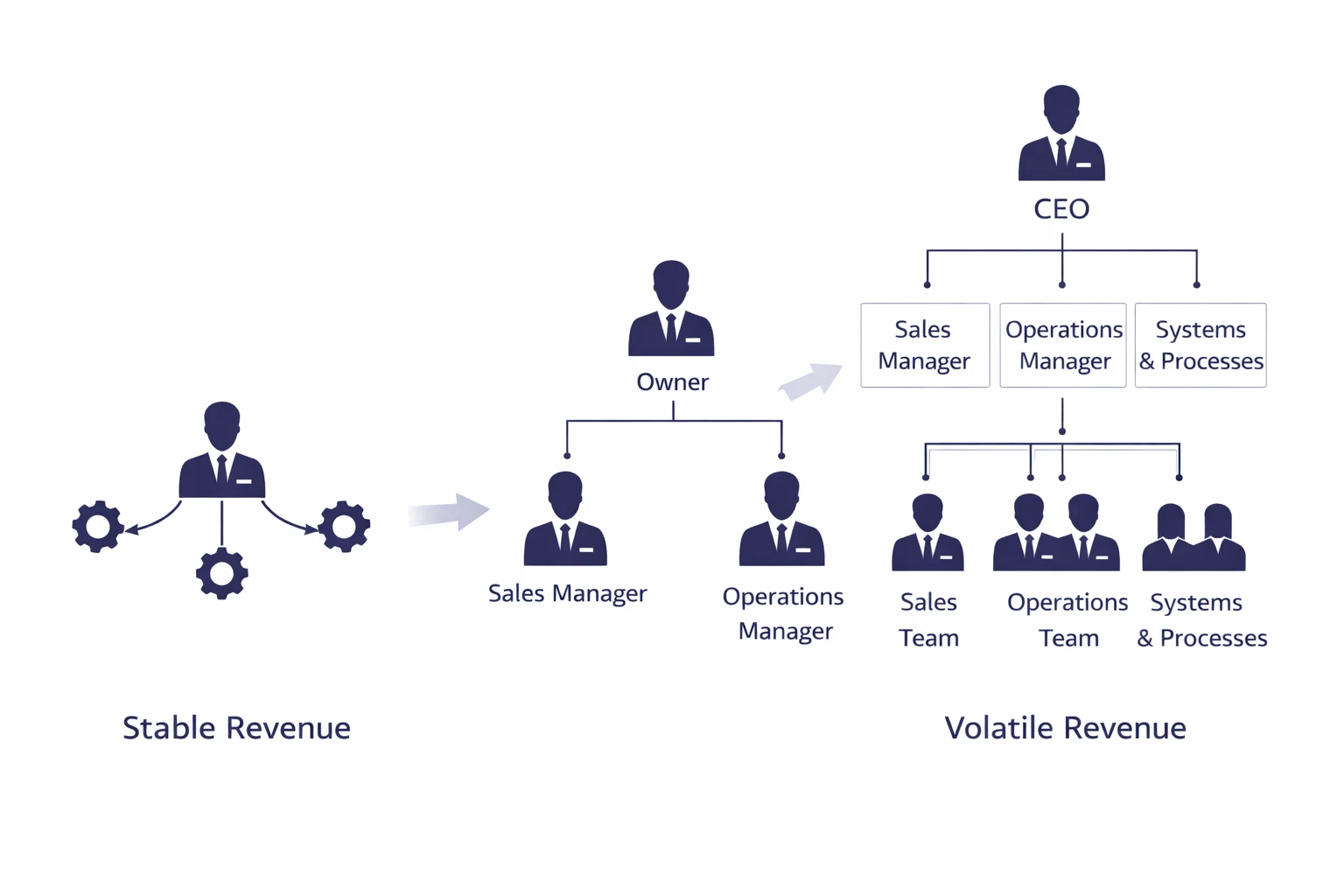
Businesses that rely heavily on their owner often attract lower multiples.
Buyers start asking practical questions.
Who manages the biggest clients?
Who makes pricing decisions?
Who solves operational problems?
If the answer repeatedly comes back to the owner, buyers begin probing further.
This becomes more important when the owner wants a clean break after the sale.
Businesses that have management teams and documented systems often feel safer to step into.
A business that runs without the owner is easier to buy.
Yes.
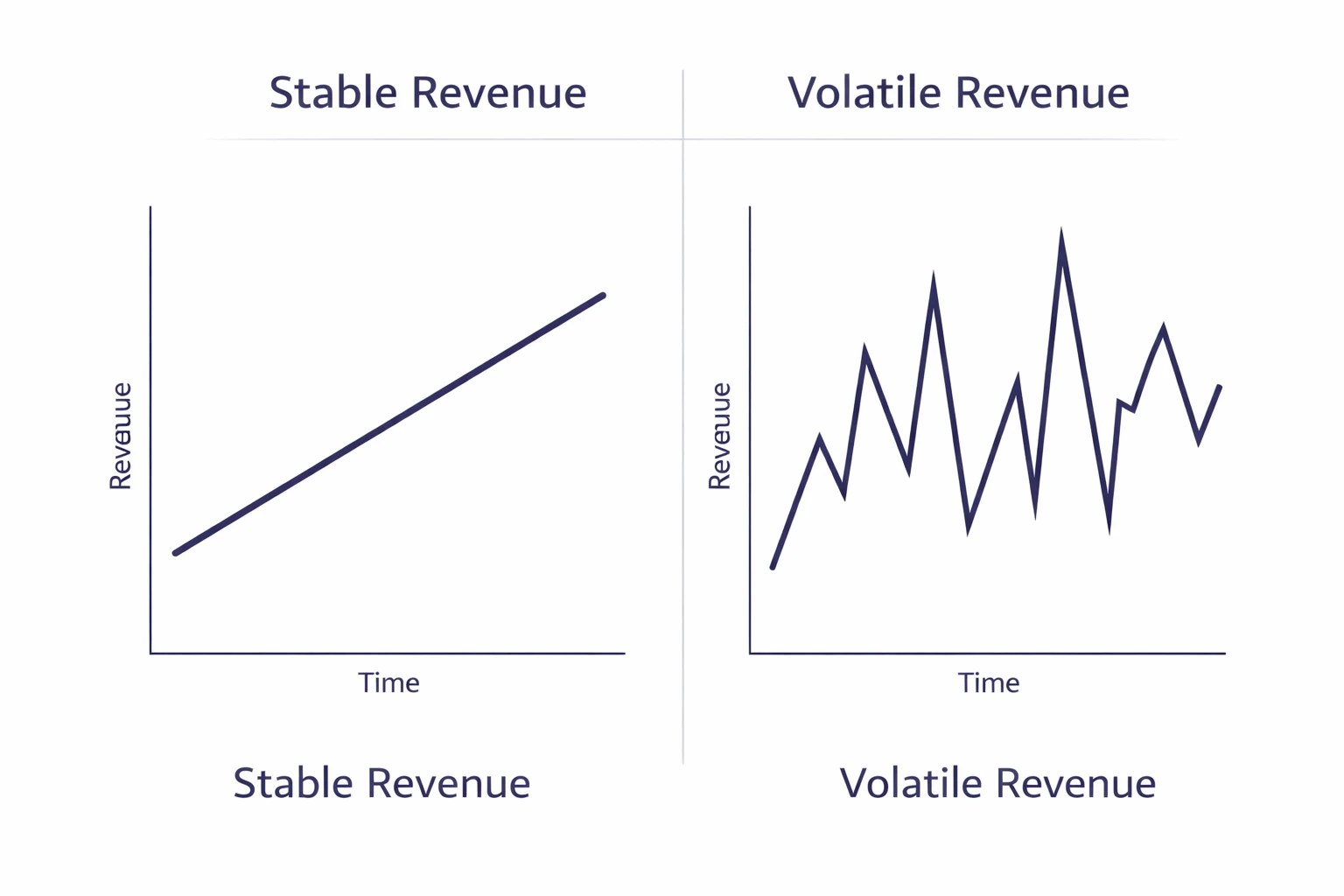
Buyers usually value predictable earnings more than large but unstable revenue.
They pay close attention to:
• repeat customers
• contract revenue
• margin consistency
• diversification of income
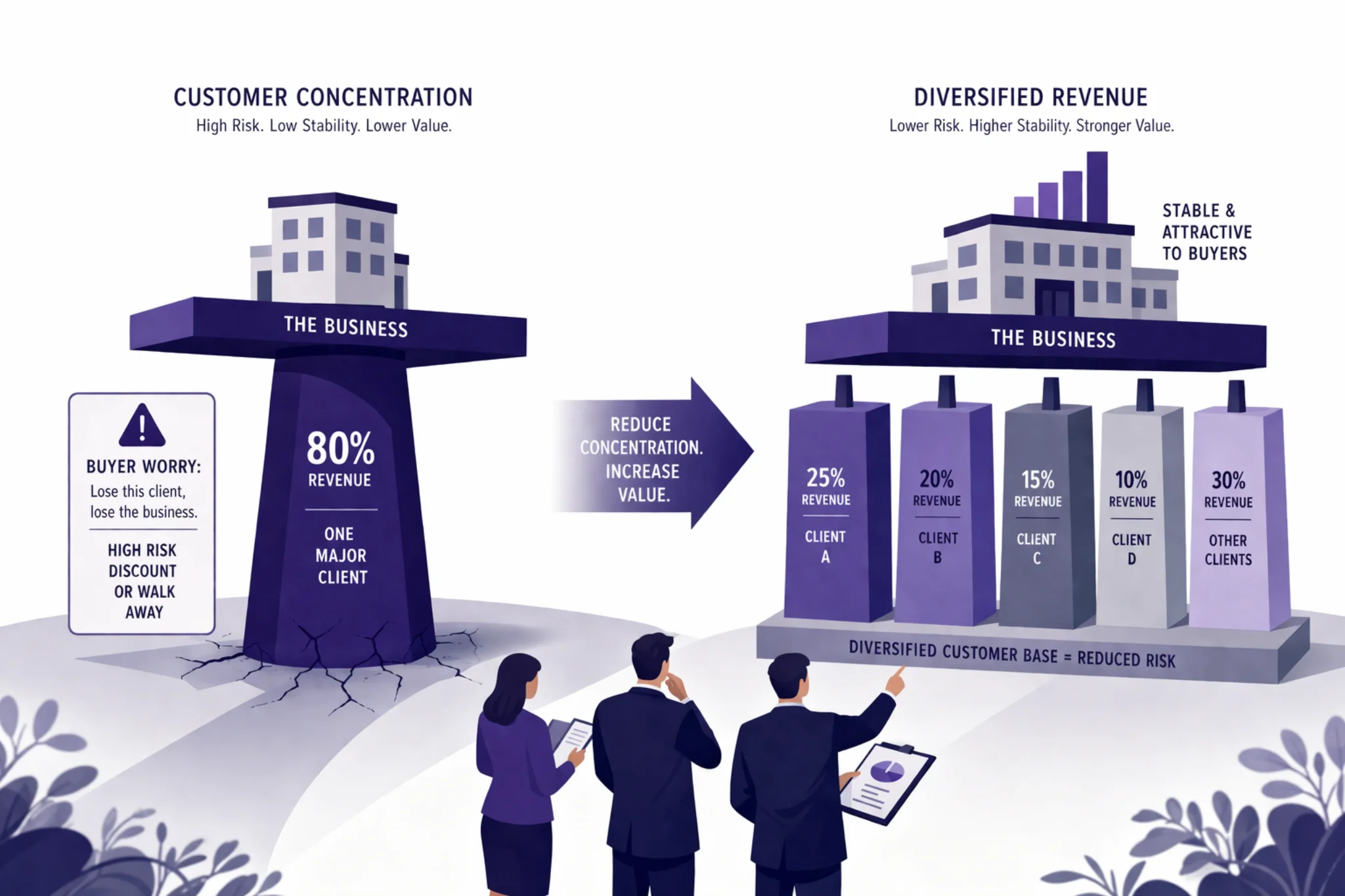
For example, if most revenue comes from a single customer, the business carries obvious risk.
If that customer leaves, most income disappears.
Buyers often adjust their valuation to reflect that risk.
Reliable earnings usually attract stronger multiples than unpredictable revenue.
Not necessarily.
Sometimes businesses experience short bursts of exceptional performance.
A product goes viral.
A marketing campaign lands perfectly.
Or a few months of unusually strong sales appear.
Owners sometimes want to value the business based on those results.
Buyers usually ask a simpler question.
Is this repeatable?
If the answer is uncertain, those spikes are often normalised when valuing the business.
Buyers tend to value consistency more than short-term peaks.
Buyers are rarely buying the past alone.
They are also evaluating future opportunity.
Multiples often increase when buyers see clear expansion potential.
Examples might include:
• unique technology
• a scarce licence
• a product with little competition
• an identifiable market gap
Sometimes the buyer already has the resources to unlock that growth.
However the opportunity still needs to feel realistic.
Growth potential lifts multiples when the opportunity feels achievable.
Often they do.
Smaller owner-operated businesses tend to sell at lower multiples because they rely heavily on the owner.
As businesses grow, structure usually improves.
Larger businesses often develop:
• management teams
• clearer operational systems
• diversified revenue streams
At that point buyers may start viewing the business more like an investment.
As structure improves and risk falls, buyers often become more comfortable paying stronger multiples.
There is no single multiple that applies to every business.
However patterns do appear.
Many small owner-operator businesses may sell around two times profit.
Mid-market businesses with stronger structure and management can often attract higher EBITDA multiples.
Larger businesses with strong growth potential may achieve even higher valuations.
The difference usually comes back to one question.
How risky is the business for the buyer?
The lower the perceived risk, the stronger the multiple tends to be.
The headline multiple rarely tells the full story.
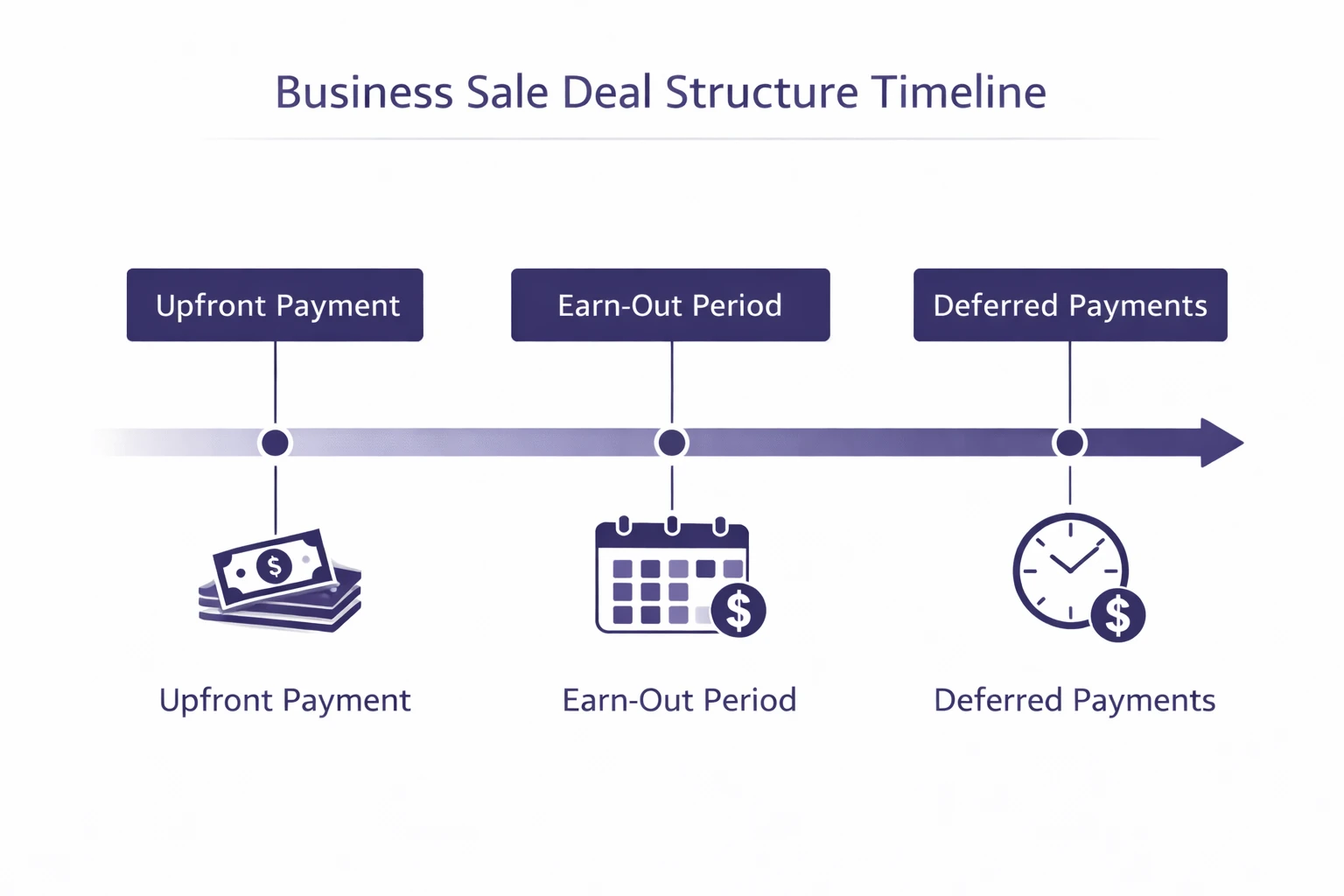
Many business sales include different payment structures.
These may include:
• upfront payments
• earn-outs
• vendor finance
• staged payments
In many middle-market deals, roughly 60–80% of the agreed value may be paid upfront, with the remaining portion tied to performance over one to three years.
Without understanding these terms, the headline multiple can easily be misunderstood.
Price without structure rarely explains the full outcome of a deal.
Many owners focus on the wrong place.
They focus on themselves.
More effort.
More sales.
More activity.
Buyers usually look at the business differently.
They ask a simple question.
Will this business make money with minimal risk?
Many owners spend time improving profit without improving the structure that actually drives valuation.
If you want a deeper breakdown of how owners prepare their business before going to market, see our guide on how to increase the value of your business before selling
“At the end of the day, buyers are buying future returns, not past effort.”