


At some point, almost every owner asks it when they want to sell their business.
How do I value my business? How to value my business?
Sometimes out of curiosity.
Sometimes because someone approached them.
Sometimes because a broker mentioned a number.
It sounds like it should have a clean answer.
It rarely does.
“I just want to know what it’s worth. Surely there’s a formula.”
There are formulas.
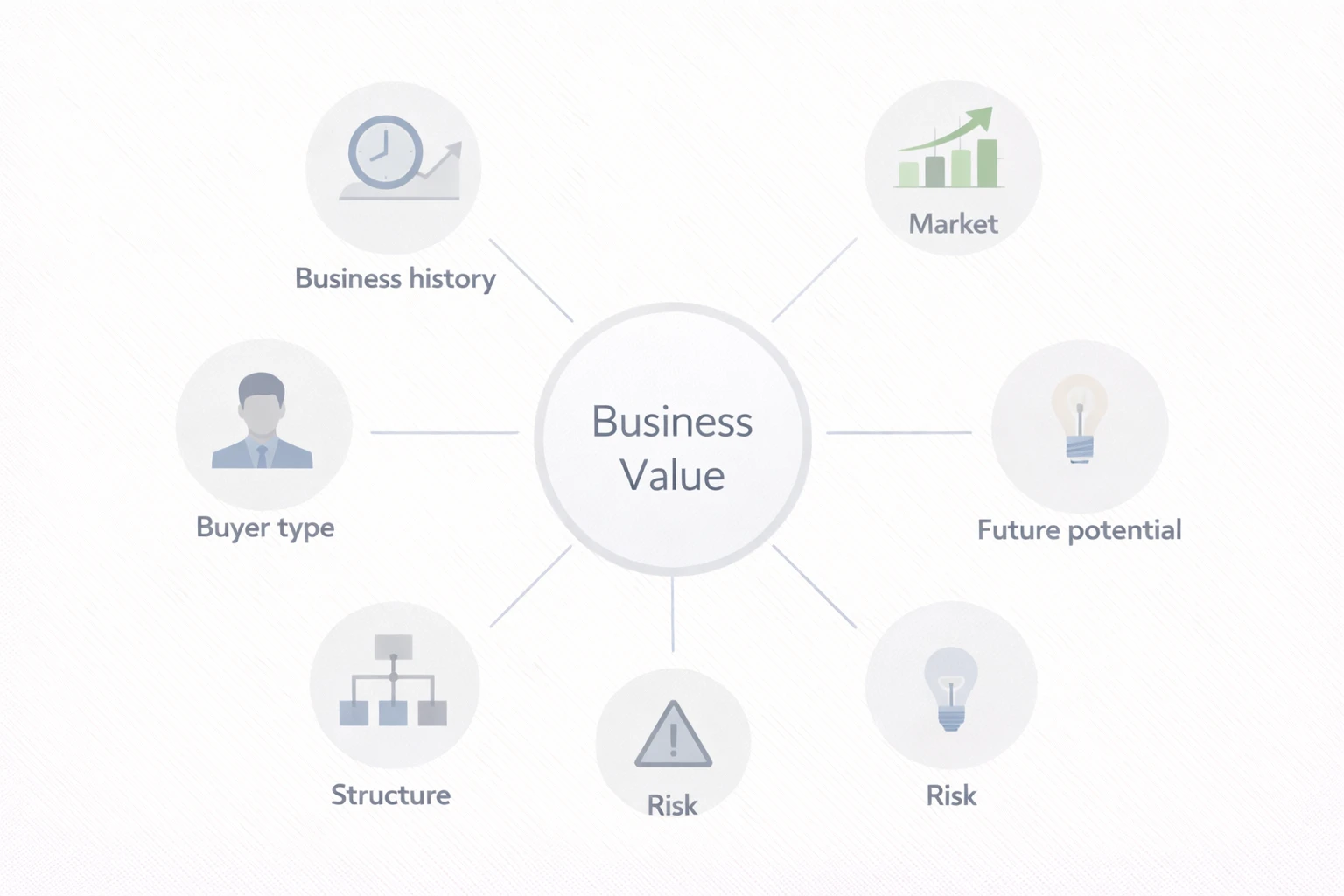
But value is not just math.
It depends on the business.
The buyer.
The structure.
The risk.
The story behind the numbers.
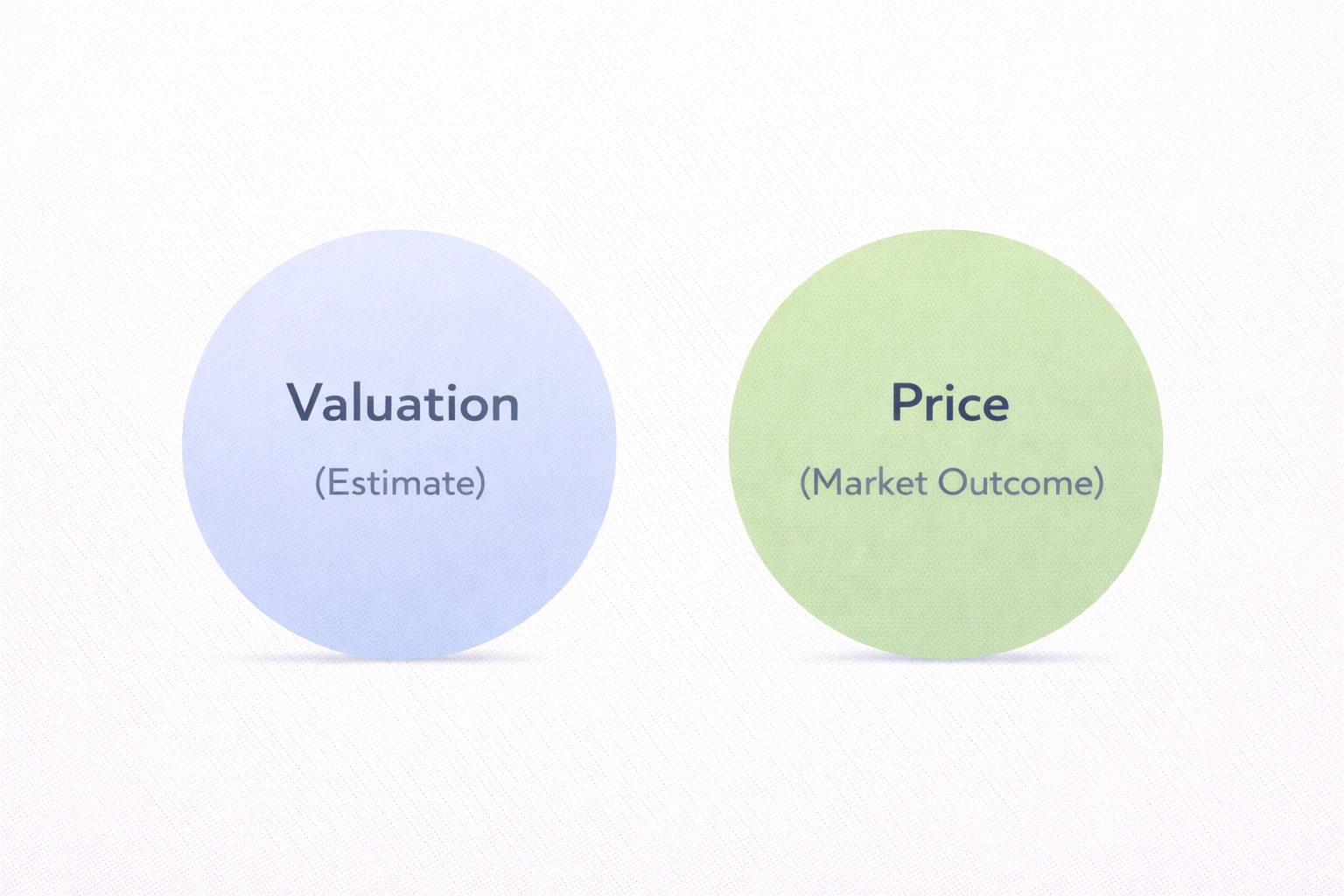
Before looking at methods, it helps to understand that valuation is an estimate.
The price paid is what the market ultimately agrees on.
Valuation is an opinion supported by evidence. Price is a negotiated outcome
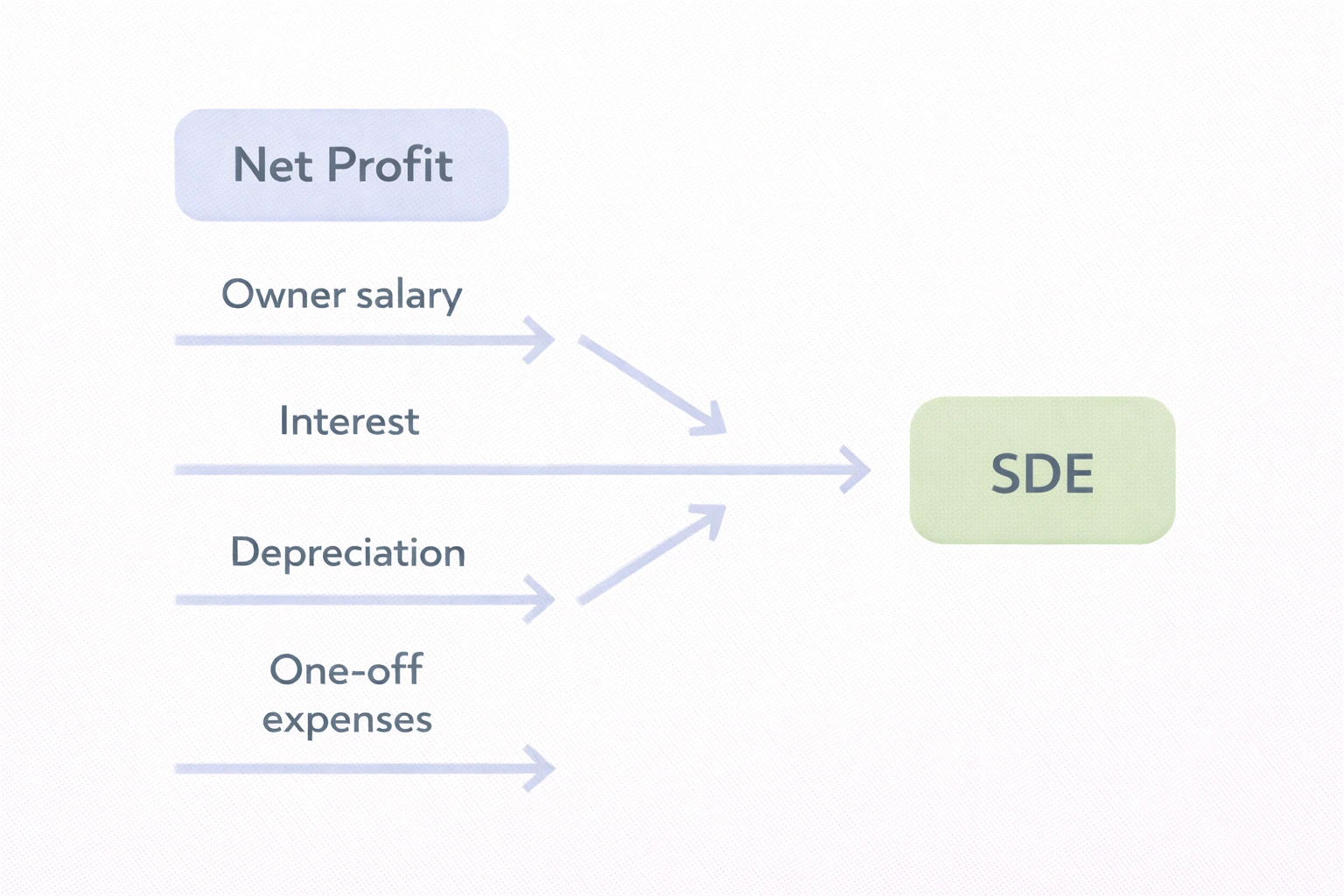
SDE stands for Seller’s Discretionary Earnings.
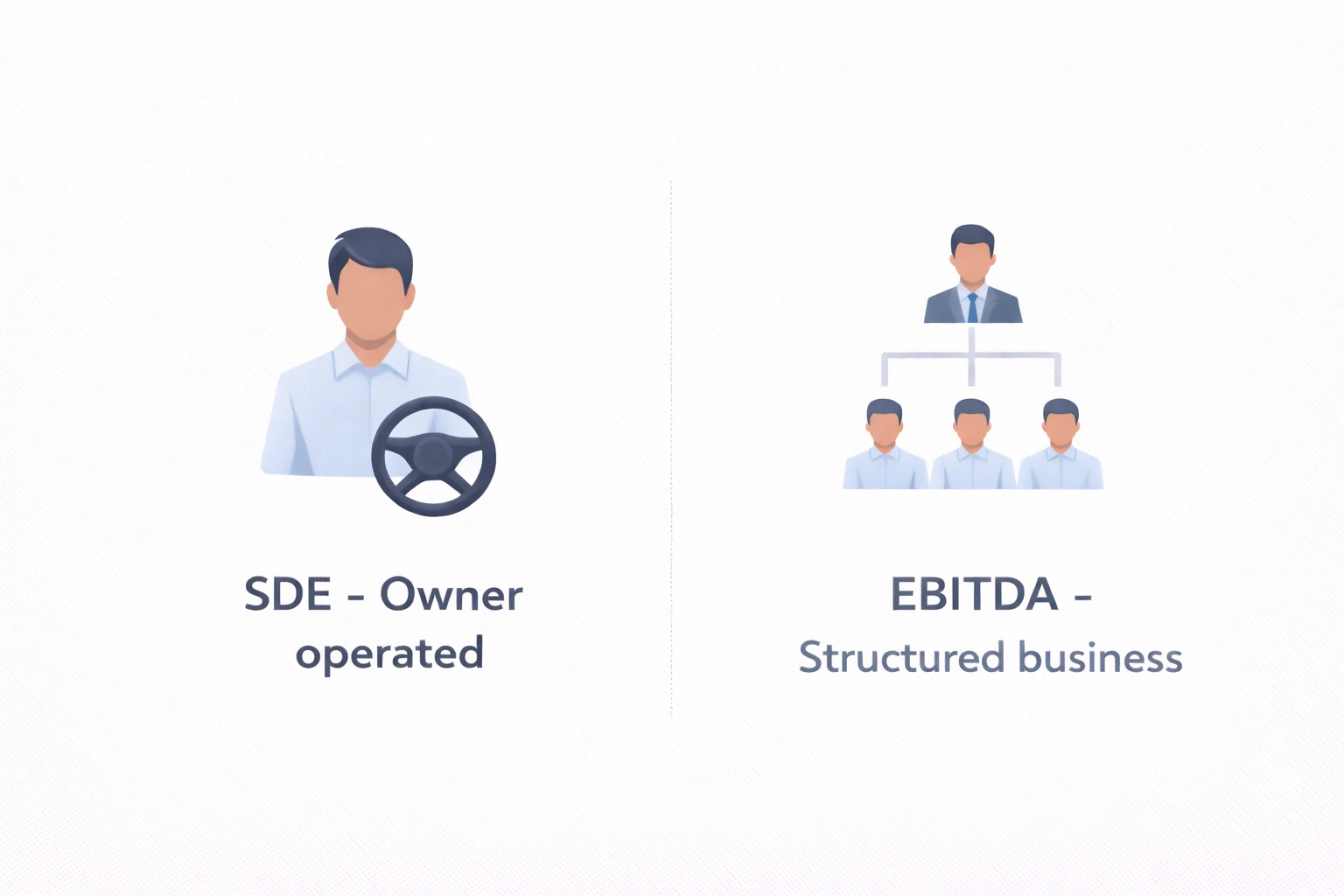
It is commonly used to value smaller, owner-operated businesses.
SDE starts with net profit.
Then adds back:
The idea is simple.
What does this business actually generate for a working owner?
If the business generates $200,000 in SDE, and similar businesses are selling for three times SDE, that suggests a $600,000 valuation range.
But that multiple is not fixed.
It depends on risk, structure, and transferability.
In smaller businesses, buyers are often buying a job plus a return.
EBITDA stands for Earnings Before Interest, Tax, Depreciation and Amortisation.
It is more common in larger or more structured businesses.
Unlike SDE, it does not add back a full owner salary if a replacement manager would still be required.
EBITDA focuses more on business performance independent of ownership.
“In larger businesses, buyers are buying an asset, not a job.”
If a business generates $1,000,000 in EBITDA and similar businesses trade at four times EBITDA, that suggests a $4,000,000 valuation range.
Again, that range depends heavily on:
The multiple is a reflection of perceived risk.
The stronger the structure, the lower the perceived risk.
Business Value = EBITDA × Multiple
Indicative ranges. Most businesses sell toward the lower end unless well structured.
EBITDA: A measure of profit before interest, tax, depreciation and amortisation, used for more structured businesses.
SDE: Seller’s Discretionary Earnings, showing what a business generates for an owner-operator including their income.
SDE and EBITDA are the most common in private business sales.
Other methods include:
Each method looks at value through a different lens.
“Valuation methods are tools. They are not answers.”
Asset-heavy businesses may lean toward asset value.
High-growth businesses may rely on future cash flow models.
Some industries use revenue as a rough benchmark.
But in private markets, no method guarantees a result.
They guide the conversation.
Different lenses can produce different reasonable outcomes.
A number on paper is only part of the picture.
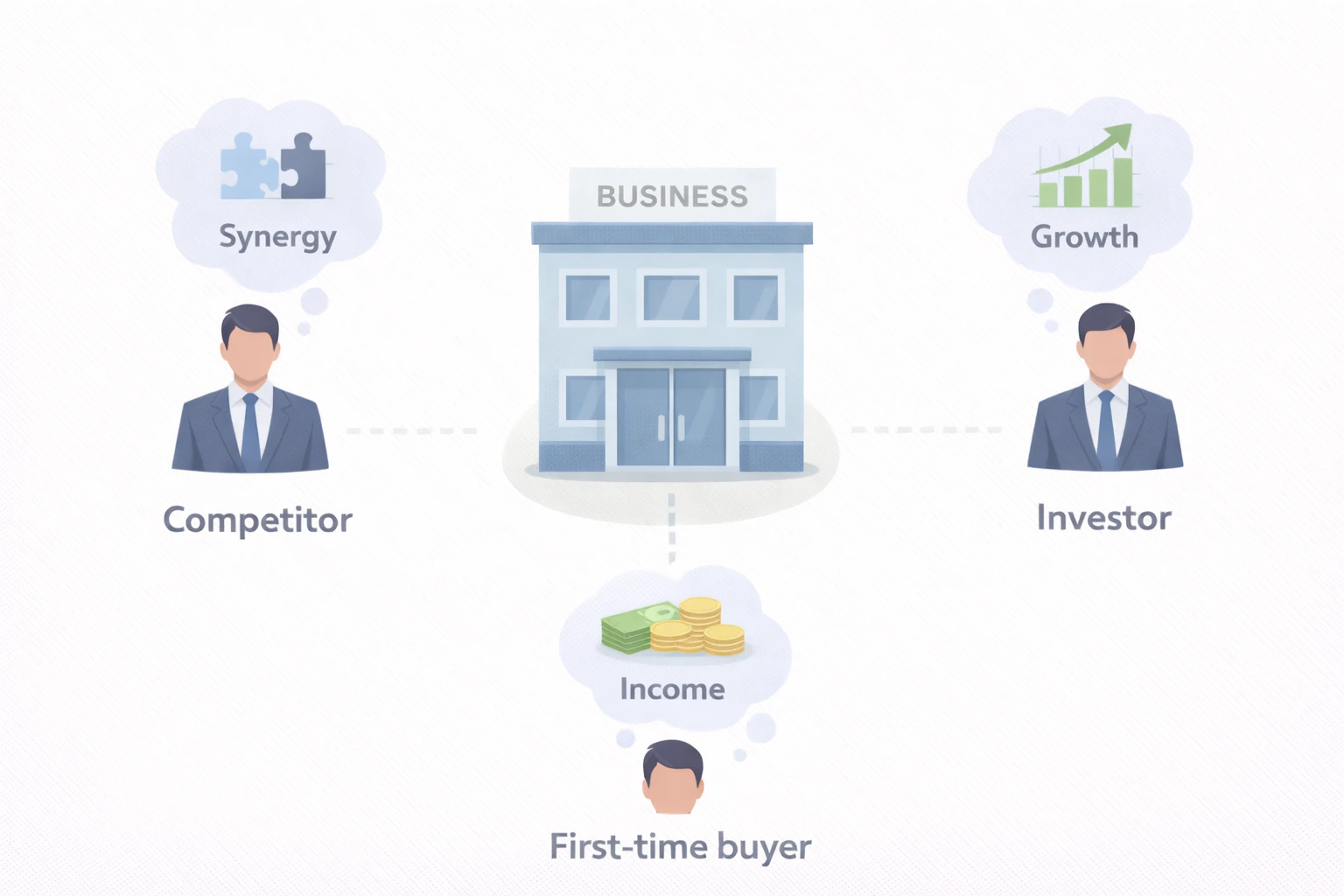
Who is buying matters.
A competitor may see cost savings and synergies.
A first-time buyer may see income and lifestyle.
An investor may focus on growth and exit potential.
The same business can attract different offers from different buyer types.
“The value often changes depending on who is looking at it.”
Structure matters too.
An asset sale may produce one outcome.
A share sale may produce another.
Even timing of payment changes perception of value.
Value shifts when risk shifts.
Valuation shapes expectations.
But expectations shape negotiations.
If an owner anchors to a number based on a rumour or a casual opinion, tension often follows.
Private business markets have limited transparency.
You rarely know:
“What someone says they sold for is rarely the full story.”
Price without context is not comparable.
There is also a practical reality.
Some brokers give high valuations to secure a listing.
Not always maliciously.
Sometimes optimistically.
An inflated valuation does not create a higher market price.
The market decides that.
Understanding this early can materially change how a business is positioned for sale. Our business sales services page explains how structured preparation and buyer selection influence valuation outcomes.
An optimistic valuation does not change what buyers are willing to pay.
Two businesses both generate $500,000 in SDE.
Business A is heavily dependent on the owner.
Clients only deal with them directly.
Processes live in their head.
Business B has documented systems.
Staff manage relationships.
Revenue is repeat and diversified.
On paper, they look identical.
In practice, they rarely attract the same multiple.
“The numbers might match. The risk does not.”
The difference shows up in valuation.
Many owners assume:
In reality:
“It depends” is not a cop-out answer.
It is the most accurate one.
Clear-cut answers feel better. Reality is usually more layered.
Valuation clarity changes conversations.
It helps owners:
It also reduces friction later.
This becomes clearer when you see how valuation interacts with buyer filtering, due diligence and deal structure; all of which are covered in our full guide on how to actually sell your business
When owners understand that value depends on risk, structure, buyer type, and transferability, negotiations feel less personal.
Valuation is not about chasing the highest rumoured multiple.
It is about understanding how the market will see your business when it is placed in front of real buyers.
“Once you understand what drives value, the number becomes easier to accept.”
Once that is clear, the numbers make more sense