


Most owners assume:
• You agree on price
• You get paid
• You walk away
Then someone mentions:
• Earn-outs
• Transition periods
• Staying for years
That is where doubt starts.
The real concern is freedom.
• Not wanting a boss
• Not wanting to feel employed
• Not wanting to lose control
There is also hearsay.
Stories about being locked in.
Rumours about buyers changing everything.
Fear about losing control over targets.
I thought once it sold, that was it.
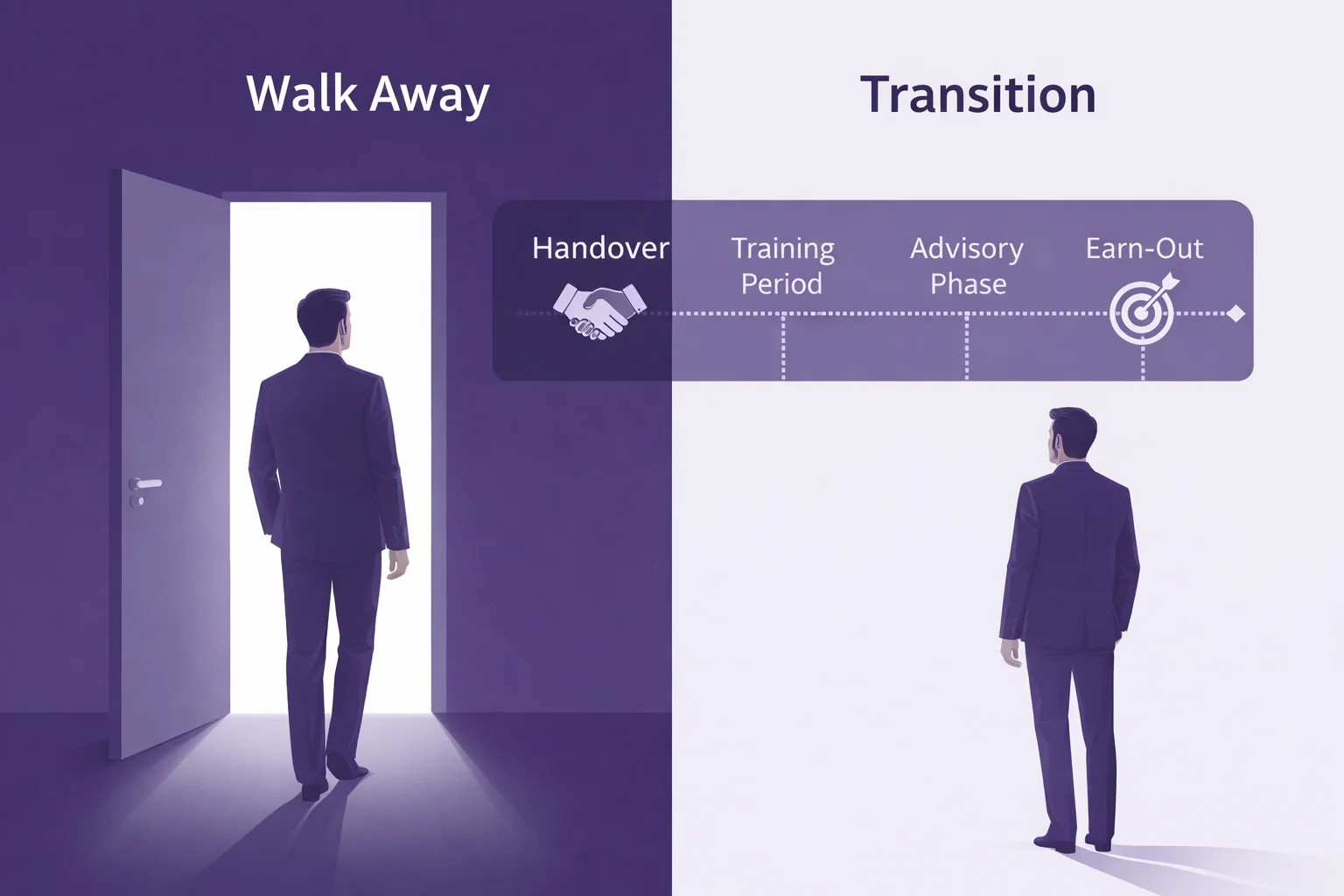
Staying on sits on a spectrum when selling your business.
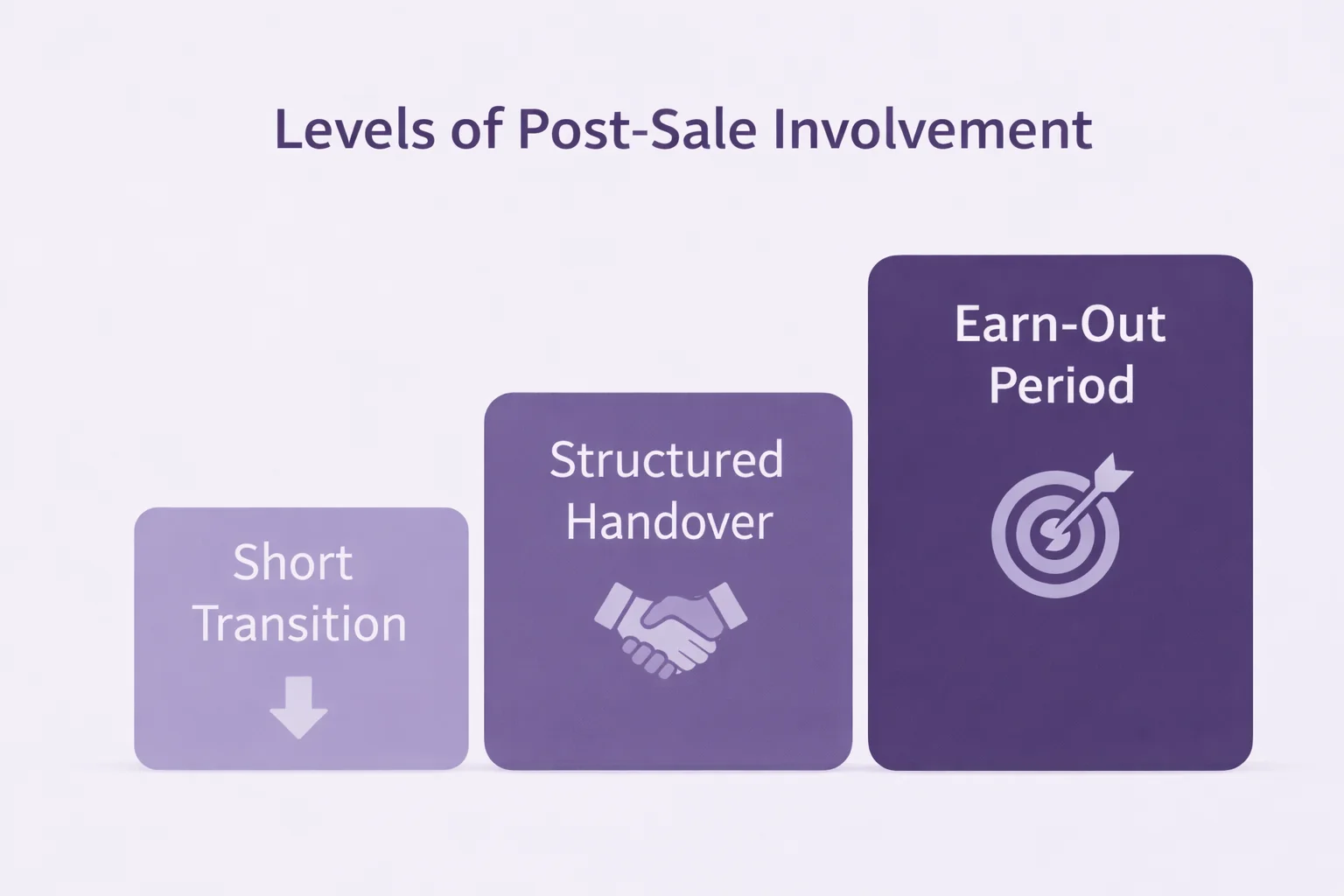
At one end:
• A few weeks
• A simple handover
• Introductions to clients and suppliers
This is rare.
Usually seen in:
• Small trading businesses
• Minimal staff
• Experienced buyers
More commonly:
• Six to twelve months
• Structured handover
• Stability across clients and staff
Here, the seller helps reduce risk.
At the longer end:
• One to three years
• Earn-out linked
• Growth-based valuation
Part of the price depends on performance.
Sometimes sellers stay longer.
Not because they must.
Because the arrangement works.
It’s like showing someone how the machine works
There is no fixed rule.
Time is driven by risk.
Risk around:
• Clients
• Contracts
• Staff
• Systems
• Funding structure
If most of the price is paid upfront:
• Involvement is shorter
If payment is deferred:
• Involvement increases
If growth projections influenced price:
• Expect performance-linked terms
Everything is negotiable before signing.
After signing, structure rules.
If you want to understand where post-sale involvement fits into the wider sale journey, read our full guide on how to actually sell your business.
Structure drives time more than preference
You do not automatically have to stay for years.
Typical ranges:
• Weeks – rare
• Six to twelve months – common
• One to three years – earn-out driven
The key words are “have to stay”.
You stay because:
• The deal requires it
• Risk requires it
• The price reflects it
Maximum earn-out often means longer involvement.
Lower risk structure often means shorter stay.
It’s better to agree to achievable terms than chase the highest number.
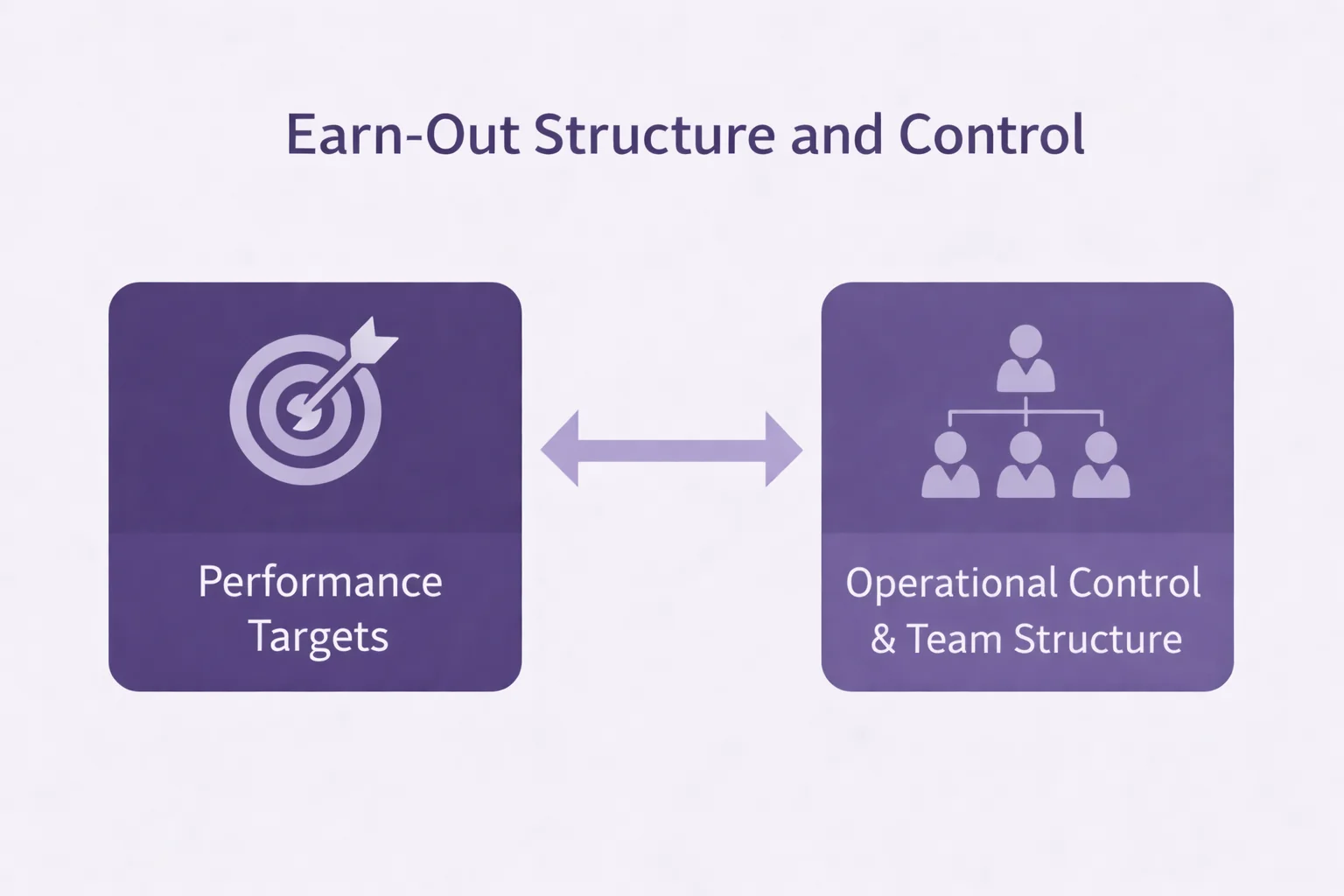
Earn-outs link payment to performance.
They are not negative.
They become difficult when:
• Targets are unrealistic
• KPIs are unclear
• Authority shifts
• Teams are restructured
• Control reduces
If revenue targets exist but the buyer changes the sales team, performance risk increases.
Clarity matters more than duration.
Clear:
• KPIs
• Authority
• Reporting lines
• Flexibility
Sellers don’t regret staying. They regret the targets.
Rarely from staying itself.
More often from:
• Over-optimistic projections
• Seller chasing maximum earn-out
• Buyer protecting risk heavily
• Undefined role boundaries
Experienced buyers structure for protection.
Inexperienced sellers may focus on the headline number.
The detail matters:
• Decision rights
• KPI design
• Team control
• Cultural alignment
Blinkers during negotiation become friction later.
Common belief:
Staying equals loss of freedom.
Reality is often different.
After sale:
• Liability reduces
• Financial exposure shifts
• Pressure changes
• Scope narrows
You may still contribute.
But you no longer carry full ownership risk.
Some sellers find it positive.
• Gradual transition
• Flexible arrangements
• More annual leave
• Focus on preferred tasks
Boundaries matter.
Clear:
• Yes positions
• No positions
• Time commitments
• Authority limits
And the right buyer matters.
The relationship continues.
It can be the first time you enjoy the business without carrying all of it.

Length of stay influences:
• Payment timing
• Risk allocation
• Earn-out delivery
• Authority during transition
• Emotional adjustment
Two deals can show the same price.
One includes long obligations.
One includes limited handover.
The better question is not:
“How long do I have to stay?”
It is:
“How do I prepare for this sale?”
Every sale structure is different. The right transition period depends on risk, leverage, and how your business is positioned before it goes to market.
If you would like structured guidance through that process, explore our business sale advisory services.
The number attracts attention. The structure determines how it feels later.